War with Israel, at least 360,000 infection cases reported
In the Gaza Strip of Palestine, which has been at war with Israel for two months, infectious diseases are reportedly spreading. This is due to severe overpopulation and contaminated drinking water issues.
The US daily newspaper The New York Times (NYT) reported on the 12th (local time) that the cold and humid weather in Gaza, overcrowding in refugee camps, shortages of food and medicine, and unclean water resources have combined to cause infectious diseases.
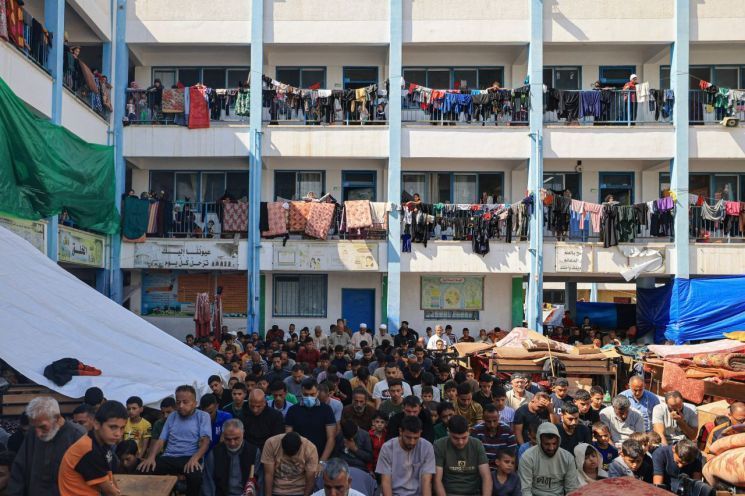
Currently, hospitals in the Gaza Strip are unable to admit infectious disease patients as they are treating those wounded by Israeli airstrikes. Severe patients also undergo surgery in unsanitary conditions, creating a vicious cycle of further infection spread.
The World Health Organization (WHO) reports that since the outbreak of the war, at least 360,900 cases of infectious diseases have occurred in the Gaza Strip. The population of Gaza was approximately 2.04 million as of 2020.
The most common illnesses are respiratory diseases such as colds and pneumonia. These are usually easily treatable in normal environments, but in a collapsed medical system like Gaza’s, they can lead to significant casualties.
NYT also interviewed residents living in Palestinian refugee camps to provide detailed accounts of the situation. Sama Al-Fara, who lives in the Rafah refugee camp in southern Gaza, told the media, "Every child is suffering from high fever, diarrhea, and vomiting."
The shortage of drinking water is particularly severe. Al-Fara said that they drink foul-smelling water used for washing without any filtration.
Even at humanitarian shelters operated by the United Nations (UN), water is scarce, forcing residents to share toilets without running water. WHO stated, "Feces are piling up in the streets, which spreads diseases and further contaminates the water."
© The Asia Business Daily(www.asiae.co.kr). All rights reserved.
![Clutching a Stolen Dior Bag, Saying "I Hate Being Poor but Real"... The Grotesque Con of a "Human Knockoff" [Slate]](https://cwcontent.asiae.co.kr/asiaresize/183/2026021902243444107_1771435474.jpg)















