Major Issues in the Automotive and Aviation Industries in 2023
Automobile and Parts Exports Total $77.2 Billion from January to October
Confirmed as the Top Single-Item Trade Surplus Since 2014
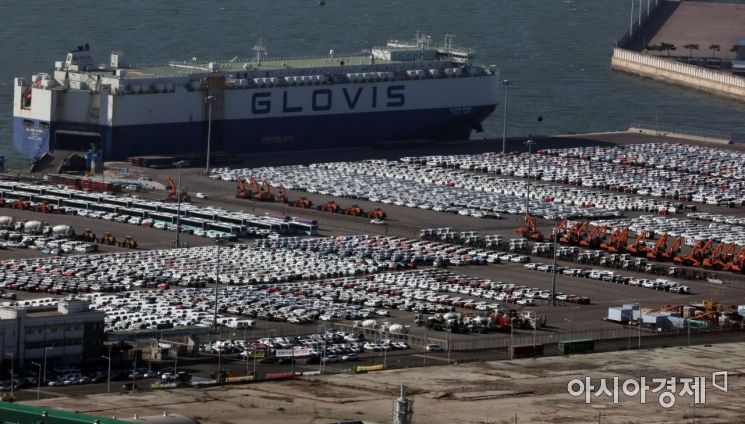
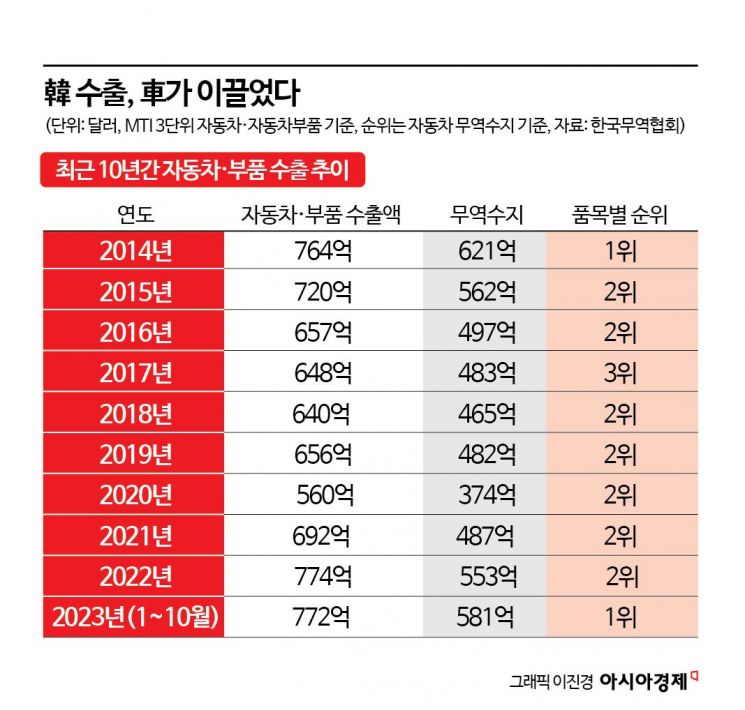
As of October this year, South Korea's automobile and parts export value reached 77.222 billion USD. With two months remaining until the end of the year, this amount is nearly equal to last year's annual export record of 77.383 billion USD, which was the highest ever. This strong performance was achieved despite a slowdown in South Korea's key export industries such as semiconductors and petrochemicals.
It also played a crucial role in earning foreign currency. During this period, South Korea's overall trade balance showed a deficit of 18.1 billion USD, while the automobile and parts sector recorded a surplus of 58.2 billion USD. Although the Korean won depreciated and the burden of importing crude oil and gas increased due to war and other factors, the automobile sector's strong performance helped prevent a downturn in South Korea's exports. When looking at trade balances by product category, the automobile trade balance is expected to reclaim the top position for the first time in 10 years since 2014.
Over Half of Car Exports Go to the US and Canada
Imports from China Surge... Chinese Tesla on the Rise
This year, automobile exports have become more concentrated toward North America, while imports from China have surged noticeably. About 10 years ago, when automobile exports were active, the share of the US and Canada in total automobile exports was around 35%. However, this year it has already exceeded 50%. This is due to major automakers such as Hyundai Motor, Kia, and Korea GM increasing local sales targeting the US market. In particular, overseas sales of high-priced models such as electric vehicles and sport utility vehicles (SUVs) have increased.
Imports of Chinese automobiles, mainly commercial vehicles such as buses and trucks, have steadily increased over the past 2-3 years, and passenger car imports have rapidly grown this year. A representative example is Tesla's electric SUV 'Model Y.' Since the second half of the year, China has surpassed the US and Germany to become South Korea's largest automobile import country. China has long focused on electric vehicles and is increasing exports of finished cars worldwide, including to South Korea.
Hyundai Motor and Kia Begin Construction of Electric Vehicle-Only Plants in Ulsan and Hwaseong
Tax Credits for Future Vehicle Facilities Encourage Investment
Domestic Electric Vehicle Adoption Growth Slows in the Second Half
The electrification transition spreading mainly in China and Europe is no exception in South Korea. Hyundai Motor began building an electric vehicle-only plant last month, and Kia started in April. Currently, electric vehicles are produced by adjusting existing internal combustion engine production lines, but from 2025, dedicated electric vehicle plants with annual capacities of 200,000 and 150,000 units will operate respectively. As competition among countries intensifies for leadership in the future mobility market, Hyundai Motor Group, which has risen to the world's third-largest automaker, has designated Ulsan (Hyundai Motor) and Hwaseong (Kia) as electrification production hubs.
Hyundai Motor Group's decision was not smooth. Major countries including the US have introduced various incentives to attract electric vehicle plants. The South Korean government initially opposed large-scale tax credits for electric vehicle production facilities but changed its stance by including future vehicles in national strategic technologies. Renault Korea Motors will be the first in the domestic automobile industry to produce foreign brand electric vehicles starting in 2025. This is the result of collaboration with China's Geely Automobile, which became Renault Korea's second-largest shareholder last year.
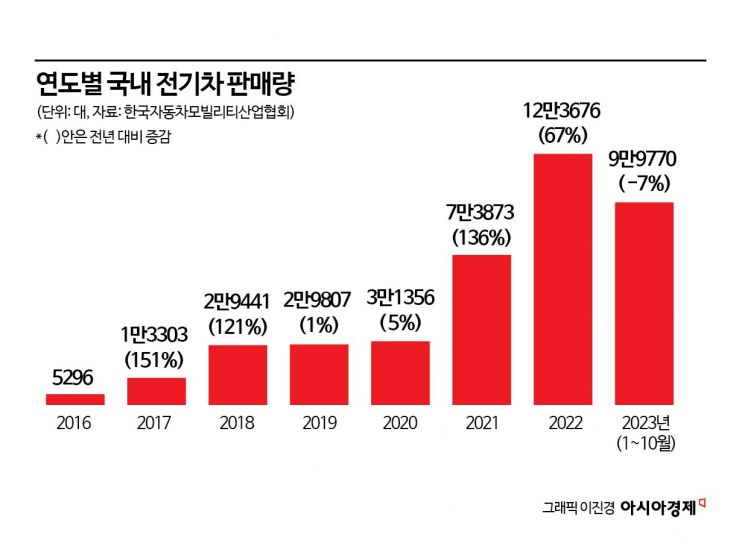
Domestic electric vehicle adoption has progressed rapidly so far but appears to have slowed recently. As of October this year, the number of electric vehicles reached 515,908, accounting for about 2.0% of all registered vehicles. The share of electric vehicles among newly registered vehicles is in double digits. However, due to insufficient charging infrastructure and high prices, new electric vehicle registrations declined for the first time this year. Instead, demand for hybrid vehicles increased.
Korean Air and Asiana Merger Stalled for Three Years
European Commission to Decide by February Next Year
Controversy Surrounds HMM Sale
The merger between Korean Air and Asiana Airlines, which began in November 2020, remains uncertain after about three years. For the two major national airlines to integrate, approvals from key competition authorities are required, but the European Union (EU), the US, and Japan have yet to make decisions. The EU is concerned about monopolies on some passenger and cargo routes and has requested remedies.
Korean Air submitted a remedy plan to the EU last month, proposing to transfer some routes to low-cost carriers such as T'way Air and to sell Asiana Airlines' cargo business. After much difficulty, Asiana Airlines' board approved this plan. The EU Commission plans to make a decision by February next year. The process of finding a new owner for South Korea's largest national shipping company, HMM, is also undergoing a lengthy procedure. The Korea Development Bank and Korea Ocean Business Corporation have decided to sell their stakes to the private sector and have shortlisted preferred bidders, but controversies have arisen over sale conditions and bidder qualifications.
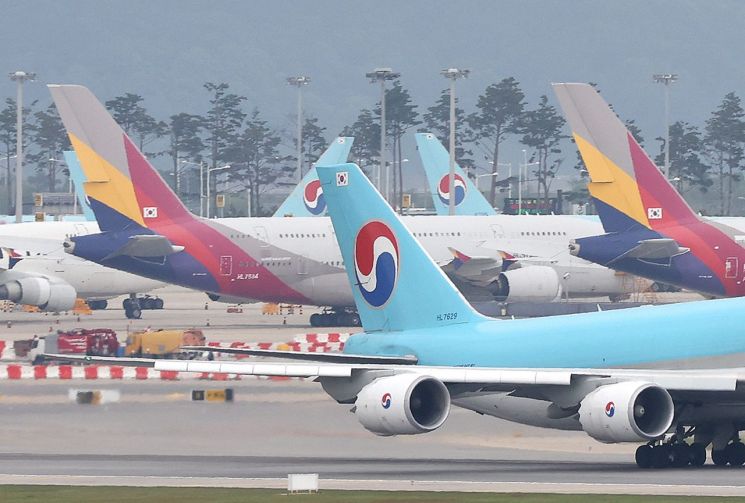 Passenger aircraft of Korean Air and Asiana Airlines parked at Incheon International Airport [Photo by Yonhap News]
© The Asia Business Daily(www.asiae.co.kr). All rights reserved.
![Clutching a Stolen Dior Bag, Saying "I Hate Being Poor but Real"... The Grotesque Con of a "Human Knockoff" [Slate]](https://cwcontent.asiae.co.kr/asiaresize/183/2026021902243444107_1771435474.jpg)

















