Prosecution: "Age Is Not a Reason to Avoid the Death Penalty"
Controversy Expected Even Within Japan
In Japan, a country that retains the death penalty, prosecutors have sought the death sentence for a 19-year-old boy at the time of the crime. The Japanese prosecution has determined that he was already fully capable of taking responsibility. Notably, the prosecution has, for the first time, disclosed the real name of a juvenile defendant, which is expected to spark controversy.
On the 11th, NHK and other Japanese media reported that prosecutors sought the death penalty for 21-year-old Endo Yukie, who was indicted on charges of murder and arson at a residence in Kofu City in 2021. He was 19 years old at the time of the crime. The prosecution stated, "Being 19 years old at the time of the crime is not a reason to avoid the death penalty." In South Korea, under the Juvenile Act, those under 18 years old cannot be sentenced to death or life imprisonment.
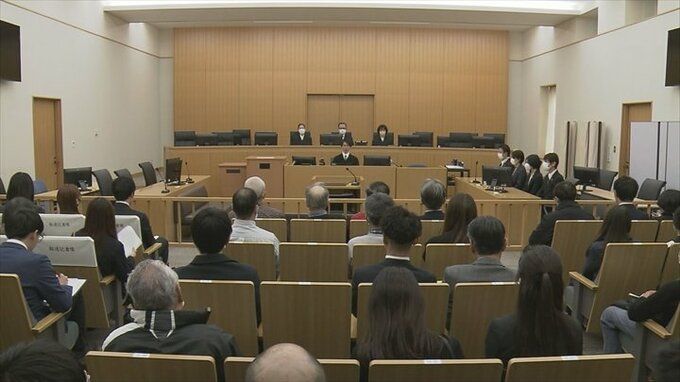
The defendant is accused of breaking into a residence in Kofu City, Yamanashi Prefecture, in October 2021, killing two people in their 50s among a family of four, and then setting fire to the house.
In this trial, the main issue has emerged as how much responsibility the defendant had, given that he was 19 years old at the time of the crime. The prosecution argued that the defendant had full responsibility at the time of the crime.
The prosecution pointed out that the investigation revealed the defendant had a one-sided affection for the eldest daughter attending the same high school, and when she did not accept him, he planned the crime. They added, "He planned the arson method and meticulously prepared, showing premeditation, and was already aware that his actions violated the law," concluding that he had sufficient responsibility.
Regarding the sentencing rationale, the prosecution explained, "The defendant committed the incident to vent excessive anger and satisfy abnormal desires. The result of killing two spouses in a merciless and brutal crime is grave. Furthermore, there is no sign of remorse, so it can be said that there is no possibility of rehabilitation."
After the indictment, the prosecution had previously disclosed the suspect’s real name, citing "serious impact on the local community." This is the first case in Japan where the prosecution has publicly revealed the real name of an 18- or 19-year-old juvenile offender following amendments to the Juvenile Act. In Japan, juvenile offenders are generally protected from having identifying information such as their names disclosed, but since April last year, under the revised Juvenile Act, offenders aged 18 to 19 are classified as "specified juveniles" and are not subject to this protection.
The defendant’s lawyer has appealed, stating, "The defendant has a mental disorder and was in a state of diminished capacity at the time of the incident." However, at the first trial held on October 25, the defendant exercised the right to remain silent and did not answer any questions from the judge, further worsening public opinion.

Japan is one of the few developed countries that retains the death penalty. For adult death row inmates, executions were carried out as recently as July last year, and in 2017, sentences were executed for two juvenile death row inmates who were 19 years old at the time of their crimes. Legal experts in Japan believe that since the 1990s, a climate favoring severe punishment to protect victims has been established, which has hindered efforts to abolish the death penalty. In fact, according to a 2019 Cabinet Office public opinion survey, 80.8% supported retaining the death penalty, far exceeding the 9% who favored abolition.
Moreover, in February, Saito Gen, Japan’s Minister of Justice, appeared before the House of Representatives Budget Committee and dismissed calls for abolition, stating, "Abolishing the death penalty is not appropriate. The death penalty must be imposed on those who commit extremely serious heinous crimes."
However, international organizations such as Amnesty International and the United Nations continue to demand Japan immediately halt executions and abolish the death penalty. Within Japan, civic groups and some lawmakers have consistently voiced that the death penalty’s crime prevention effect cannot be scientifically proven. Since there is always conflict between supporters and opponents during death penalty sentencing and execution processes, the repercussions related to this prosecution’s death penalty demand are expected to continue.
© The Asia Business Daily(www.asiae.co.kr). All rights reserved.


















