Instead of Luxury Stores on the 1st Floor, Affordable Basement Shops
Youth Unemployment Rise and Economic Slowdown Lead to Reduced Consumption
Young Chinese consumers are increasingly heading underground in shopping malls and department stores. Skipping the first floor where luxury brand stores are located, they are going straight to the basement (B1, B2) levels, which house more affordable shops. This phenomenon has even led to the emergence of a new term on social networking services (SNS) called the 'B1B2' economy.
According to a recent report by the US CNBC network, the trend of young Chinese people shopping and dining in the basement levels of malls is becoming more pronounced. Typically, the basement floors contain low-cost gift and souvenir shops, clothing stores, supermarkets, and relatively inexpensive consumer goods outlets such as Miniso and Luixing Coffee.
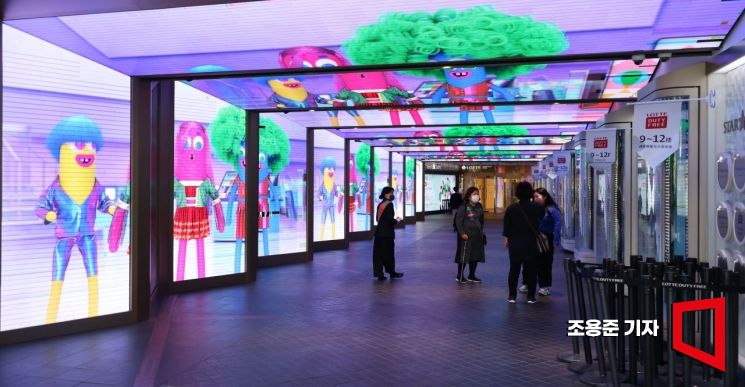 On October 11th, a duty-free shop in Seoul appeared quiet due to the sparse visits of Chinese tourists. Photo by Jo Yongjun jun21@
On the Chinese SNS platform Weibo, the hashtag '年?人?商?只去B1B2 (Young people only go to B1B2 for shopping)' is trending. One Weibo user posted a self-deprecating comment saying, "The top floor of the department store is for watching movies, the basement is for eating, and the other floors are for walking around to digest."
Sean Lane, director of China Market Research Group, explained, "Landlords try to place 'anchor stores' such as Louis Vuitton, Apple, and Starbucks in expensive locations like the first floor. However, unlike historically when high-end stores attracted more people, due to the Chinese economic downturn, low-cost brands are now drawing more customers." He added, "Young Chinese consumers are now choosing Luixing Coffee over Starbucks."
Jia Miao, assistant professor of sociology at New York University Shanghai Campus, said, "Many young Chinese are struggling to find stable jobs or earn enough money to maintain a decent life. They need to save more money." According to a survey conducted in June, the average monthly salary of Chinese bachelor's degree holders in 2022 was 5,990 yuan (approximately 1.1 million KRW).
China has been struggling with economic recovery following the COVID-19 pandemic. This sluggish consumption has triggered the 'B1B2' trend. Although quarterly GDP growth rates this year have exceeded expectations, raising hopes that the government’s early-year targets might be met, the recovery was soon hampered by the real estate crisis and soaring debt. For these reasons, international credit rating agency Moody's recently downgraded China's national credit rating outlook from 'stable' to 'negative.'
In particular, youth unemployment among those aged 16 to 24 has reached its worst levels, leading to changes in consumption patterns centered on young people. As youth unemployment exceeded 20% and continued to set record highs, the Chinese government stopped releasing youth unemployment figures altogether starting in August.
According to a McKinsey report, the growth rate of consumer spending in China is expected to slow further. Leading online shopping platforms Alibaba and JD.com have refused to disclose sales figures for the Guanggunjie, China’s largest annual shopping event, for two consecutive years.
© The Asia Business Daily(www.asiae.co.kr). All rights reserved.
![Clutching a Stolen Dior Bag, Saying "I Hate Being Poor but Real"... The Grotesque Con of a "Human Knockoff" [Slate]](https://cwcontent.asiae.co.kr/asiaresize/183/2026021902243444107_1771435474.jpg)















