Seojongmo, Seoul National University Professor: "Understanding Patients as a Clinician is Key to Success as a Scientist"
Career Change from Ophthalmologist to Engineering Professor
"Medical Students Should Be Able to Take Desired Courses in Other Departments"
"A physician-scientist does not treat 100 patients immediately but can treat 1,000 or 10,000 patients in the long term."
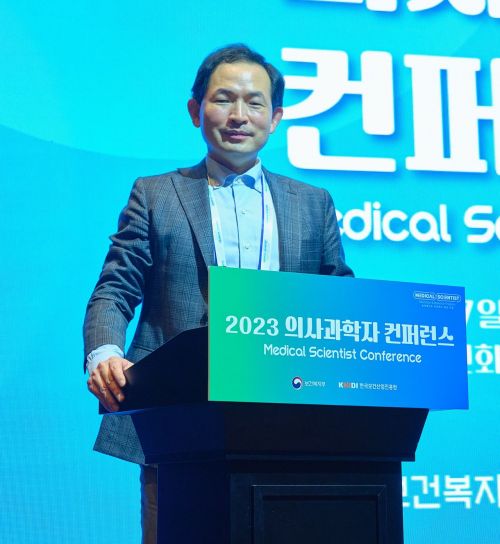
Seo Jong-mo, a representative 'physician-scientist' in Korea and a professor in the Department of Electrical and Computer Engineering at Seoul National University College of Engineering, said this in an interview with Asia Economy on the 7th. He is an ophthalmologist who graduated from Seoul National University College of Medicine and also an engineer specializing in biomedical engineering. Asia Economy conducted the first-ever video interview with Seo, who was attending the '2023 Physician-Scientist Conference' held in Jeju Island that day.
'Physician-scientist' is a hot issue these days, linked to discussions about increasing medical school quotas and establishing medical graduate schools to train physician-scientists. He emphasized, "Even if doctors want to conduct research as scientists, the environment forces them to focus on clinical practice, so the government should reduce the clinical burden on physician-scientists and create an environment where they can research comfortably."
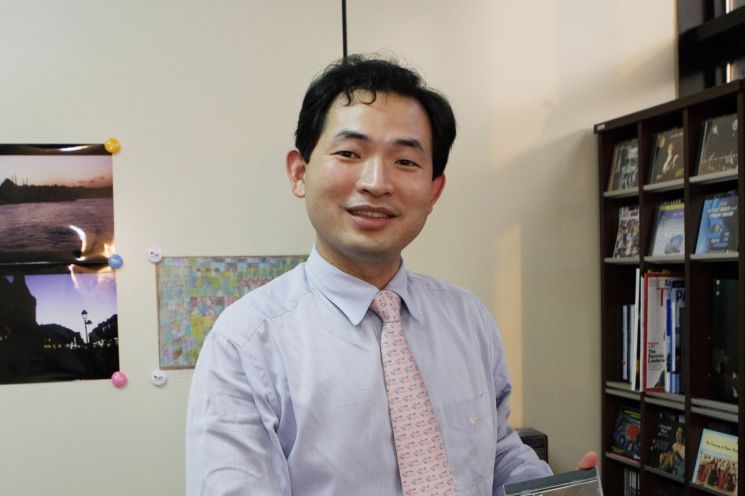 Sejongmo, Professor, Department of Electrical Engineering, College of Engineering, Seoul National University / Photo by Seoul National University
You are an ophthalmologist but became a professor in the Department of Electrical and Computer Engineering at the College of Engineering. What was the turning point?
After encountering 'biomedical engineering' in my third year of medical school, I wanted to pursue a career in this field. When I approached the biomedical engineering professor at the time, I was told, "It is difficult to conduct research without sufficient knowledge about patients," and was sent away. After completing my internship, when I returned, I was told to come back after becoming a specialist. I am still grateful for this advice. Treating patients clinically and seeing them regain their vision and be discharged allowed me to think once more about what patients truly need. Watching the 'Artificial Eye Project' that started in 2000 during my ophthalmology residency, I resolved to make it my lifelong research topic.
What is the difference between a physician-scientist and a typical doctor?
A physician-scientist is a scientist who holds a medical license and conducts research related to medicine. It does not only refer to those who have completely left clinical practice. The boundary between a typical doctor and a physician-scientist is not clear-cut, but it can be distinguished based on whether the emphasis is on clinical practice or research.
What achievements have you made as a physician-scientist?
Recently, I developed a new material for an artificial retina device. Although artificial retinas have been released in Germany and the United States since the 1980s, they all disappeared. This was because the technological level did not meet patients' expectations. Artificial retinas require very small and flexible electronic circuits, but the products at the time had incomplete waterproofing and caused side effects. Only recently have new flexible materials used in mobile phones emerged. We succeeded in creating ultra-small electronic circuits implantable in the body using PFA, COC, and flexible glass among these materials. However, since it is not yet perfect, we plan to implant it in patients only when it reaches a level safe enough to be implanted in my own eye.
What is the research reality for physician-scientists in Korea?
Research is difficult due to 'fixed perceptions about doctors' rather than systems or research environments. Even if an idea arises while treating patients and one wants to research it, this becomes a waiting issue for patients and a complaint for the hospital, causing staff difficulties. Most doctors choose harmonious relationships with hospital staff and colleagues. Some private practice doctors conduct research, but if clinical practice decreases, hospital revenue declines. They cannot ignore the salaries of their family and employees.
Such situations seem to affect prospective physician-scientists as well.
The number of first- and second-year medical students at Seoul National University who raise their hands wanting to conduct research drops by half by their fourth year, and after residency, when they marry, the rate practically approaches zero due to economic responsibilities. I was able to change my career from an ophthalmology professor at a medical school to a professor researching biomedical engineering at an engineering school because I was unmarried at the time and my father supported me. Many dream of becoming physician-scientists, but I think the surrounding environment often does not allow it.
What is needed from an educational perspective to nurture physician-scientists?
The current medical school curriculum is tightly packed, making it difficult to learn anything else. Seoul National University started a 'Sustained Research Program (Micro Degree)' last year, which recognizes courses necessary for research as a supplementary degree. Education that allows flexible attendance of courses in other fields beyond major courses and recognizes expertise accordingly should be expanded. It is also necessary to show students various career paths by presenting successful cases of seniors, even in the form of special lectures.
How are physician-scientists trained overseas?
In the United States, the National Institutes of Health runs a physician-scientist training program, and physician-scientists receive more than twice the amount of independent national research funding compared to other researchers. Additionally, there is an endowed professorship system where wealthy patients or their families who have been treated by physician-scientists donate large sums to support research. Based on donated research funds, endowed professors can focus more on research, and new professors fill the clinical gaps created by the endowed professors' research. Korea should also consider various funding methods to reduce the clinical burden on physician-scientists.
What message would you like to convey to the Korean medical and educational communities?
There are still many diseases to be solved and better treatment methods are needed. At the center of this research must be doctors who observe patients' suffering and understand them well. Physician-scientists do not just treat 100 patients now but can develop medical technologies that treat 1,000 or 10,000 patients in the long term. I hope an environment is created where physician-scientists can research comfortably.
▶Professor Seo Jong-mo Profile= Graduated from Seoul National University College of Medicine in 1996 and earned a Ph.D. in biomedical engineering from the same university's graduate school. After serving as a clinical instructor in ophthalmology at Seoul National University Hospital and assistant professor of ophthalmology at Dongguk University College of Medicine, he joined the Department of Electrical and Computer Engineering at Seoul National University College of Engineering as a professor in 2008. He researches nano- and bio-medical technologies. He serves as a director of the Korean Optometry Society and is a clinical adjunct professor at Seoul National University College of Medicine, treating rare retinal diseases at Seoul National University Hospital.
© The Asia Business Daily(www.asiae.co.kr). All rights reserved.
![Clutching a Stolen Dior Bag, Saying "I Hate Being Poor but Real"... The Grotesque Con of a "Human Knockoff" [Slate]](https://cwcontent.asiae.co.kr/asiaresize/183/2026021902243444107_1771435474.jpg)

















