Accounts for 23% of all elementary, middle, and high schools
89% located in non-capital regions
Half of the planned new schools are in the capital area
The number of 'mini schools' with fewer than 100 students nationwide has been steadily increasing. This is due to the sharp decline in the school-age population caused by low birth rates. In particular, as small-scale and closed schools increase mainly in non-metropolitan areas, each city and provincial education office is struggling to come up with measures such as establishing branch schools.
'Small-scale schools' have increased every year for five years
According to the educational statistical yearbook data collected through each city and provincial education office on the 11th, the number of small-scale schools with fewer than 100 students enrolled in elementary, middle, and high schools was ▲2,660 schools (2019) ▲2,698 schools (2020) ▲2,698 schools (2021) ▲2,703 schools (2022) ▲2,735 schools (2023). Except for the years 2020 and 2021 when the number was the same, there has been an increasing trend over the past five years.
Even when looking at small-scale schools with 60 or fewer students, estimated as 10 students per grade in elementary schools, the number steadily increased except in 2021. The figures were ▲1,872 schools (2019) ▲1,965 schools (2020) ▲1,962 schools (2021) ▲2,005 schools (2022) ▲2,071 schools (2023).
According to this year's Ministry of Education's basic education statistics, there are 11,819 elementary, middle, and high schools. Among them, small-scale schools with fewer than 100 students account for 23.1%, and those with fewer than 60 students account for 17.5%.
In particular, as population concentration in the metropolitan area accelerates, small-scale schools are more prevalent in non-metropolitan regions. As of this year, the number of small-scale schools with fewer than 100 students in non-metropolitan areas excluding Seoul, Gyeonggi, and Incheon was 2,447 schools, accounting for 89.4% of the total 2,735 small-scale schools. Among small-scale schools with fewer than 60 students (2,071 schools), 91.6% (1,898 schools) are also located in non-metropolitan areas.
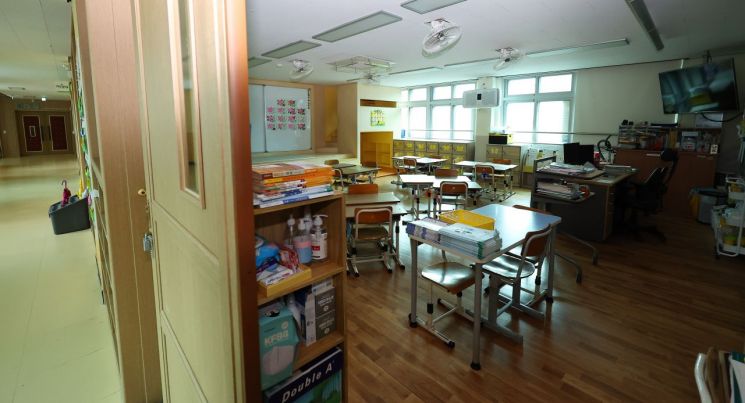
Population decline is a reality, education offices prepare for school closures
In preparation for the decline in the school-age population, each city and provincial education office is devising support measures for small-scale schools. The Daejeon Metropolitan Office of Education announced the 'Daejeon-type Small School Revitalization Basic Plan' last year and has selected small schools with five or fewer classes in rural areas starting this year. Students attending large schools are supported to transfer or enroll in nearby small schools.
In the metropolitan area, where there are relatively more students, efforts have been made to alleviate overcrowded classes and support small-scale schools by distributing class sizes. The Seoul Metropolitan Office of Education's 'Urban Campus Establishment and Operation Basic Plan' announced this year aims to establish branch-type schools in urban areas to ensure students' commuting conditions even when nearby schools are closed. In particular, the plan includes building schools together with newly developed public housing or purchasing officetels and commercial buildings to establish urban campuses.

Increasing closed schools in provinces, new schools concentrated in metropolitan areas
Meanwhile, the number of schools closing due to decreasing students per class continues to rise, but new schools are concentrated in metropolitan areas including Gyeonggi Province. As the population concentrates in metropolitan areas, educational facilities are becoming polarized. According to statistics from the Local Finance Education Informer, as of this year, 93.8% (3,680 schools) of the 3,922 closed schools nationwide are in non-metropolitan areas.
However, among the 171 schools planned to be newly established nationwide, more than half?89 schools?are concentrated in metropolitan areas. In particular, 74 of these are planned to be built in Gyeonggi Province. Looking at statistics from the past five years, more than half of the newly established schools each year have been in metropolitan areas.
An official from the Ministry of Education explained, "There are many large-scale housing development projects in the Gyeonggi area. Although there are some development projects in non-metropolitan areas, Gyeonggi has a large population, and there are many cases where schools close in old urban areas and new schools open in new urban areas."
Experts advise that with the realities of population decline and metropolitan concentration, a comprehensive restructuring of the education system is necessary. Professor Kim Seongcheon of the Graduate School of Education Policy at Korea National University of Education said, "Regional school restructuring is now inevitable," adding, "To achieve this, support policies must be coordinated not only in facilities but also in personnel systems and curriculum policies." He further explained, "Currently, in rural areas, an 'integrated operation school model' is used to operate elementary, middle, and high schools together, but software development aspects have not been realized. It is necessary to further activate this model to ensure quality investment and operation."
© The Asia Business Daily(www.asiae.co.kr). All rights reserved.
![Clutching a Stolen Dior Bag, Saying "I Hate Being Poor but Real"... The Grotesque Con of a "Human Knockoff" [Slate]](https://cwcontent.asiae.co.kr/asiaresize/183/2026021902243444107_1771435474.jpg)

















