As buyers in the real estate market adopt a wait-and-see approach, apartment prices in Seoul have turned downward for the first time in 29 weeks. Nationwide, sale prices have fallen for two consecutive weeks.
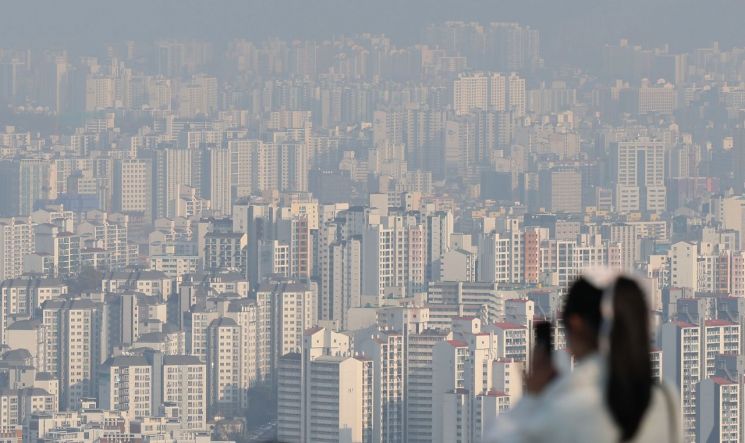
According to the 'Weekly Apartment Price Trends' released by the Korea Real Estate Board on the 7th, the nationwide apartment sale price change rate for the first week of December (as of the 4th) recorded -0.01%. This marks a decline for two consecutive weeks after turning negative for the first time in 23 weeks since the third week of June (-0.01%).
This week, Seoul (-0.01%) also turned to a decline. It is the first drop in 29 weeks since the third week of May (-0.01%). The districts with the largest decline were Gangbuk and Geumcheon-gu (each -0.06%), while Gangnam-gu continued to widen its decline for the third week, falling by 0.05%. Mapo and Dongjak-gu (each -0.03%) and Seocho-gu (-0.01%) also fell for two consecutive weeks. Songpa-gu (0.00%) stopped rising and recorded a flat rate.
The Real Estate Board explained, "Due to uncertainties in the future housing market, the buyer wait-and-see sentiment is expanding, and intermittent transactions are occurring mainly in complexes where listing prices have been adjusted downward."
Gyeonggi Province also turned to a decline for the first time in 26 weeks, falling by 0.01%. Gwacheon and Seongnam-si (each -0.02%) and Yongin-si (-0.01%) turned to a decline this week. In Incheon (-0.05%), the downward trend continued for the fifth consecutive week, with all districts within the city, including Jung-gu (-0.11%) and Michuhol and Gyeyang-gu (each -0.08%), declining.
The provinces (-0.02%) also fell for two consecutive weeks at the same rate as the previous week. The five major metropolitan cities declined by 0.03%, and Sejong-si (-0.02% → -0.09%) saw a larger drop.
Meanwhile, nationwide apartment jeonse (long-term lease) prices rose by 0.07%, continuing an upward trend for 20 weeks.
Seoul increased by 0.14%, with Seongdong and Songpa-gu (each 0.26%) showing the largest gains among districts. This was followed by Dongdaemun-gu (0.21%), Gwangjin-gu (0.19%), and Guro-gu (0.18%), which also saw significant increases.
The Real Estate Board stated, "With weakened buying sentiment, some purchase demand has shifted to jeonse, causing jeonse prices to rise mainly in preferred complexes. However, in some complexes, the gap between landlords' and tenants' desired transaction prices is large, leading to downward adjustments."
Jeonse prices in Gyeonggi rose by 0.12%, Incheon by 0.01%, and the provinces by 0.03%.
© The Asia Business Daily(www.asiae.co.kr). All rights reserved.
![Clutching a Stolen Dior Bag, Saying "I Hate Being Poor but Real"... The Grotesque Con of a "Human Knockoff" [Slate]](https://cwcontent.asiae.co.kr/asiaresize/183/2026021902243444107_1771435474.jpg)
















