Private School Pension 2.93 Million Won · Military Pension 2.77 Million Won
IMF "Han, Government Debt Will Soar Without Pension Reform"
As the need for pension reform emerges, it has been identified that the gap in pension benefits between the National Pension and other special occupational pensions is approximately 4.6 to 5.3 times. However, there are also concerns that it is difficult to simply compare the benefit amounts because the paid insurance premiums and subscription periods differ.
One in Three National Pension Recipients Has Only an Elementary School Education
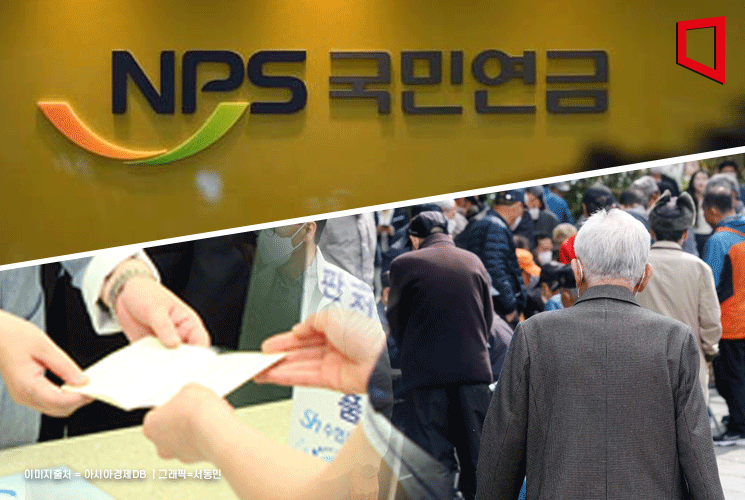
According to a recent paper presented by Professor Kwon Hyuk-chang of Gyeongsang National University (Social Welfare) and Research Fellow Jeong In-young of the National Pension Research Institute at the Korean Social Security Association, one in three (33.3%) National Pension recipients were found to have only graduated from elementary school. Those with a college degree or higher, including junior colleges, accounted for only 7.6%, while the rest were high school graduates at 28.4% and middle school graduates at 22.4%.
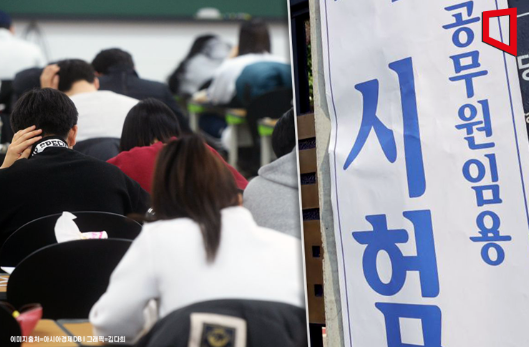
In contrast, among public officials' pension recipients, high school graduates were the largest group at 45.3%, followed by college graduates including junior colleges at 42.8%, middle school graduates at 7.7%, and elementary school graduates at 4.3%. The private school teachers' pension had the highest educational attainment, with college graduates including junior colleges accounting for 83.3%, followed by high school graduates at 13.3% and elementary school graduates at 3.3%.
This survey extracted a total of 1,420 public pension recipients through the 8th National Old-age Security Panel and compared and analyzed them by pension recipient type. The research team stated that this is the first study to compare and analyze the demographic and sociological characteristics of public pension recipients.
Average Monthly Public Officials' Pension 2.53 Million KRW... However, Simple Comparison of Benefit Amounts Is Difficult
Also, comparing the average monthly benefits of occupational pensions as of 2021, the public officials' pension (retirement pension) was found to be 2.53 million KRW. The private school teachers' pension was 2.93 million KRW, and the military pension (retired military pension) was 2.77 million KRW. In contrast, the National Pension was 550,000 KRW.
The research team explained, "The National Pension was introduced later, and due to the dual labor market structure, there are many temporary and daily workers with low education and unstable employment, resulting in generally shorter subscription periods and lower monthly incomes. Additionally, the upper limit of the standard monthly income (the subscriber-specific standard income used to calculate pension premiums and benefits) is set low."
In fact, it is difficult to simply compare the benefit amounts between the National Pension and occupational pensions because the paid insurance premiums and subscription periods differ. Looking at the premium rates alone, the National Pension is 9% (4.5% paid by the individual), whereas the public officials' pension is 18%. Also, the average employment period for public officials' pension recipients is 32.3 years (as of 2022), making a simple comparison with the shorter subscription period of the National Pension unreasonable.
However, there are also criticisms that the excessively large gap between the National Pension and occupational pension benefits may cause relative deprivation and is therefore undesirable.
IMF: "Without Pension Reform, Government Debt Will Double GDP in 50 Years"
Meanwhile, the International Monetary Fund (IMF) emphasized the need for pension reform, warning that if there are no changes in pension policies, the size of South Korea's government debt will reach twice the gross domestic product (GDP) by 2075.
South Korea is predicted to become the most aged country among OECD member countries by 2050, with an old-age dependency ratio of 80, surpassing Japan. Aging is a major factor increasing pension expenditures. Pension spending as a percentage of GDP rose from 1.8% in 2009 to 4.0% last year.
According to the Ministry of Health and Welfare, under the current system, the National Pension is expected to run a deficit starting in 2041 and deplete its funds by 2055. The public officials' pension has already turned to a deficit. Therefore, the IMF suggested that to slow the increase in the government debt-to-GDP ratio, measures such as raising pension contribution rates, extending retirement ages, and lowering pension income replacement rates could be considered.
© The Asia Business Daily(www.asiae.co.kr). All rights reserved.
![Clutching a Stolen Dior Bag, Saying "I Hate Being Poor but Real"... The Grotesque Con of a "Human Knockoff" [Slate]](https://cwcontent.asiae.co.kr/asiaresize/183/2026021902243444107_1771435474.jpg)
















