Securing the Most Radiation Monitoring and Analysis Equipment (21 Units) Prioritizing Citizen Safety, Operating Monitoring and Analysis Systems
Strengthening Monitoring and Analysis with Additional Radiation Equipment, Establishing a Flawless Respo
Busan City has secured the largest number of radiation monitoring and analysis devices among local governments, operating a seawater and seafood radiation monitoring and analysis system with citizen safety as the top priority.
In response to the discharge of contaminated water from Fukushima, the city has been gradually expanding its radiation monitoring and analysis equipment by adding 7 devices since June and plans to operate a total of 21 devices by the end of the year.
First, one fixed-type and one ship-mounted unmanned monitoring network were added to strengthen seawater radiation analysis, along with two mobile rapid radiation analysis devices for inspecting seawater inside Japanese live fish trucks.
The newly installed fixed-type rapid unmanned seawater radiation monitoring network has been operating at the breakwater of Cheonseong Port on Gadeokdo Island since October, and the results so far have been safe.
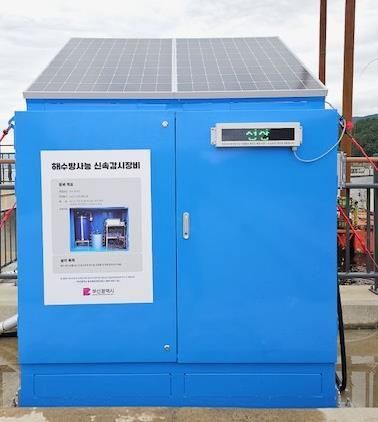 Radioactivity Monitoring and Analysis Equipment for Seawater and Marine Products, Fixed Seawater Radioactivity Rapid Unmanned Monitoring Network (Cheonseonghang Breakwater)
Following the six locations established by 2022, the recent additions bring the total number of fixed unmanned monitoring networks to seven.
The six established locations include Munjung Breakwater, National Institute of Fisheries Science, Suyeong Bay Yacht Stadium, Namcheon Port, International Passenger Terminal, and Fisheries Resources Research Institute.
The ship-mounted rapid unmanned seawater radiation monitoring network has been installed and operated on the city’s fishery guidance vessel since December. Notably, this ship-mounted system is the first in the nation to use a high-resolution scintillation detector (CeBr), which is expected to enable more precise and rapid radiation inspections.
With the establishment of the ship-mounted rapid unmanned seawater radiation monitoring network, the city has uniquely created a triple monitoring system nationwide by combining fixed rapid unmanned seawater radiation monitoring networks and precise seawater analysis by the Health and Environment Research Institute, establishing an early warning system for seawater.
To monitor seawater in Japanese live fish trucks, one mobile rapid seawater radiation analysis device was installed at the Busan International Seafood Distribution Facility Management Office, and another mobile rapid seawater radiation analysis device has been installed and operated since October at the Namhang Management Office to quickly analyze coastal seawater inside Jagalchi Market.
Seawater radiation inspections inside Japanese live fish trucks are conducted at the (entry stage) Nuclear Safety and Security Commission, (unloading stage) Busan International Seafood Distribution Facility Management Office, and (departure stage) Busan Port Authority.
Additionally, the city has installed one alpha, one beta, and one gamma nuclide analyzer each to strengthen the safety inspection of seafood.
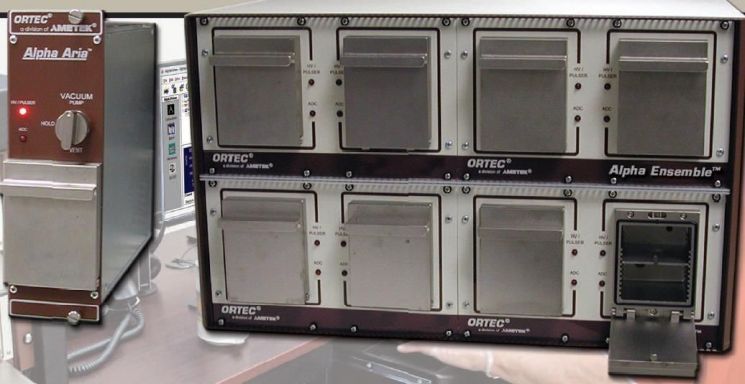
The Busan Health and Environment Research Institute added one gamma nuclide analyzer in June to enhance seafood radiation inspections.
Furthermore, the institute installed a beta nuclide analyzer (liquid scintillation counter) in November this year and is scheduled to receive and operate an alpha nuclide analyzer in December.
Starting next year, the city will be able to conduct regular analyses not only for gamma nuclides but also for additional nuclides such as alpha and beta (plutonium and strontium), contributing promptly to the safety of citizens' food.
The city plans to further expand its seawater and seafood safety measures next year by adding one seawater rapid unmanned radiation monitoring network (Nuclear Safety Division) and one gamma nuclide analyzer (Fisheries Resources Research Institute).
Mayor Park Hyung-jun stated, “With citizen safety as the highest priority, we have strengthened the early warning system for seawater radiation and the seafood safety inspection system by adding radiation analysis equipment. All radiation inspection results so far have been safe,” and added, “Our city will continue to enhance the radiation monitoring and analysis system next year to ensure the safety of Busan’s seawater and seafood.”
© The Asia Business Daily(www.asiae.co.kr). All rights reserved.
![Clutching a Stolen Dior Bag, Saying "I Hate Being Poor but Real"... The Grotesque Con of a "Human Knockoff" [Slate]](https://cwcontent.asiae.co.kr/asiaresize/183/2026021902243444107_1771435474.jpg)
















