October Apartment Transactions Hit 9-Month Low
Out-of-Town Buyers' Share at Lowest This Year Amid Weakened Demand
Out-of-town buyers purchasing apartments in Seoul have abruptly stopped their investment trips to the capital. This appears to be due to a contraction in investment demand as Seoul housing prices, which had been recovering, began to show signs of decline again amid loan regulations and high interest rates.
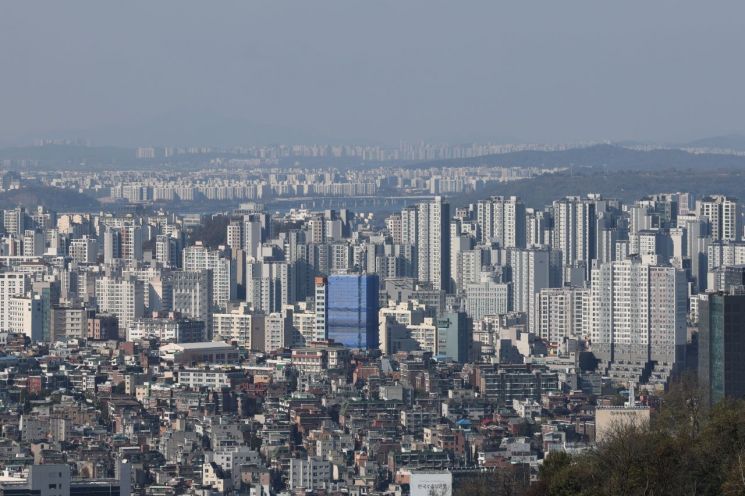
According to the Seoul Real Estate Information Plaza on the 7th, the number of apartment transactions in Seoul in October (based on contract date) was 2,312, marking the lowest level in nine months since January (1,412 transactions). Earlier this year, Seoul apartment transactions gradually increased, surpassing 3,000 transactions from April onward, driven by government deregulation and the introduction of special home loan programs such as the Special Bogeumjari Loan, which helped clear quick-sale properties. However, as housing prices rose again with some complexes recording new high-price transactions and the Special Bogeumjari Loan, a key factor driving prices, ended, October's transaction volume sharply dropped by more than 1,000 compared to the previous month.
Not only overall transactions but also investment purchases by residents from other regions buying Seoul apartments have decreased. According to the Korea Real Estate Board, in October, the number of Seoul apartment purchases by out-of-region residents was 635, accounting for 21.3% of total transactions (2,983). This is the lowest figure in a year since October last year (18.7%).
Among Seoul’s 25 districts, Gwanak-gu saw the largest decline in the proportion of purchases by out-of-town buyers, dropping from 26.7% in September to 18.3% in October. The proportion of out-of-town buyers also decreased in the three Gangnam districts: Gangnam-gu (23.7% → 17.9%), Songpa-gu (30.7% → 27.4%), and Seocho-gu (20.6% → 20.4%).
As the upward momentum of Seoul housing prices slowed, demand for investment purposes declined, and buying activity weakened due to loan regulations and high interest rates. According to the Korea Real Estate Board, as of the fourth week of November (27th), the Seoul apartment sales-to-supply index was 85.3, down 1.1 points from the previous week (86.4). An index below 100 indicates that selling pressure exceeds buying pressure. Seoul apartment prices halted their 28-week rise, and Gangnam-gu, which had shifted to a decline after 31 weeks, saw the drop deepen.
Potential buyers living in provinces, where the transaction drought is even more severe than in Seoul, are sometimes unable to purchase because they cannot sell their existing homes. Mr. Lee (43), living in Myeongji-dong, Gangseo-gu, Busan, recently tried to sell one property and buy a home in Seoul but gave up on his investment plan in Seoul because his property did not sell. He said, "I listed it several million won below market price, but there hasn't even been an inquiry," adding, "I'm worried it will become even harder to sell next year when more than 10,000 households are supplied nearby."
Seo Jin-hyung, co-representative of the Fair Housing Forum and professor at Gyeongin Women's University, said, "If there were strong expectations that Seoul real estate prices would rise, buyers would chase prices, but currently, due to high interest rates and external economic variables, the potential for price increases is judged to be limited, so the influx of out-of-town buyers is decreasing."
© The Asia Business Daily(www.asiae.co.kr). All rights reserved.
![Clutching a Stolen Dior Bag, Saying "I Hate Being Poor but Real"... The Grotesque Con of a "Human Knockoff" [Slate]](https://cwcontent.asiae.co.kr/asiaresize/183/2026021902243444107_1771435474.jpg)
















