Strong Backlash Cancels Paju-si Burial Plan
Landowners "Won't Sell Land, Media Coverage Is a Burden"
Movie 'Seoul's Spring' Sparks Increased Historical Interest Among 2030 Generation
The plan of the bereaved family to bury the remains of Jeon Du-hwan, who has been kept at his home in Yeonhui-dong, Seoul for two years due to the lack of a burial site, in Paju, Gyeonggi Province according to his will has fallen through due to opposition from the landowner.
On the 6th, the owner of the private land in Jangsa-ri, Munsan-eup, Paju-si, Gyeonggi-do, where Jeon Du-hwan was expected to be buried, told Yonhap News in an interview, "The provisional contract period has already ended, but the main contract was not concluded," adding, "I have withdrawn the listing and have no intention of selling it in the future."
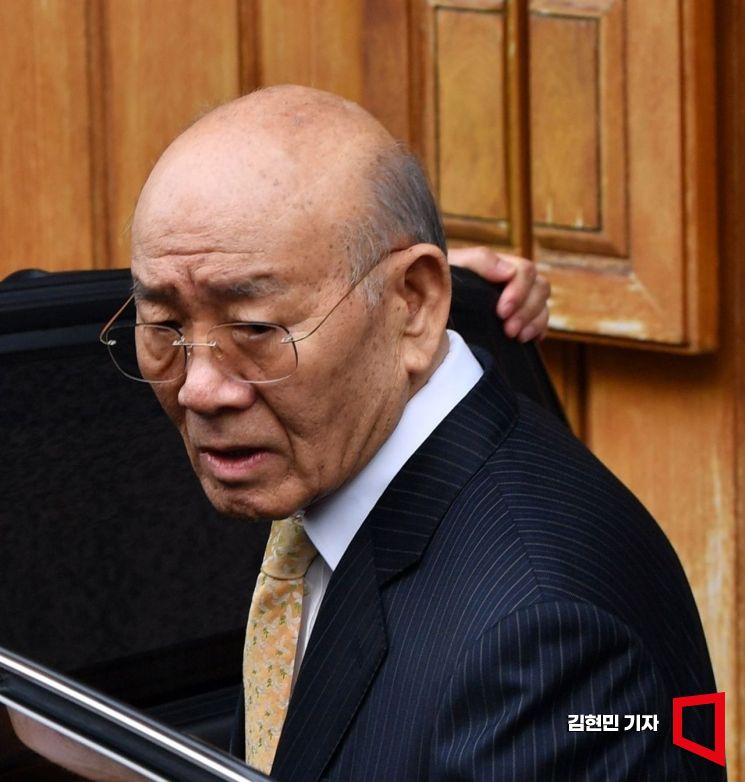
According to Yonhap News, the landowner signed a provisional contract for the sale of the land with acquaintances in March last year. He said, "They came saying they wanted to develop our mountain (66,000㎡) into a camping site and a nursing home, so we signed a provisional contract," and added, "We had agreed to complete the related permits and sign the main contract by October this year, but it did not materialize."
In order to build a camping site and nursing home on the land, the military authorities must give their consent, but it seems the buyer's side failed to complete this procedure, preventing the formal contract from being finalized.
In mid-last month, news spread that Jeon Du-hwan would be buried in Paju-si, Gyeonggi Province, prompting civic groups, politicians, and even the mayor of Paju to strongly oppose the plan. The landowner said, "I felt burdened after media reports emerged that the remains of former President Jeon Du-hwan would be interred on our land."
Jeon Du-hwan, who died in November 2021, has been temporarily interred at his home in Yeonhui-dong, Seodaemun-gu, Seoul for over two years, but it seems unlikely he will leave the residence anytime soon. In his memoirs, Jeon expressed his will to "remain as bare bones on a forward hill overlooking the northern land to witness the day of reunification," and accordingly, his family has been pursuing a plan to bury his remains near the Demilitarized Zone.
However, after the burial plan in Jangsan-ri, Munsan-eup, Paju became known, civic groups based in the Paju area held press conferences opposing it, sparking strong backlash. Last month, 11 civic groups including the Paju branch of Koreans United declared, "There is no place for Jeon Du-hwan, a symbol of coup d'?tat, Gwangju massacre, military dictatorship, and oppression of the people, to be buried. Furthermore, there is no place anywhere in Paju where the massacre perpetrator Jeon Du-hwan can rest peacefully," expressing their opposition.
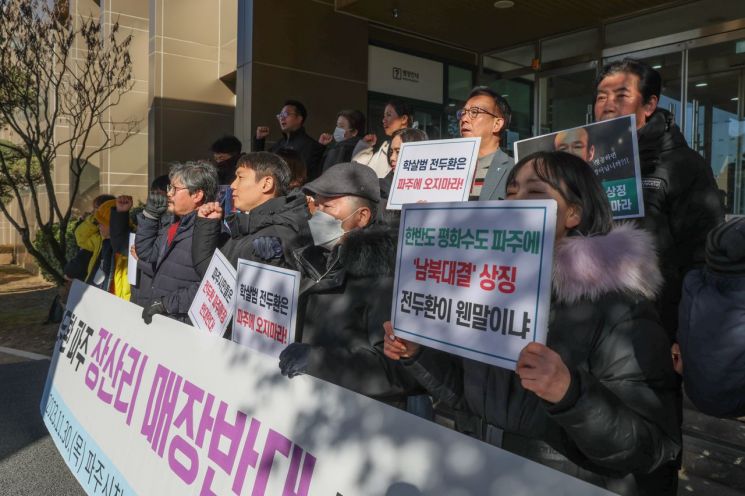 On the 30th of last month, in front of Paju City Hall in Adong-dong, Paju-si, Gyeonggi-do, 11 civic groups including the Gyorehana Paju Branch, the Minjokmunje Research Institute Goyang Paju Branch, and the DMZ Ecological Peace School held a press conference and shouted slogans opposing the burial of Jeon Du-hwan in Jangsan-ri, Paju.
 [Photo by Yonhap News]
Politicians also took a stand. Park Jung, a member of the Democratic Party representing Paju Eul district, condemned in a press release, "What right does the tyrant who drenched Gwangju in blood and never apologized until his death have to come to Paju?" He added, "Jeon Du-hwan claimed his entire fortune was 290,000 won while playing golf, and never paid the 102 billion won in fines and 3 billion won in unpaid taxes. The land for this burial site alone is worth over 500 million won; repaying the debt to the state should be the minimum courtesy."
Kim Kyung-il, mayor of Paju from the same party, raised his voice on his social media, saying, "There is a movement to bury the remains of Jeon Du-hwan, who thoroughly trampled on the spring of democracy in Korea and massacred the people, in Paju," and declared, "I strongly oppose the burial of Jeon Du-hwan's remains in Paju."
The film also ignited public interest like wildfire. The movie "Spring in Seoul" (director Kim Seong-su), inspired by the December 12 military coup, was released on the 22nd of last month and has attracted over 5 million viewers, gaining attention.
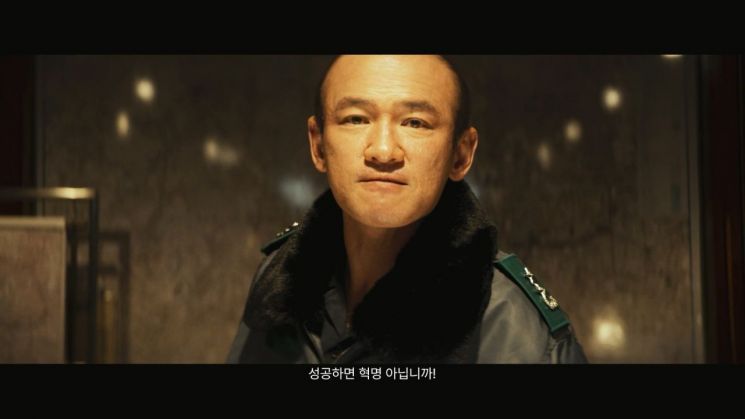
The film depicts the tense nine hours on December 12, 1979, in Seoul, the capital, during the rebellion by the new military forces. Actor Hwang Jung-min plays a character inspired by Jeon Du-hwan, and Jung Woo-sung portrays Lee Tae-shin, the commander of the capital security forces.
Viewers in their 20s and 30s who watched the film have expressed their anger one after another. This reflects a growing interest in history among young audiences. Online, videos from that time are going viral again as people search for records about Jeon Du-hwan.
© The Asia Business Daily(www.asiae.co.kr). All rights reserved.
![Clutching a Stolen Dior Bag, Saying "I Hate Being Poor but Real"... The Grotesque Con of a "Human Knockoff" [Slate]](https://cwcontent.asiae.co.kr/asiaresize/183/2026021902243444107_1771435474.jpg)


















