Germany Records Heaviest December Snowfall in History
This summer, the European continent, which was boiling with heatwaves, is now setting new records with cold waves this winter.
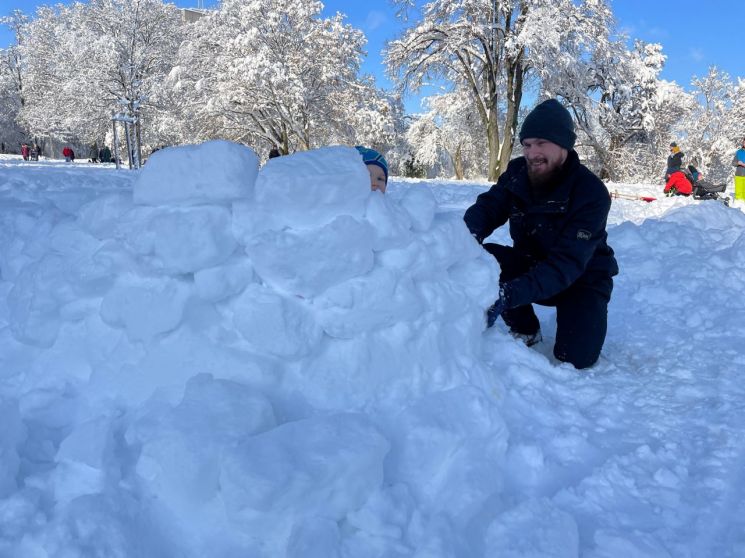
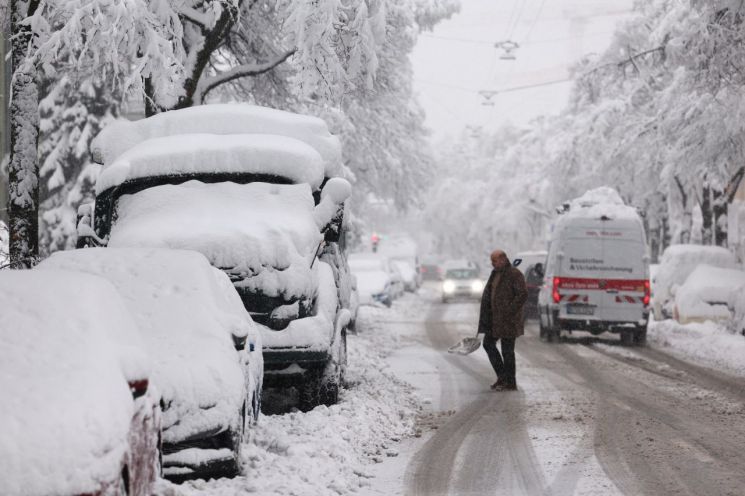
According to the Washington Post (WP) and others on the 4th (local time), a record snowstorm hit Munich, Germany over the past weekend. On the 2nd, Munich recorded 44 cm of snowfall, the highest ever for December. It is also the largest amount for an entire winter since March 2006.
Due to this heavy snowfall, about 760 flights were canceled at Munich Airport on the 2nd. Not only airplanes but also buses and trams were paralyzed, and trees fell under the weight of the snow, damaging power lines and causing power outages, resulting in continuous damage.
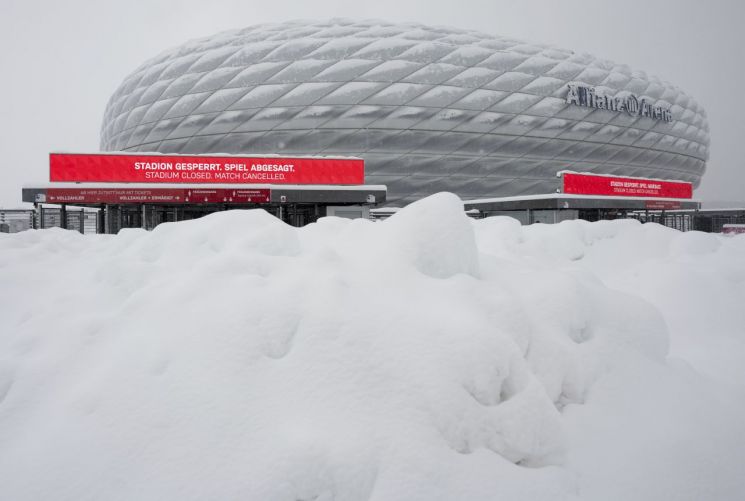
Munich’s home stadium, Allianz Arena, was closed due to safety concerns, leading to the cancellation of the Bundesliga soccer match between FC Bayern Munich and Union Berlin. As a result, Kim Min-jae (27, Bayern Munich), who had been under controversy for overexertion, was able to rest.
Swiss meteorological agencies also reported that the Alps region and others received more snow than the average for this time of year, with some locations approaching the highest annual snowfall on record.
Additionally, cold waves hit various parts of Russia, including Siberia. On the 4th, Siberia experienced an unusually early winter temperature drop to between minus 50 and 57 degrees Celsius.
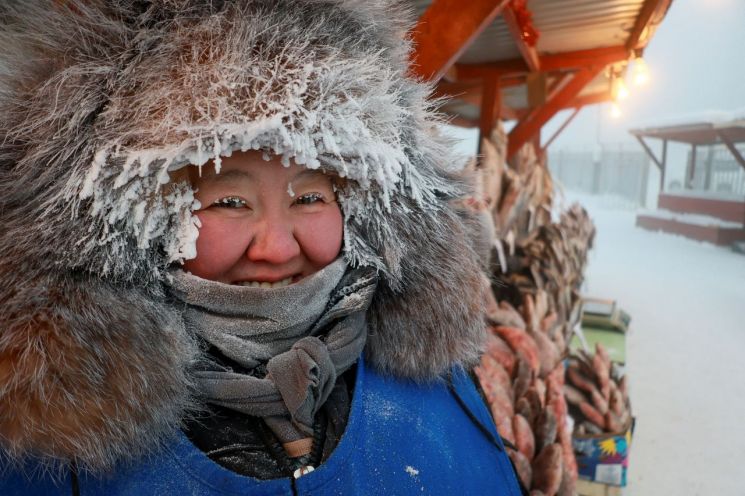 On the 5th (local time), a vendor is selling goods at an open-air market in Yakutsk, Russia. In some parts of northeastern Siberia, temperatures dropped below minus 50 degrees Celsius.
 [Photo by Reuters]
The reason for the cold wave sweeping across Europe is that cold air near the Arctic descended southward. As a result, the jet stream tends to be pushed from the UK toward southern and central Europe, and the weakening of the jet stream may also extend to Eastern Europe and Asia.
French meteorologist Nahel Belgherze said on X (formerly Twitter), “Europe seems to be facing the snowiest meteorological winter since 2010.”
It was an unprecedented heatwave in summer...
Since this summer’s heatwave was record-breaking, the perceived temperature psychologically feels even lower.
Europe experienced the worst heatwave this summer, causing Swiss glaciers to disappear by 10% over two years. Some predictions suggest that at this rate, glaciers may no longer be visible by 2100.
In some southern regions, temperatures rose to 48 degrees Celsius, causing sudden power outages due to increased electricity usage.
 On July 18th (local time), a man in Rome's Piazza del Popolo, Italy, is dipping his head into the fountain water to cool off.
 [Photo by AFP Yonhap News]
Not only heatwaves but also wildfire disasters compounded the situation. In August, Greece experienced the largest wildfire ever recorded by the European Union (EU), and shortly after, a year’s worth of rain fell in just one day, resulting in the worst flood in history.
In Emilia-Romagna, northern Italy, six months’ worth of rain poured down in just a day and a half, causing more than 20 levees to collapse, killing 13 people and displacing tens of thousands. Forty-one cities and towns were submerged in water in an instant.
The heatwave that struck Europe in the summer of 2022 is estimated to have caused over 60,000 deaths.
© The Asia Business Daily(www.asiae.co.kr). All rights reserved.
![Clutching a Stolen Dior Bag, Saying "I Hate Being Poor but Real"... The Grotesque Con of a "Human Knockoff" [Slate]](https://cwcontent.asiae.co.kr/asiaresize/183/2026021902243444107_1771435474.jpg)

















