The Seoul Metropolitan Government is seeking a new operator to run the Uisinseol Light Rail Transit (LRT) line, which is currently operating at a deficit. On the 6th, Seoul announced that it will contract a new operator for the Uisinseol Line starting July next year, with the contract running until 2047. The new operator will be subject to a Minimum Cost Compensation (MCC) system, under which Seoul will cover the operating losses. In this case, an additional annual budget of 37.1 billion KRW from Seoul will be required. Currently, the line operates under a Build-Transfer-Operate (BTO) model, where the private operator bears all losses.
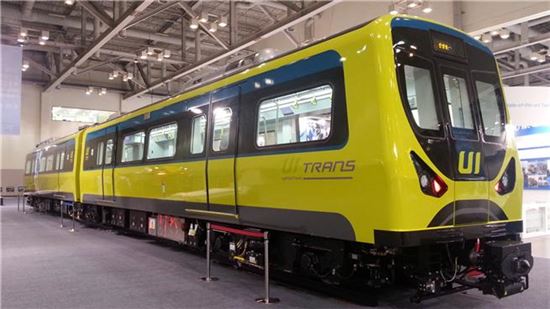 Uisinseon Light Rail. Asia Economy DB
Opened in September 2017, the Uisinseol Line is Seoul’s first light rail transit line connecting the city center with the northern districts. Although cumulative ridership has surpassed 150 million passengers, the line is running at a deficit due to lower-than-expected ridership and a high rate of fare evasion. The average daily ridership is 67,000, which is only 51% of the initially projected 130,000 passengers. The fare evasion rate stands at 33.2%, nearly three times the expected 11.6%.
The current operator, Uisinseol Light Rail Transit Operation Co., Ltd., had a cumulative deficit of 205.5 billion KRW as of 2021, resulting in a capital erosion state. Under the BTO model, the company is responsible for all costs including operating expenses, financial loans, and replacement investments, but it currently cannot even cover operating expenses. In January 2021, Seoul provided approximately 610 billion KRW in support for financial loans and replacement investments in exchange for taking over fare-setting authority.
As the current operator decided to withdraw, Seoul considered handing over the operation of the Uisinseol Line to Seoul Metro, the public enterprise that operates Seoul’s subway system, but ultimately judged that entrusting a new private operator would be better. Considering the difficulty of finding a new operator under the ongoing deficit accumulation, Seoul decided to add the MCC system to the existing BTO model. MCC is a system where Seoul compensates the shortfall if the private operator’s operating revenue falls short of operating expenses and other costs.
Changing the business model inevitably increases Seoul’s financial burden. Seoul expects that switching the Uisinseol Line to a BTO-MCC model will add an annual fiscal burden of 37.1 billion KRW. Consequently, Seoul will have to pay a total of 863 billion KRW to the private operator from July next year until September 2047. Seoul will also bear the 328.8 billion KRW loan taken by the private operator for construction costs.
The Seoul Metropolitan Council has also raised concerns about this issue. Im Gyu-ho, a Seoul city council member from the Democratic Party, pointed out last month that "more than 800 billion KRW in taxes have been subsidized to the private Line 9 subway," and warned that "if the Uisinseol Light Rail Transit undergoes business restructuring using the same MCC method as Line 9, a similar situation will occur."
Seoul stated, "The Uisinseol Line’s operating expenses can be deducted through annual management performance evaluations," and added, "We will continuously monitor the financial status of the newly selected Uisinseol Line operator and reassess appropriate operating expenses every five years."
© The Asia Business Daily(www.asiae.co.kr). All rights reserved.
![Clutching a Stolen Dior Bag, Saying "I Hate Being Poor but Real"... The Grotesque Con of a "Human Knockoff" [Slate]](https://cwcontent.asiae.co.kr/asiaresize/183/2026021902243444107_1771435474.jpg)















