As part of the Seongdong-type Residential Environment Improvement Project, the 'Hope Banollim Project' is being promoted for a total of 43 households including basic livelihood security recipients... Replacing squat toilets with western-style toilets to remove odors and mold, and providing customized support such as installing hot water facilities and washbasins

Seongdong-gu, Seoul (Mayor Jung Won-oh) is undertaking a bathroom improvement project targeting a total of 43 basic livelihood security recipients living in semi-basement units.
This project is part of the Seongdong-type housing environment improvement initiative, which Seongdong-gu is focusing on this year in collaboration with the nonprofit organization Habitat, following a comprehensive survey of semi-basement housing conducted last year.
The district has installed flood prevention facilities such as flood barriers in semi-basement homes and is now promoting the "Hope Banolim Project" for vulnerable housing groups. The Hope Banolim Project, short for "Raising the living standards of semi-basement housing," reflects Seongdong-gu's commitment to addressing the most essential needs of vulnerable residents.
According to the 2021 Seoul Housing Survey conducted among 15,000 households in Seoul, essential facilities such as bathrooms and bathing facilities were lacking more frequently in lower-income households. Additionally, the need for housing repairs was higher among lower-income groups, with bathroom and bathing facility repairs accounting for 44.4% of the total repair needs, the highest proportion.
Bathrooms are essential spaces in daily life, as the Ministry of Land, Infrastructure and Transport's Minimum Housing Standards (Announcement No. 2011-490), used as a benchmark for minimum housing levels, classify exclusive flush toilets and bathing facilities as essential equipment.
Seongdong-gu will support a total of 43 vulnerable households, including basic livelihood security recipients living in semi-basement units, who have been unable to improve their bathroom environments due to financial burdens. Responsible officials will visit each household, prioritizing those using traditional toilets, considering the degree of vulnerability and urgency.
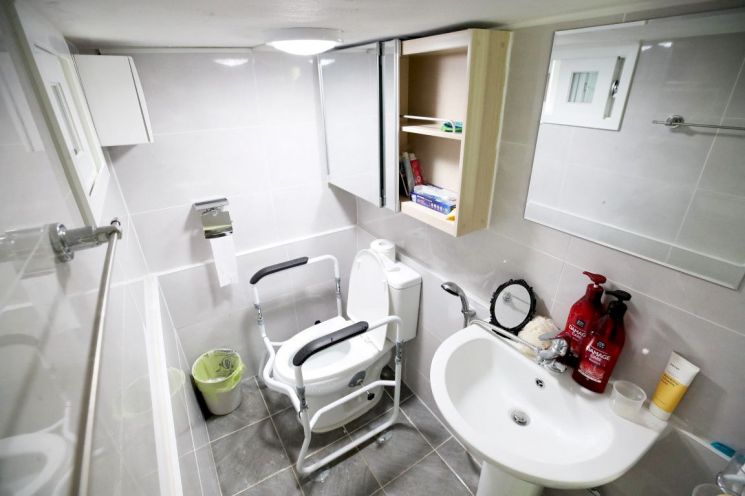
The district will repair old bathrooms and install bathing facilities across three areas: hygiene, safety, and air quality. In the hygiene sector, old toilets or squat toilets will be replaced, and sinks and hot water facilities will be installed. Bathroom odors and mold will also be eliminated. For safety, safety handrails will be installed on toilets to prevent falls, and electrical facilities and anti-slip tiles will be applied.
In terms of air quality, support will be provided for the installation of ventilation fans or windows. Additionally, based on the residents' conditions, customized support such as threshold adjustments and wall handrails will be provided when elderly or disabled residents live in the household.
The construction will be carried out sequentially by Habitat. After bathroom improvements, the district plans to sign a coexistence agreement with landlords to prevent unfavorable treatment such as rent increases, allowing tenants to reside under the same rental conditions for five years.
© The Asia Business Daily(www.asiae.co.kr). All rights reserved.
![Clutching a Stolen Dior Bag, Saying "I Hate Being Poor but Real"... The Grotesque Con of a "Human Knockoff" [Slate]](https://cwcontent.asiae.co.kr/asiaresize/183/2026021902243444107_1771435474.jpg)
















