Concerns Rise Over Sudden Hold on China Customs Clearance
Foreign Ministry "Communicated to China... Negotiations Underway"
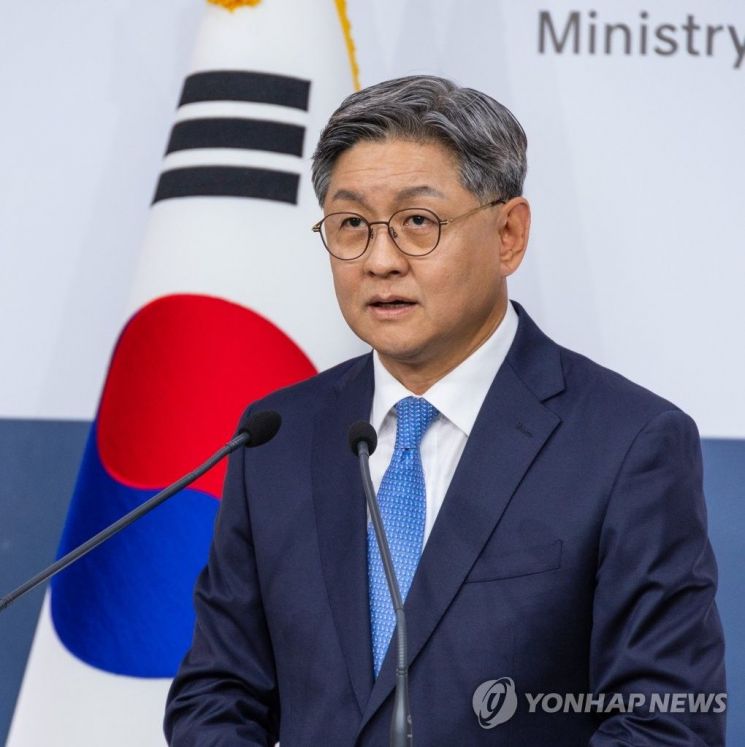
Regarding China's recent suspension of customs clearance for urea exports to South Korea, the Ministry of Foreign Affairs stated that it is actively requesting China to proceed with customs clearance without any disruptions.
At a regular briefing on the 5th, Senior Spokesperson Lim said, "On December 1, we raised concerns related to urea imports with relevant Chinese authorities including the National Development and Reform Commission, the General Administration of Customs, the Ministry of Commerce, and the Ministry of Foreign Affairs." When asked by reporters about the response from China, Spokesperson Lim said, "We will not disclose detailed responses from the Chinese side," but added, "However, we are making efforts to resolve difficulties faced by Chinese authorities and our companies."
It is known that Chinese authorities have not officially expressed their position on the urea water issue to South Korean diplomatic authorities. Inside and outside the government, it is also viewed that seasonal factors such as increased fertilizer production demand in winter and the resulting rise in urea consumption are at play. Spokesperson Lim added, "We will continue to collaborate with related domestic ministries and agencies and maintain consultations with China to resolve difficulties faced by our companies and stabilize the supply chain."
According to industry sources, on the 30th of last month, China suspended the export of industrial urea by a local Chinese company intended for a major South Korean corporation. Chinese economic media Xinhua Finance reported, "China is preparing fertilizer reserves for food security and spring cultivation next year, so it will be very difficult for urea water exports to resume, and domestic traders are unlikely to choose to export."
According to statistics from the Chinese General Administration of Customs, South Korea imported 91.8% of industrial urea from China as of October this year. Urea water is made from urea as a raw material. It is a product that decomposes nitrogen oxides (NOx) emitted by diesel vehicles into nitrogen and water. It is used in large factories and power plants to prevent exhaust emissions and is an essential material across all industrial sectors including power generation and transportation. However, South Korea heavily depends on China for most of its urea imports.
The problem is that other raw materials besides urea also have a high proportion of Chinese origin. According to data received by Kim Hoe-jae, a member of the Democratic Party of Korea, from the Ministry of Trade, Industry and Energy titled '2023 First Half Import Amount Status of Items Dependent on Specific Countries,' 79.4% of rare earth metal imports, which are key to semiconductor production, came from China. The dependency on China for gallium and germanium, which China began restricting exports of since August, is as high as 87.6%.
© The Asia Business Daily(www.asiae.co.kr). All rights reserved.
![Clutching a Stolen Dior Bag, Saying "I Hate Being Poor but Real"... The Grotesque Con of a "Human Knockoff" [Slate]](https://cwcontent.asiae.co.kr/asiaresize/183/2026021902243444107_1771435474.jpg)















