Microsleep Method
Sleeping Over 11 Hours a Day
Tukkeun Penguin Reaches Slow-Wave Sleep in Just Seconds
The Ad?lie penguins living in Antarctica have been found to take microsleeps averaging 4 seconds per day to protect their chicks during the breeding season. They endure more than 11 hours daily through a total of 11 hours of 'microsleep' (microsleep).
Eleven hours equals 39,600 seconds, which means the penguins nap about 10,000 times a day.
Dr. Won-Young Lee from the Korea Polar Research Institute (KOPRI) and Dr. Paul-Antoine Librelle from the Lyon Neuroscience Research Center in France published the results of their study on the sleep patterns of Ad?lie penguins during the breeding season at the Antarctic King Sejong Station in the scientific journal Science.
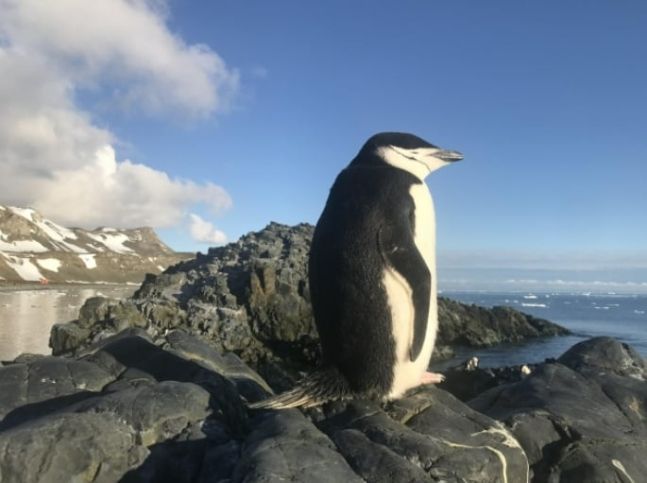
The research team attached devices containing EEG (electroencephalogram) sensors, accelerometers, GPS, and dive recorders to 14 Ad?lie penguins on King George Island in Antarctica, then retrieved and analyzed the devices after two weeks.
Ad?lie penguins engage in microsleep to protect their chicks. All animals, including humans, have reduced ability to detect and respond to their surroundings while sleeping.
During the breeding season, when their partners go hunting for several days, Ad?lie penguins remain alone at the nest to guard their eggs and chicks from gulls and other predators. Because they only nap for an average of 4 seconds at a time, they can stay alert as if awake to watch for predators.
The Ad?lie penguin is named for the thin black facial feathers that resemble a chinstrap. They typically lay eggs in pebble nests in November. Like other penguins, mated pairs share parenting duties. One parent cares for the eggs and chicks while the other goes fishing to feed the family.
Dr. Lee, who conducted the study, told Science, “The penguins’ habitat is very crowded and noisy. Also, Antarctic skuas, seabirds, can harm penguin eggs and chicks at any time.”
In the case of Ad?lie penguins, the accumulation of 4-second microsleeps allowed them to gain the restorative benefits of long-duration sleep.
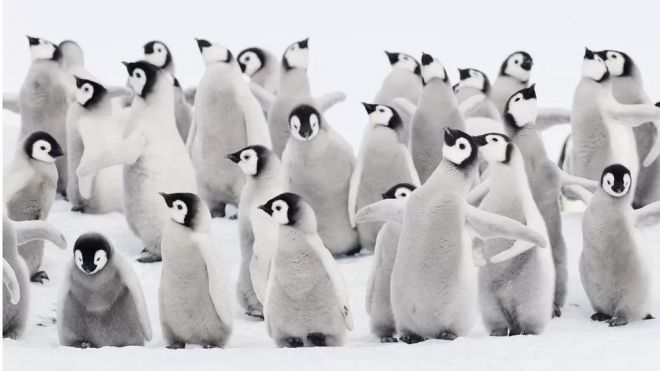
Dr. Lee also said, “Humans take a long time to enter slow-wave sleep, which is deep sleep, but Ad?lie penguins reach slow-wave sleep instantly even during just a few seconds of microsleep. Because Ad?lie penguins breed in colonies in breeding grounds with high predation risk, their sleep appears to have evolved to be fragmented so they can remain constantly vigilant.”
Meanwhile, Emperor penguins, which also inhabit areas around Antarctica, are famous for their paternal care. Unlike other penguins, they incubate their eggs on ice rather than on land.
Penguins arrive at breeding grounds from late March to April and lay eggs in May to June. The eggs hatch in August, and the males incubate the eggs in a pouch on their feet for about 65 days until the chicks hatch. During this time, Emperor penguin males do not eat anything except snow while protecting the eggs.
© The Asia Business Daily(www.asiae.co.kr). All rights reserved.
![Clutching a Stolen Dior Bag, Saying "I Hate Being Poor but Real"... The Grotesque Con of a "Human Knockoff" [Slate]](https://cwcontent.asiae.co.kr/asiaresize/183/2026021902243444107_1771435474.jpg)

















