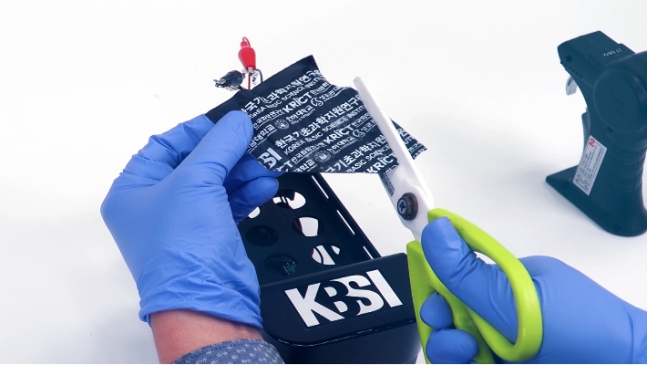
A project worth approximately 110 billion KRW for the development of next-generation battery technologies, including all-solid-state batteries known as the "battery of dreams," has passed the preliminary feasibility study (PFS).
On the 29th, the Ministry of Trade, Industry and Energy announced at the National Research and Development Project Evaluation Committee meeting that the "High-Performance Next-Generation Secondary Battery Technology Development Project for Eco-Friendly Mobility," with a total budget of 117.23 billion KRW (82.06 billion KRW in government funding), has passed the PFS.
With the PFS approval, from next year until 2028, development will proceed on sulfide-based all-solid-state secondary batteries for electric vehicles, lithium-metal secondary batteries for electric vehicles, and ultra-lightweight lithium-sulfur secondary batteries for urban air mobility.
All-solid-state batteries use solid electrolytes instead of liquid ones, drastically reducing the risk of fire, which is why they are called the battery of dreams. Lithium-metal batteries use lithium metal as the anode material instead of graphite, improving energy density and lifespan.
Lithium-sulfur batteries use sulfur as the cathode material, making them lighter than conventional batteries. They are expected to be primarily utilized in urban air mobility and other applications where reducing weight is critical.
Currently, as commercial batteries such as ternary batteries approach their performance limits and the technology gap between competing countries narrows, individual companies face difficulties developing all various next-generation technologies on their own. Accordingly, the Ministry of Trade, Industry and Energy explained that it is a timely moment for technology development through large-scale, government-led projects.
Lee Seung-ryeol, Director of the Industrial Policy Office at the Ministry of Trade, Industry and Energy, stated, "This is the first PFS project in the secondary battery field in 13 years," adding, "Due to high corporate interest in next-generation batteries, participation is expected not only from cell manufacturers but also from companies involved in materials, components, and equipment."
© The Asia Business Daily(www.asiae.co.kr). All rights reserved.
![Clutching a Stolen Dior Bag, Saying "I Hate Being Poor but Real"... The Grotesque Con of a "Human Knockoff" [Slate]](https://cwcontent.asiae.co.kr/asiaresize/183/2026021902243444107_1771435474.jpg)















