A bill to ease the Reconstruction Excess Profit Recoupment System (Jaechohwan) has passed the Land, Infrastructure and Transport Committee's Land Bill Subcommittee in the National Assembly. The bill aims to relax the exemption criteria for the reconstruction excess profit burden imposed per union member from the existing KRW 30 million or less to KRW 80 million or less, and to raise the application range of the burden rate from the original KRW 20 million to KRW 50 million.
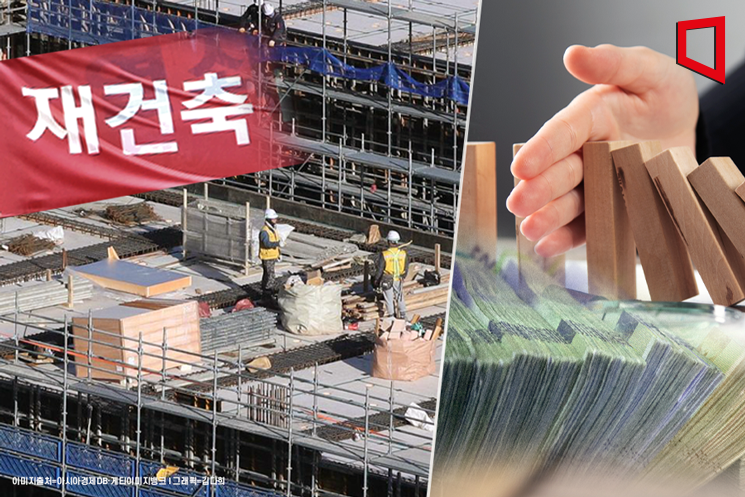
On the 29th, the Land Bill Subcommittee of the Land, Infrastructure and Transport Committee reached a bipartisan agreement on the amendment to the "Act on the Recoupment of Reconstruction Excess Profits." After discussions since April 26, the ruling and opposition parties prepared alternatives such as easing the imposition criteria and introducing long-term holding reductions at the fifth meeting on that day.
Last September, the government announced a real estate measure raising the exemption criteria for the reconstruction excess profit burden to KRW 100 million and expanding the application range of the burden rate to KRW 70 million. Based on this, in November of the same year, Kim Jeong-jae, a member of the People Power Party, introduced the amendment as the representative bill.
Jaechohwan was introduced in 2006 during the Roh Moo-hyun administration but has been deferred through grace periods due to reasons such as the real estate market slump and has continued until now. While both ruling and opposition parties agreed on the need to revise the imposition criteria, they failed to narrow differences over specific standards. As a result, the amendment bill remained pending in the National Assembly for over a year.
On this day, the subcommittee agreed on a plan to exempt the burden for reconstruction excess profits up to KRW 80 million. The unit for the burden rate application range was raised to KRW 50 million, and the burden rates were set as follows: 10% for excess profits between KRW 80 million and KRW 130 million, 20% for KRW 130 million to KRW 180 million, 30% for KRW 180 million to KRW 230 million, 40% for KRW 230 million to KRW 280 million, and 50% for amounts exceeding KRW 280 million.
The starting point for calculating excess profits, which serves as the basis for determining the burden, was also adjusted from the current approval date of the temporary organization, the Promotion Committee, to the date of approval for the establishment of the union, which is when the project entity (the burden payer) is determined.
Additionally, for homeowners who have held reconstruction apartments for more than 20 years, up to 70% of the burden will be reduced. Elderly single-home owners (aged 60 or older) can defer payment until the disposal of the relevant house through inheritance, donation, or transfer, provided they offer collateral.
Furthermore, when rental housing, etc., is supplied to the state or local governments, the sales costs of the relevant housing will be excluded from the excess profits and thus not reflected in the burden.
The Ministry of Land, Infrastructure and Transport expects that although the easing of the imposition criteria was reduced compared to the original government proposal, the long-term holding reduction benefits have been significantly expanded, greatly reducing the burden on actual single-homeowners who have held reconstruction apartments for a long time.
The amendment will be enforced three months after promulgation once approved by the National Assembly. The Ministry plans to promptly complete the revision of subordinate statutes as well.
© The Asia Business Daily(www.asiae.co.kr). All rights reserved.
![Clutching a Stolen Dior Bag, Saying "I Hate Being Poor but Real"... The Grotesque Con of a "Human Knockoff" [Slate]](https://cwcontent.asiae.co.kr/asiaresize/183/2026021902243444107_1771435474.jpg)
















