Hundreds of Billions Won Tax Lawsuit Nearing 20 Years Without Conclusion
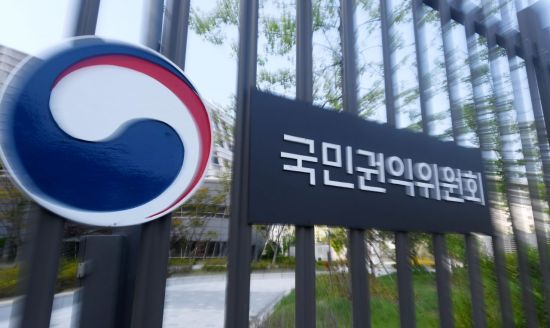
The conflicting rulings between the Constitutional Court and the Supreme Court have left the conclusion of a tax lawsuit worth hundreds of billions of won unresolved for nearly 20 years. Critics point out that only the corporate parties involved in the lawsuit suffer damages due to the clash between the two institutions. While the Constitutional Court and the Supreme Court hold completely opposite positions and the National Tax Service remains neutral, the key to resolving the issue lies with the Anti-Corruption and Civil Rights Commission. The Commission can issue recommendations citing reasons such as ‘protection of rights.’
Companies such as KSS Shipping and GS Caltex were subjected to corporate tax and other tax assessments by the competent tax office in 2004. They had received tax reduction benefits on the premise of going public, but since they failed to list their shares within the deadline, they were required to pay the taxes they had been exempted from. The corporate tax imposed on KSS Shipping amounted to about 14 billion won, and the defense tax exceeded 1.4 billion won.
KSS Shipping filed a lawsuit arguing that “since the Tax Reduction Regulation Act was fully revised in 1994 and no separate legislative provisions were made in the supplementary provisions, there is no basis for imposing the tax.”
The Supreme Court concluded that even though the law was amended, the tax year for KSS Shipping should be governed by the previous law, which included the supplementary provisions. The Constitutional Court directly overturned the Supreme Court’s judgment, issuing a limited unconstitutionality ruling, stating that “interpreting an expired provision as valid violates the constitutional principles of separation of powers and the principle of taxation by law.”
Following the Constitutional Court’s decision, KSS Shipping requested a retrial in 2013, but the Supreme Court dismissed the retrial request. KSS Shipping then filed a constitutional complaint, and in 2022, nine years later, the Constitutional Court annulled the Supreme Court’s ruling that had dismissed the retrial request. The reason was that the court’s refusal to accept the retrial request was unconstitutional. Although the lawsuit has lasted 19 years, no resolution has been reached, and the case has returned to square one.
So Sun-moo (72, 10th class), senior counsel at the law firm Gaon, who has been handling KSS Shipping’s case, recently submitted a grievance petition to the Anti-Corruption and Civil Rights Commission. The Commission can review grievance cases and issue corrective recommendations to institutions. As of August last year, the implementation rate of system improvements following the Commission’s recommendations reached 76.2%, effectively giving them binding power. Considering the importance of the case, the Commission is carefully deliberating.
Woo Bin, Legal Newspaper Reporter
※This article is based on content supplied by Law Times.
© The Asia Business Daily(www.asiae.co.kr). All rights reserved.
![Clutching a Stolen Dior Bag, Saying "I Hate Being Poor but Real"... The Grotesque Con of a "Human Knockoff" [Slate]](https://cwcontent.asiae.co.kr/asiaresize/183/2026021902243444107_1771435474.jpg)















