Opening of 'Busan Seafood Platform' at Sinpyeong Jangrim Seafood Specialization Complex on the 27th at 2 PM
About 100 attendees including Lee Seong-gwon, Deputy Mayor for Economic Affairs, and local seafood industry officials
Establishment o
Busan City has completed the establishment of the 'Busan Seafood Platform' within the Sinpyeong-Jangnim General Industrial Complex's specialized seafood food cluster and will hold an opening ceremony at 2 p.m. on the 27th.
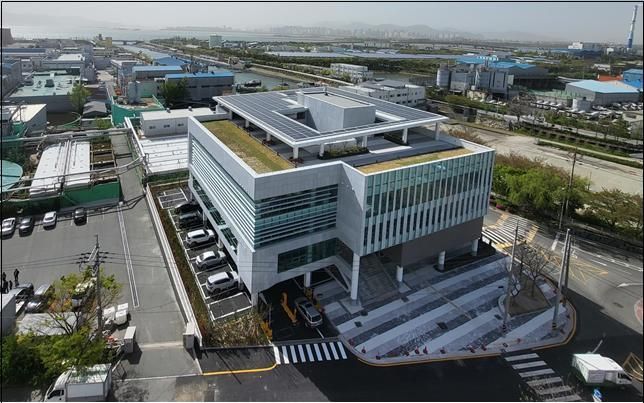
The opening ceremony will be attended by about 100 people, including Lee Seong-gwon, the Deputy Mayor for Economic Affairs, and local seafood food industry officials, and will proceed with ▲a unveiling ceremony ▲pre-event ▲main event ▲side event (Seafood Food Growth Forum).
Starting with the opening ceremony, the Busan Seafood Platform (BSP) will officially begin operations. It was established to comprehensively support Busan's seafood food companies and to lead the development and future of the blue food tech industry in the Busan area.
The platform has a total floor area of 5,260㎡, with one basement floor and four above-ground floors. A total of 19.4 billion KRW was invested in construction, equipment installation, and other costs.
Blue food refers to foods made from seafood farmed or caught in inland and coastal waters. It is defined as seafood that goes beyond the simple concept of food to include meanings such as sustainable food production, marine ecosystem conservation, and a source of healthy nutrition.
The Busan Seafood Platform houses the Marine Bio Blue Food Center of Busan Technopark, which was newly established last year as a dedicated organization. It will provide comprehensive support such as customized business consulting, research and development (R&D), and quality and ingredient testing for local seafood food companies.
Additionally, the Sinpyeong-Jangnim General Industrial Complex, completed in 1990, is an aging industrial complex. It used to have many leather companies, but after the decline of the leather industry, it was reorganized mainly with seafood food companies.
Considering the poor convenience facilities for resident companies, the platform also provides convenience facilities such as business meeting rooms, video conference rooms, product photography rooms, and rental offices to support them.
The Busan Seafood Platform will serve as a blue food tech hub to lead the global innovative growth of Busan's seafood food industry and plans to promote structural changes and strengthen competitiveness in the local seafood food sector.
Busan has about 400 seafood food companies, and the specialized seafood food cluster houses 59 seafood food companies, including 27 fish cake companies.
Busan's seafood food industry ranks first nationwide with an annual production volume of 389,000 tons (worth 1.7 trillion KRW), but most are small and medium-sized enterprises facing difficulties competing with large corporations concentrated in the metropolitan area. Recently, they have been complaining about rising management costs and difficulties securing raw materials and manpower.
The city plans to support blue food tech innovation by integrating advanced technology based on Busan's excellent seafood food infrastructure through the Busan Seafood Platform. To this end, high-priced research analysis equipment has been installed at the platform, and the 'Blue Food Innovation Ecosystem Creation Project' has been launched in cooperation with Pukyong National University as part of the industry-academia collaboration project. Additionally, an 'E-commerce Expert Course' is being operated to train marketing professionals.
In particular, to address the shortage of private radiation testing institutions, the Busan Seafood Platform plans to establish a radiation testing system for seafood processed products and serve as a radiation testing institution for seafood processed products.
The radiation testing system is scheduled to be established by March, and the Marine Bio Blue Food Center is also preparing for radiation testing institution certification.
Although radiation testing for seafood processed products must be requested from private testing institutions, Busan has only one private radiation testing center at Pusan National University, making it difficult to properly respond to the increasing demand for testing. This difficulty is expected to be resolved, supporting the safe and excellent production of seafood processed products by Busan seafood food companies.
Deputy Mayor for Economic Affairs Lee Seong-gwon said, “Busan has been a central city for seafood production, logistics, and trade, playing a significant role in the local economy. The platform opened today provides an opportunity for the seafood food industry to leap forward as a high-tech industry. Based on this experience, we will do our best to ensure the smooth operation of the Seafood Food Industry Cluster, which is scheduled to be completed in 2027.”
© The Asia Business Daily(www.asiae.co.kr). All rights reserved.
![Clutching a Stolen Dior Bag, Saying "I Hate Being Poor but Real"... The Grotesque Con of a "Human Knockoff" [Slate]](https://cwcontent.asiae.co.kr/asiaresize/183/2026021902243444107_1771435474.jpg)















