$16 Billion Fund Inflow Last Month
70% of Total Invested in Junk Bonds
This month, the U.S. corporate bond fund market saw the largest inflow of funds in three years. Analysts suggest that the corporate bond market is warming up as expectations grow that the Federal Reserve's (Fed) tightening cycle has ended due to economic slowdown factors such as easing inflation and a cooling labor market.
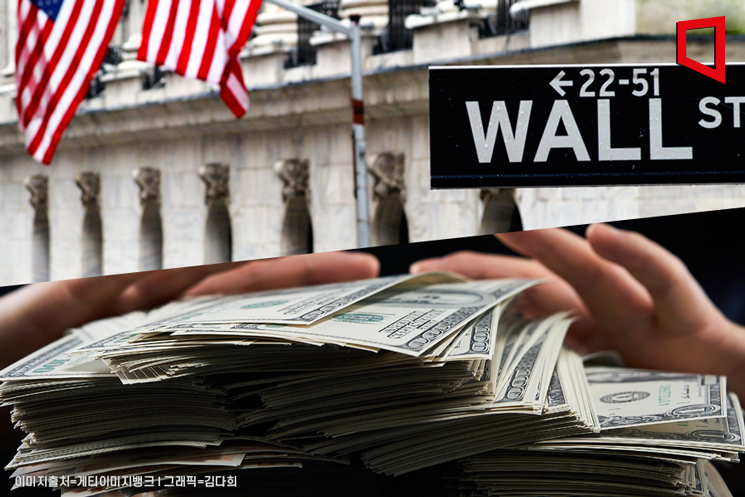
According to Emerging Portfolio Fund Research (EPFR), a market information provider, more than $16 billion flowed into U.S. corporate bond funds from the 1st to the 20th of this month. This is the largest monthly inflow in over three years since July 2020.
Among U.S. corporate bond funds, over 70% of the total inflow, amounting to $11.4 billion, was invested in funds primarily holding high-yield junk bonds (non-investment grade corporate bonds). This amount is more than double the $5 billion inflow into funds investing in investment-grade corporate bonds during the same period. Considering that last month, high-yield funds holding high-risk, high-return bonds experienced an outflow of over $18 billion, it indicates a significant improvement in the previously frozen corporate bond investment sentiment.
This is analyzed as a result of growing expectations for the end of rate hikes after the Fed held the benchmark interest rate steady at 5.25-5.5% for two consecutive times on the 1st of this month. Investors' expectations reflect that if the Fed pivots its monetary policy next year, the funding costs for lower credit-rated companies will decrease, allowing for high investment returns without default risk.
Will Smith, head of U.S. high-yield bonds at global asset management firm AllianceBernstein, stated, "We have witnessed a significant shift in investor sentiment across the market," adding, "As investors stop betting on further declines in corporate bond prices, a large-scale relief rally is reflected in the U.S. corporate bond market."
Signs of a cooling U.S. economy are also fueling the peak rate theory. The U.S. consumer price index (CPI) for October rose by 3.2%, down from 3.7% the previous month and below the market expectation of 3.3%. Nonfarm payrolls last month increased by 150,000, significantly lower than the 297,000 in the previous month. Although the minutes from the Federal Open Market Committee (FOMC) meeting released the day before did not mention rate cuts, the confirmation of economic slowdown through indicators has heightened market expectations for a pivot. UBS expects the Fed to start cutting rates as early as March next year, while Morgan Stanley forecasts rate cuts beginning in June next year.
Changes in interest rate outlooks are also increasing the investment value of corporate bonds. According to Bank of America (BofA) data, the credit spread (yield difference) between investment-grade corporate bonds and U.S. Treasuries narrowed from 1.3 percentage points at the beginning of this month to 1.17 percentage points currently. The spread between non-investment grade corporate bonds and U.S. Treasuries also tightened from 4.47 percentage points to 3.95 percentage points during the same period.
However, concerns have been raised that the corporate bond market could be hit if the Fed's high interest rate stance prolongs. Torsten Slok, chief economist at investment firm Apollo, said, "Companies with the lowest credit ratings are the most vulnerable in a prolonged high interest rate scenario," adding, "Defaults among these highly leveraged companies with weak cash flows could continue."
© The Asia Business Daily(www.asiae.co.kr). All rights reserved.

















