Local Allocation Tax and Adjustment Grants Decrease by 6.9%
Reduction in Current Expenses and Event-Related Costs
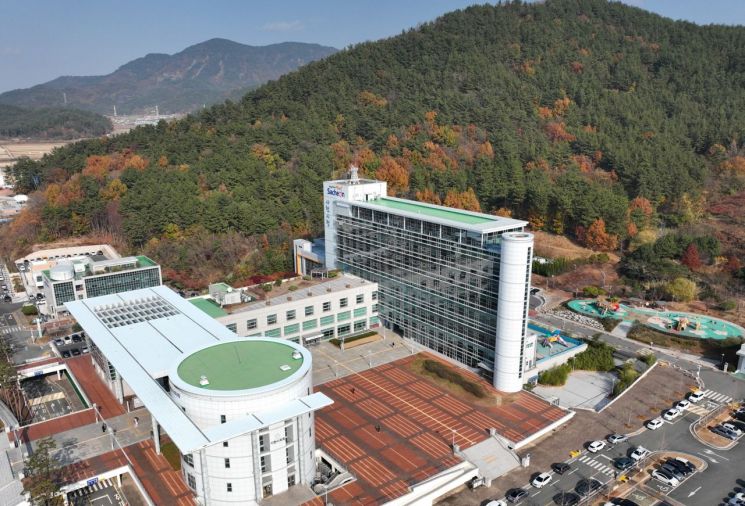
Sacheon City in Gyeongnam announced on the 22nd that it has prepared the initial budget for next year at 931.8 billion KRW, an increase of 28.4 billion KRW (3.15%) compared to this year’s original budget, and submitted it to the city council.
The general account is 874.2 billion KRW, up by 40.3 billion KRW, while the special account is 57.6 billion KRW, down by 11.9 billion KRW. Local revenues such as local taxes and non-tax income increased by 6.2 billion KRW to 155.5 billion KRW, but local allocation tax and adjustment grants decreased by 24.4 billion KRW due to reductions in national and provincial taxes, and surplus funds decreased by 21.8 billion KRW.
Additionally, national subsidies (290 billion KRW) and provincial subsidy projects (105.2 billion KRW) increased by about 68.4 billion KRW compared to this year, but the city’s financial burden for matching national and provincial projects also increased, reducing fiscal capacity and significantly decreasing the actual available resources.
The major expenditure budget by sector is ▲Social Welfare 253.1 billion KRW (27.2%) ▲Environment 181.7 billion KRW (19.5%) ▲Agriculture, Forestry, and Marine Fisheries 117.1 billion KRW (12.6%) ▲Land and Regional Development 81.8 billion KRW (8.8%) ▲Culture and Tourism 38.1 billion KRW (4.1%) ▲Transportation and Logistics 25.4 billion KRW (2.7%) ▲Industry and Small and Medium Enterprises 18.7 billion KRW (2.0%), etc.
The largest portion, social welfare, is allocated for protecting vulnerable groups and socially disadvantaged people, including basic pensions (81.1 billion KRW), livelihood benefits (27.4 billion KRW), infant support (14.8 billion KRW), and senior social activity support projects (6.7 billion KRW).
The environment budget includes the Samcheonpo district (Phase 2 sewage pipeline maintenance 25.7 billion KRW), Sacheon district (Phase 3 sewage pipeline maintenance 26.3 billion KRW), and Sadeung sanitary landfill expansion project (3.2 billion KRW), with an 88% increase compared to the previous year.
The agriculture, forestry, and marine fisheries sector includes support for farmers and fishermen’s income (4.5 billion KRW), expansion of Sacheon City’s scientific farming facilities (6.8 billion KRW), Mochung Park public park golf course (8.0 billion KRW), wood culture experience center (3.1 billion KRW), and construction of seafood processing facilities (1.4 billion KRW).
For land and regional development, funds are allocated for the creation of the Western General Industrial Complex (2.5 billion KRW), construction of the Rainbow Bridge connecting Nosan Park and Moksom Island (1.7 billion KRW), restoration of the Samcheonpo Stream ecological river (1.7 billion KRW), and maintenance of the Sangpyeong district (Mugocheon) general river (1.0 billion KRW).
The culture and tourism sector includes land acquisition for Sacheon-Samcheonpo Sports Complex (3.0 billion KRW), creation of the Rainbow-colored Ecological Trail (1.0 billion KRW), construction of a senior-friendly national sports center (2.9 billion KRW), Waryong Cultural Festival (600 million KRW), drone light show (300 million KRW), Agricultural Festival (450 million KRW), Samcheonpo Port Seafood Festival (200 million KRW), and Jeoneo Festival (150 million KRW).
The transportation and logistics sector focuses on small-scale projects to resolve longstanding issues, such as financial support for unprofitable routes (4.3 billion KRW), expansion and paving of Provincial Road No. 1 (from LIG intersection to Byeongdung intersection) (800 million KRW), and improvement of children’s school routes (500 million KRW).
The industry, small and medium enterprises, and energy sector includes discount subsidies for the issuance of Sacheon Love Gift Certificates (2.0 billion KRW), contributions to the Gyeongnam Credit Guarantee Foundation to support small business funds (700 million KRW), metaverse leading projects (900 million KRW), land acquisition for public rental knowledge industry center construction (2.9 billion KRW), installation of urban gas supply pipelines for detached houses (1.7 billion KRW), and renewable energy convergence support projects (1.4 billion KRW).
Despite difficult fiscal conditions, the city implemented expenditure restructuring under sound fiscal principles, suppressing operating cost increases for public institutions and invested organizations, and reducing administrative operating expenses by 10 to 20%.
Furthermore, local subsidies and event projects were cut by 10%, prioritizing key pending projects for livelihood stabilization and regional economic revitalization, as well as the establishment of an integrated fiscal stabilization fund in preparation for the opening of the Aerospace Administration.
The 30 billion KRW allocation to the Integrated Fiscal Stabilization Fund is a contingency measure to utilize the fund originally planned, following the urgent injection of 30 billion KRW this year to mitigate the local fiscal shock caused by the central government’s non-transfer of local allocation tax ahead of the Aerospace Administration’s opening in Sacheon City.
Mayor Park Dongsik stated, “Although revenue conditions are unfavorable due to ongoing economic uncertainties and reductions in local allocation tax, we focused on concentrated investment in key industries driving future growth and social welfare sectors that support the socially vulnerable. We will do our best to overcome difficulties together with citizens through selective and focused fiscal management.”
Meanwhile, the budget proposal submitted by Sacheon City for next year will be reviewed at the 273rd Sacheon City Council’s 2nd regular session.
© The Asia Business Daily(www.asiae.co.kr). All rights reserved.
![Clutching a Stolen Dior Bag, Saying "I Hate Being Poor but Real"... The Grotesque Con of a "Human Knockoff" [Slate]](https://cwcontent.asiae.co.kr/asiaresize/183/2026021902243444107_1771435474.jpg)















