Gyeongbuk Office of Education Requests During Administrative Audit
Gyeongbuk Provincial Council member Bae Jin-seok (People Power Party, Gyeongju 1) emphasized the basic role of education support offices in supporting schools, including support for small schools, during the 2023 administrative audit of the Gimcheon, Sangju, and Mungyeong Education Support Offices on the 20th.
As of April, the number of small schools with fewer than 60 students in the Gyeongbuk region was 342, accounting for 36.4% of the total 939 schools. By school level, there were 229 elementary schools (46.4%), 102 middle schools (38.9%), and 11 high schools (6%).
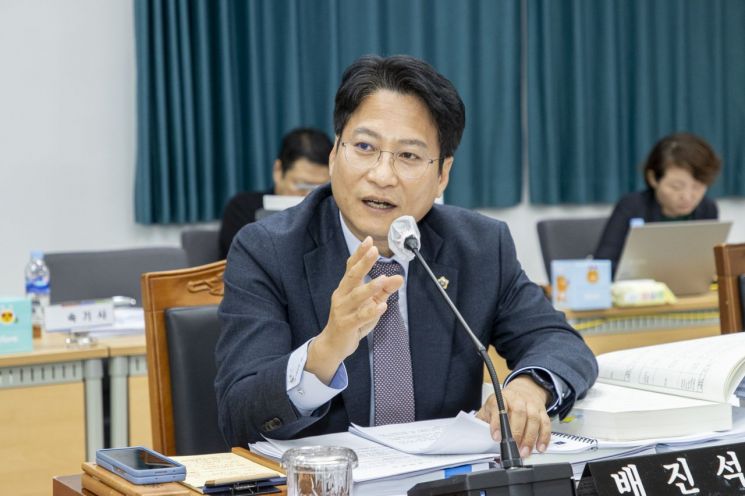
There were 15 cities and counties in Gyeongbuk Province where the average ratio of small schools in elementary, middle, and high schools exceeded 36.4%. Cheongsong County had the highest ratio at 72.7%, followed by Sangju at 56.9%, and Mungyeong City at 54.3%, showing a high proportion of small schools despite being urban areas.
Looking at the ratio of small schools by level in Sangju City, among 31 elementary schools, 21 schools (67.7%) were small schools, and among 17 middle schools, 11 schools (64.7%) were small schools. In Mungyeong City, 14 out of 20 elementary schools (70%) were small schools, and 4 out of 9 middle schools (44.4%) had fewer than 60 students, qualifying as small schools.
Provincial Council member Bae stated that currently, the ratio of small schools is higher in elementary schools and increases in rural areas compared to urban areas, but in the coming years, the ratio of small schools in middle and high schools is expected to increase. He asked the superintendents of Gimcheon, Sangju, and Mungyeong Education Offices whether they are considering appropriate countermeasures.
Bae said, “In Sangju and Mungyeong, population outflow from urban areas is continuously increasing, but from another perspective, this could also be a factor for population inflow.” He emphasized the need for education support offices to prepare active support measures to increase the number of students in small schools.
The education support offices were first established as education district offices in 1952 with the launch of the education autonomy system. Since September 2010, regional education offices under the education office have been renamed education support offices to strengthen their support functions for individual schools.
Provincial Council member Bae Jin-seok said, “Education support offices generally handle tasks related to kindergartens, elementary schools, middle schools, as well as academies and private tutoring centers. While the education office performs overall educational tasks for the metropolitan local government, education support offices carry out detailed educational tasks and support individual schools.” He requested that education support offices actively support schools by considering the educational conditions and characteristics of each region, as educational environments and current issues differ by area.
© The Asia Business Daily(www.asiae.co.kr). All rights reserved.