US Economy Expected to Underperform in Q4
Market Anticipates Monetary Policy Shift Between May and July Next Year
Meritz Securities analyzed that the US economy is expected to be sluggish in the fourth quarter of this year, and there is a high possibility of a decline in US bond yields. This is because as the recession becomes more visible, expectations are growing that the US tightening stance will end by the second quarter of next year. It was also explained that the yield on government bonds is strongly linked to US Treasury yields and that there are no significant internal upward pressure factors.
On the 16th, Yoon Yeo-sam, a researcher at Meritz Securities, stated, "Currently, the timing for the shift in monetary policy in both the US and domestic markets is likely to be between May and July, increasing the probability of returning to the interest rate range explored in the first half of this year during the first half of next year."
He added, "Although the short-term sharp drop in interest rates has reduced price merit, it is necessary to maintain bond buying from the perspective of 'protecting interest income' starting now."
The 10-year US Treasury yield, which approached 5% at the end of October, dropped to around 4.4% following the November Federal Open Market Committee (FOMC) meeting as a turning point. The entry of long-term US yields into the 5% range raised concerns about impacts on the real estate and low-credit bond markets, and the confirmation of multiple weak economic indicators (ISM, employment, inflation, consumption) increased downward pressure on yields.
In particular, the October US Consumer Price Index (CPI), which fell short of expectations, significantly contributed to stabilizing the bond market. Researcher Yoon said, "Energy (gasoline) price stability contributed the most, but underlying this was the role of housing costs in lowering core inflation to a lower-than-expected 0.2%." He forecasted, "Although core inflation decline will pause in the fourth quarter due to base effects, the core inflation stabilization trend will be maintained based on falling rents."
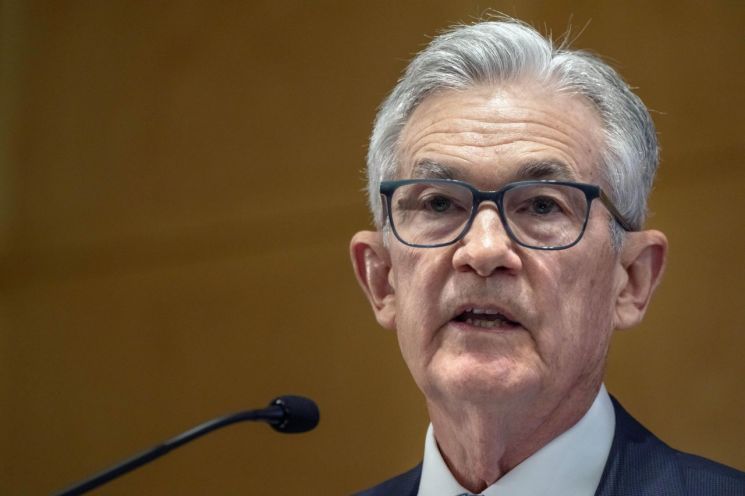
Market attention is expected to focus on reviewing the minutes of the November FOMC meeting (on the 22nd). Researcher Yoon noted, "Interest lies in what discussions took place among committee members regarding Chairman Powell's comment that 'the rise in long-term yields was not something we intended.'" He added, "While there is caution against interpreting the recent decline in long-term yields as financial easing, the market is reflecting expectations that rates might be lowered starting May next year."
Government bond yields fell in tandem with the 10-year US Treasury yield dropping to the 4.4% range. The key point is that yields rose only half as much when increasing but fell by the same magnitude when declining. Researcher Yoon evaluated, "Considering that factors driving rate increases such as the economy, monetary policy, and supply-demand were less significant compared to the US, it is reasonable that current market yields have returned to the levels seen at the beginning of the year."
Researcher Yoon predicted that the Bank of Korea's hawkish stance will be maintained. This is based on the judgment that long-term yields have recently fallen faster than expected and that inflation forecasts are likely to be higher than in August due to burdens from energy, agricultural products, and public utility charges.
He explained, "The spread of long-term corporate bonds and short-term bank bonds, centered on high-quality bonds that were unpopular recently, has narrowed rapidly. However, the differentiation of lower-rated bonds due to the possibility of PF-related events is a point that needs to be monitored."
© The Asia Business Daily(www.asiae.co.kr). All rights reserved.
![Clutching a Stolen Dior Bag, Saying "I Hate Being Poor but Real"... The Grotesque Con of a "Human Knockoff" [Slate]](https://cwcontent.asiae.co.kr/asiaresize/183/2026021902243444107_1771435474.jpg)















