US-Japan Joint Project Scheduled for Launch Next Summer
Burns Upon Atmospheric Reentry... Research Team Calls It "Eco-Friendly"
The National Aeronautics and Space Administration (NASA) of the United States and the Japan Aerospace Exploration Agency (JAXA) plan to jointly launch the world's first satellite made of wood next year.
On the 16th (local time), the US-based Space.com reported that they plan to launch a wooden satellite named 'LignoSat' in the summer of 2024.
Scientists successfully completed wooden sample tests on the International Space Station (ISS) earlier this year and subsequently determined that wood is suitable for satellite manufacturing.
About the size of a typical mug, this satellite does not burn or rot in the lifeless space environment, but it is designed to burn up due to friction with the atmosphere upon re-entry into Earth's atmosphere. Because of this, it could become a useful biodegradable material for future artificial satellites.
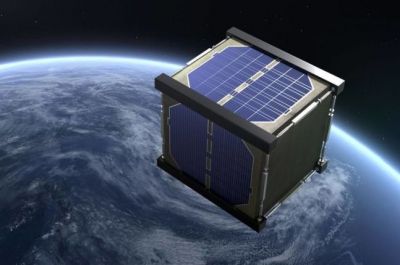
Currently, approximately 9,300 tons of space debris, including defunct satellites and rocket remnants used during satellite launches, are accumulated in Earth's orbit. Most space debris consists of shiny metals such as titanium and aluminum, which increase the brightness of the night sky over most parts of the Earth by more than 10%, causing light pollution. This makes it difficult to observe distant space from the ground.
Additionally, spacecraft made of metal pose a risk of not completely burning up and falling to the ground due to their large volume when re-entering Earth's atmosphere after use. They are also costly to produce. The research team explained, "Wooden satellites like LignoSat are theoretically expected to become slightly more environmentally friendly space debris."
Magnolia wood is used to manufacture the satellite. A research team from Kyoto University in Japan sent three types of wood samples?magnolia, cherry, and birch?to the ISS, and based on test results, magnolia was chosen for satellite manufacturing because it is less likely to crack or break during the production process.
In a statement released in May, the research team said, "After testing the three wood samples, no deformation was observed even after exposure to space," and confirmed that "after about 10 months of exposure to intense cosmic rays and sunlight, as well as extreme temperature changes in space, there were no cracks, warping, or surface damage."
© The Asia Business Daily(www.asiae.co.kr). All rights reserved.
![Clutching a Stolen Dior Bag, Saying "I Hate Being Poor but Real"... The Grotesque Con of a "Human Knockoff" [Slate]](https://cwcontent.asiae.co.kr/asiaresize/183/2026021902243444107_1771435474.jpg)















