Bat Found Hanging on Window Screen in Mapo Apartment
Low Infection Risk if Not Bitten, But Avoid Contact
A bat appeared in an apartment near Hapjeong Station in Mapo-gu, Seoul, causing anxiety among residents. An expert explained, "If you are not bitten, the risk of infection is very low," adding, "Diseases are not transmitted just by accidentally brushing against a person, so you only need to be careful about contact."
According to Yonhap News on the 17th, a bat was found hanging on a window screen on the 15th floor of an apartment near Hapjeong Station in Seoul around 9 a.m. on the 15th.
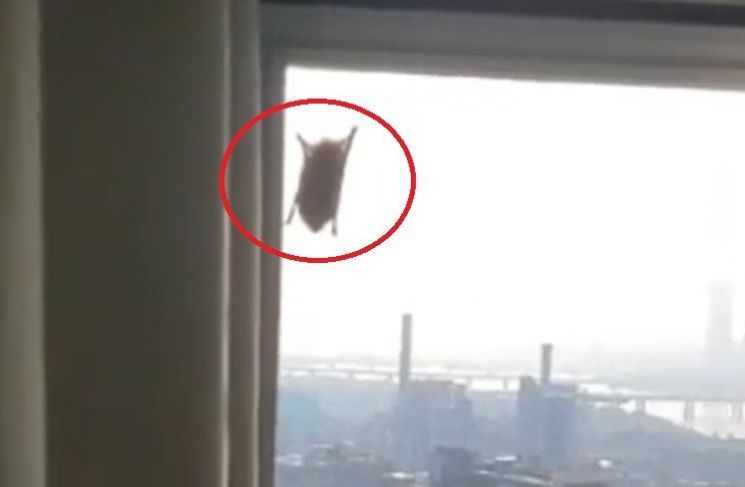
Resident Jo, who discovered the bat, said, "The apartment is in the city center, and there are no nearby forests or caves, so I was surprised to see a bat," adding, "I heard that bats carry various viruses, so as soon as I saw it, I used a net to chase it away."
This is the first time a bat has been found in Mapo-gu, Seoul. A Mapo-gu Office official stated, "Until now, there has never been a report of bats appearing within Mapo-gu."
The official added, "I don't think we can say it's an animal for the sake of the bat," and "If someone reports 'I found a bat, please rescue it,' we might be able to rescue it according to procedures."
Experts: "It Seems to Have Taken a Rest While Heading for Hibernation"
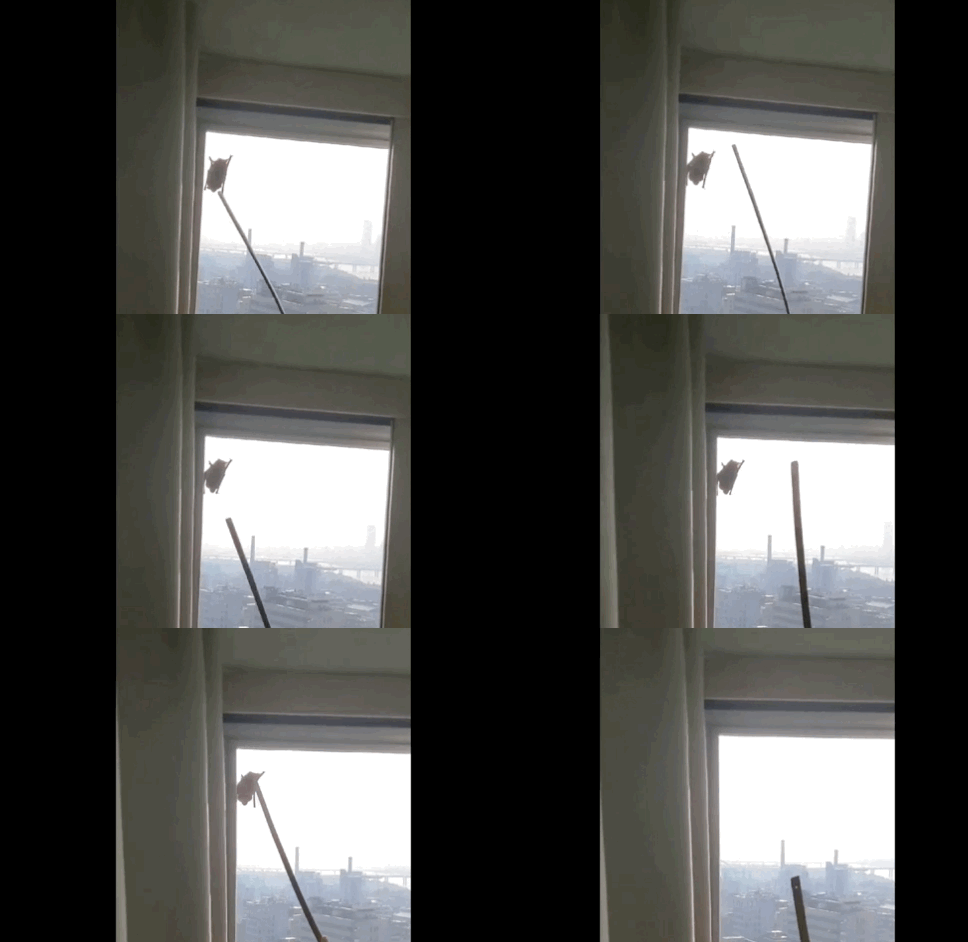 According to Yonhap News on the 17th, around 9 a.m. on the 15th, a bat was found hanging on a window screen on the 15th floor of an apartment near Hapjeong Station in Seoul by a resident.
 [Photo by a reader, Yonhap News]
Bats usually hibernate from October to May of the following year, and experts explain that this year as well, the bat likely took a short rest at the apartment while on its way to hibernation.
The house bat is a species that lives in residential areas, mainly inhabiting buildings or cracks in concrete, so it is occasionally seen in residential areas. The lesser horseshoe bat, which primarily inhabits forests or caves, is also one of the species frequently found in residential areas from late November to early December.
Bats, which inhabit almost all parts of the world except the Arctic and Antarctic, number over 1,400 species, making up more than a quarter of all mammal species worldwide. Biologists consider bats one of the five creatures that must never disappear from Earth. Alongside primates that provide insight into human evolution, bees that pollinate flowers, plankton that produce oxygen through photosynthesis, and fungi (molds) that act as 'nature's cleaners,' bats are essential for human survival.
Nature's 'Insecticide' and Virus Carrier
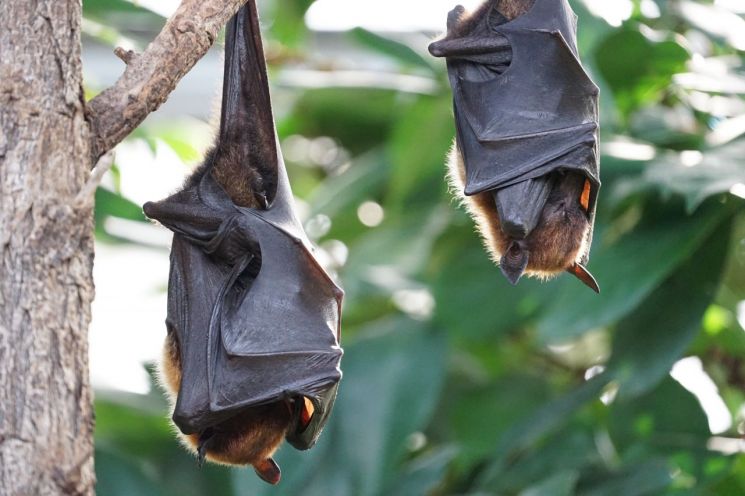
Additionally, bats contribute as natural insecticides. They stabilize ecosystems by consuming enormous amounts of pests. They also pollinate tropical fruits such as bananas and mangoes.
However, bats are widely known as primary hosts for many infectious disease viruses, including Ebola, SARS, and MERS. The recent COVID-19 virus is no exception. Three species of vampire bats directly transmit rabies to humans. Bats' high body temperature makes them resistant to most viruses, which underlies their remarkable adaptability to survive anywhere. Because of this, bats are sometimes called 'virus reservoirs' that harbor various viruses.
Recently, many bats have appeared in apartment complexes in urban areas such as Incheon, Siheung, and Goyang, startling residents. Most bats cling to apartment window screens for extended periods, leading to complaints requesting their removal. Given the public's heightened alertness due to COVID-19, it is understandable that citizens worry about infection upon suddenly encountering bats.
Therefore, if a bat is found, it is better to report it to a wildlife rescue management center rather than handling it directly by hand. Due to the nature of wild animals, there is a risk of disease transmission, so caution is necessary.
Experts emphasize, "The perception that bats appear in residential areas due to lack of habitat is an overinterpretation," adding, "Bats live everywhere, whether over Seoul or in rural areas. If you are not bitten, the risk of infection is very low, and diseases are not transmitted just by accidentally brushing against a person, so only contact needs to be avoided."
© The Asia Business Daily(www.asiae.co.kr). All rights reserved.
![Clutching a Stolen Dior Bag, Saying "I Hate Being Poor but Real"... The Grotesque Con of a "Human Knockoff" [Slate]](https://cwcontent.asiae.co.kr/asiaresize/183/2026021902243444107_1771435474.jpg)

















