Senate Passes Temporary Budget Bill on 15th
Budget Bill to Take Effect Upon Biden's Signature
Purpose to Buy Time for Spending Bill Negotiations
The U.S. Senate passed an additional temporary budget bill to be used until January-February next year, allowing the U.S. federal government to narrowly avoid a temporary shutdown.
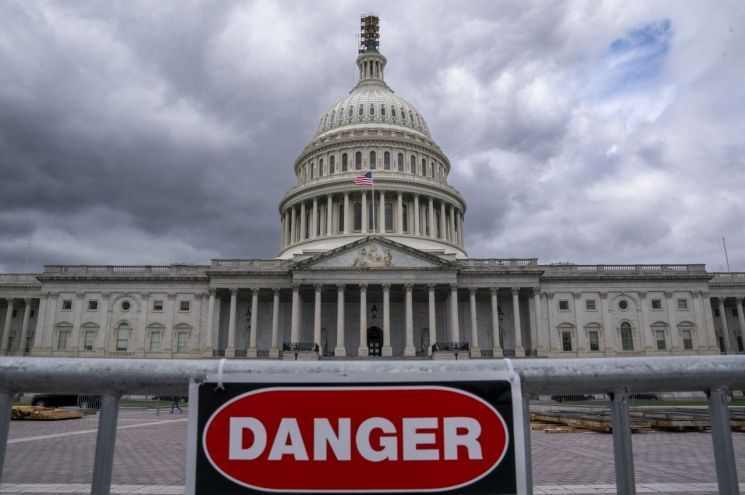
On the 15th (local time), the Senate held a plenary session and voted on the follow-up budget bill to be applied after the temporary budget bill processed at the end of September expires on the 17th. The vote resulted in 87 in favor and 11 against, passing the budget bill.
The day before, the House of Representatives also passed the temporary budget bill with 336 votes in favor and 95 against. Once President Joe Biden signs it this weekend, the budget bill will take effect.
This budget bill, led by House Speaker Mike Johnson, a Republican, is characterized by including only the expenditures needed for January and February next year, rather than the entire budget required for government operations next year. The timing for when each government department’s budget runs out was also divided into two phases. Departments related to veterans affairs, transportation, agriculture, housing, and energy have their necessary budgets set until January 19 next year, while defense, state, and homeland security departments have theirs until February 2. This deviates from the existing practice of bundling spending bills for 12 departments into one.
Speaker Johnson appears to have structured the budget bill this way to buy time by passing a temporary budget and then reduce the Biden administration’s spending through individual negotiations. However, this temporary budget bill does not include the military aid budget for Ukraine or humanitarian aid budgets for Ukraine and other countries requested by President Biden.
Speaker Johnson secured cooperation from the Democrats to pass this budget bill. He bypassed the House Rules Committee, controlled by Republican hardliners, and directly submitted the budget bill to the plenary session using a 'fast-track' method. In this case, the approval condition is strengthened to require two-thirds consent rather than a simple majority, but the strategy was to overcome the crisis by gaining Democratic cooperation. The Democrats also cooperated in passing the budget bill because the temporary budget maintains the previous year’s government spending level and they had neither grounds nor alternatives to oppose it.
President Biden is also expected to sign the temporary budget bill as the shutdown deadline approaches. ABC News quoted a White House official saying, "President Biden will sign the temporary budget bill once it passes the Senate." It added that "(President Biden) urged the House to accept the president’s additional support requests for Israel, Ukraine, and humanitarian aid."
© The Asia Business Daily(www.asiae.co.kr). All rights reserved.
![Clutching a Stolen Dior Bag, Saying "I Hate Being Poor but Real"... The Grotesque Con of a "Human Knockoff" [Slate]](https://cwcontent.asiae.co.kr/asiaresize/183/2026021902243444107_1771435474.jpg)















