Choi Won-i and Park Joon-sung, alumni of the Hyperspectral Remote Sensing Laboratory at Pukyong National University, have respectively joined NASA and Harvard University as researchers.
Dr. Choi Won-i was recently selected through NASA's Postdoctoral Fellowship open recruitment and is scheduled to work at NASA's Goddard Space Flight Center starting February next year.
Dr. Choi, who earned his bachelor's, master's, and doctoral degrees from the Department of Geospatial Information System Engineering at Pukyong National University, worked as a postdoctoral researcher at Pukyong National University last year and is currently a postdoctoral researcher at Chapman University in the United States.
Dr. Choi applied to NASA while conducting research with Pukyong National University on the National Institute of Environmental Research's commissioned project titled "Development of data processing algorithms and equipment for ground remote sensing instruments, improvement and operationalization of environmental satellite (GEMS) data retrieval algorithms," achieving these results.
He plans to conduct research at NASA's Goddard Space Flight Center on the topic "Quantification of the impact of sulfur oxides and aerosols emitted by volcanic eruptions on TOMS ozone retrieval: Long-term analysis since 1978."
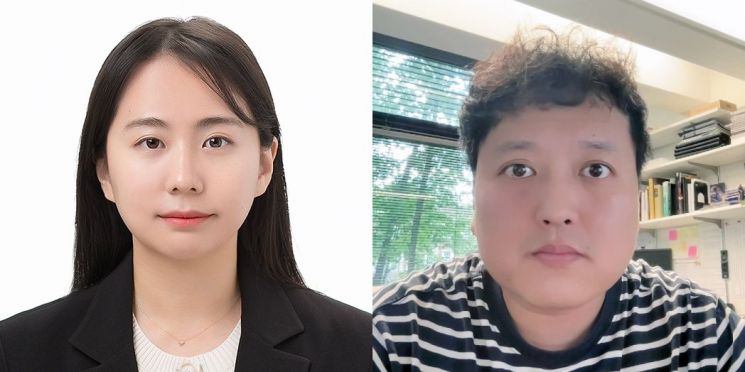
Dr. Park Joon-sung passed the open recruitment for a Post-Doctoral Research Fellow position at the Harvard-Smithsonian Center for Astrophysics and has been working as a Physicist there since last September. This center is an astrophysics research institution jointly operated by the Harvard College Observatory and the Smithsonian Astrophysical Observatory.
Dr. Park earned his bachelor's, master's, and doctoral degrees from the Department of Geospatial Information System Engineering at Pukyong National University and entered this center after completing the National Research Foundation of Korea's core talent development program "Global PhD Fellowship" and the basic research program in science and technology "Postdoctoral Domestic Training Course."
He has been recognized for his active research activities, including developing operational algorithms for nitrogen dioxide retrieval from South Korea's geostationary environmental satellite (GEMS), calculating long-range transported sulfur dioxide inflow based on satellite data, and investigating formaldehyde retrieval sensitivity using Pandora, a ground observation instrument based on hyperspectral sensors.
Additionally, at Harvard, he plans to conduct research on developing ozone vertical profile retrieval algorithms for the U.S. geostationary environmental satellite (TEMPO).
© The Asia Business Daily(www.asiae.co.kr). All rights reserved.
![Clutching a Stolen Dior Bag, Saying "I Hate Being Poor but Real"... The Grotesque Con of a "Human Knockoff" [Slate]](https://cwcontent.asiae.co.kr/asiaresize/183/2026021902243444107_1771435474.jpg)















