Former Samsung Executive Released After Stealing Trade Secrets
Very Low Sentences for Technology Leakage... Up to 6 Years
Only About 10% Received Prison Sentences in the Past 4 Years
Lenient Punishments Lead to Surge in Overseas Leakage
U.S. Imposes Spy-Level Penalties
Concerns over technology leakage are growing as Mr. A, a former Samsung Electronics executive who was detained on charges of leaking semiconductor factory blueprints to China, was recently released on bail. Although countries around the world are strengthening punishments as a preemptive measure due to the sophisticated evolution of recent technology leakage methods, South Korea is still criticized for having lenient penalties.
The Suwon District Court Criminal Division 14 granted bail to Mr. A, who was indicted on charges including violation of the Industrial Technology Protection Act, on the 10th. The bail bond was set at 50 million KRW.

Mr. A was indicted for illegally acquiring and using Samsung Electronics' trade secrets, including basic process data (BED) of semiconductor factories, process layouts, and factory blueprints, from August 2018 to February 2019. The technology in question is a trade secret valued at a minimum of approximately 300 billion KRW and potentially worth several trillion KRW.
Having worked at Samsung Electronics and Hynix Semiconductor (now SK Hynix) and having received the Euntap Industrial Medal, Mr. A established a semiconductor manufacturing company in Singapore in July 2015. He then attracted large-scale investments from companies in Chengdu, China, and Taiwanese electronics manufacturers, recruiting over 200 personnel from the domestic semiconductor industry. This represents the largest scale of industrial technology personnel outflow.
Prosecutors believe he intended to build production facilities that were exact replicas of Samsung Electronics' semiconductor factories.
The semiconductor industry is concerned that lenient punishments for technology leakage suspects could lead to the production of more industrial spies.
Criticism has been raised especially because the court decided to grant bail to Mr. A just two days after a joint meeting on technology leakage was held at the Presidential Office. Earlier, on the 8th, the Presidential Office held a joint meeting on industrial technology protection attended by 10 ministries and agencies, including the National Intelligence Service and the Ministry of Justice, and launched the 'Government-wide Joint Response Team for Technology Leakage.'
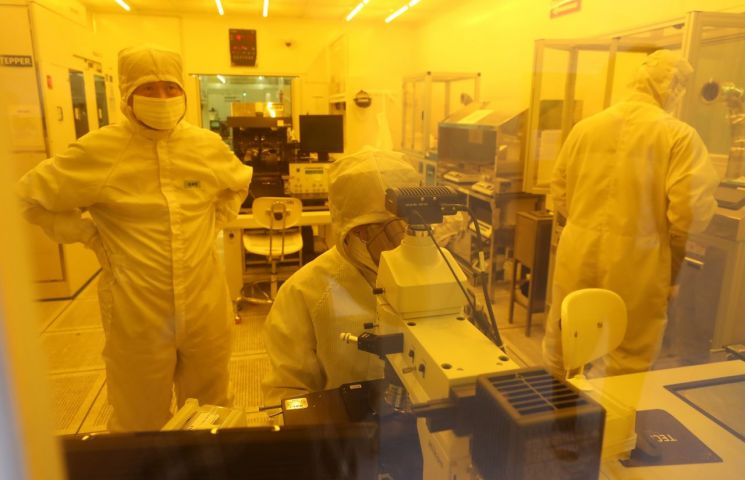
Although the damage caused by technology leakage crimes is very serious, the actual sentences handed down are known to be much lighter than the statutory penalties.
Domestic sentencing guidelines for technology leakage prescribe a basic imprisonment term of 8 months to 2 years, with aggravated punishment up to a maximum of 4 years. For overseas technology leakage, the basic term is 1 year to 3 years and 6 months, with aggravated punishment up to a maximum of 6 years. These are far below the maximum penalties stipulated in the Industrial Technology Protection Act, which are 10 years domestically and 15 years overseas.
In fact, only about 10% of technology leakage cases sentenced between 2019 and 2022 resulted in imprisonment, and the average sentence for overseas trade secret leakage crimes handed down last year was only 14.9 months.
Compared to cases in other countries, domestic punishment levels are significantly lower. The United States, through the so-called Economic Espionage Act, imposes aggravated punishments on those who leak national strategic technologies overseas at the level of espionage charges, enhancing deterrence. Taiwan applies 'economic espionage' charges to prevent leakage of core technologies, and Japan has enacted related laws to claim enormous amounts in damages.
An industry insider stated, "If core technologies are leaked overseas, as in Mr. Choi's case, astronomical damages occur," adding, "The fact that Mr. Choi was released on bail while still under trial indicates that South Korea still has a low awareness of the seriousness of technology leakage crimes."
© The Asia Business Daily(www.asiae.co.kr). All rights reserved.
![Clutching a Stolen Dior Bag, Saying "I Hate Being Poor but Real"... The Grotesque Con of a "Human Knockoff" [Slate]](https://cwcontent.asiae.co.kr/asiaresize/183/2026021902243444107_1771435474.jpg)
















