Ministry of Employment Releases 'Working Hours Survey' Results... 8 Months After Review
Only 14.5% of Employers Say "Facing Difficulties Due to the 52-Hour Workweek"
The government has decided to maintain the current 52-hour workweek system (statutory 40 hours + 12 hours of overtime). This decision comes about eight months after beginning a review of the controversial working hours reform plan, which sparked debate over the so-called 'maximum 69 hours per week.' However, for certain industries such as manufacturing and production, the government will support the establishment of supplementary measures allowing labor and management to choose the overtime management unit if both parties agree.
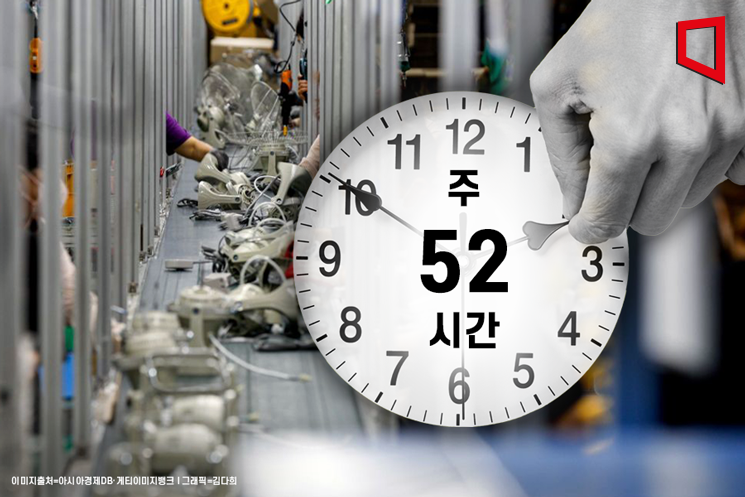
On the 13th, the Ministry of Employment and Labor announced the results of a 'working hours-related survey.'
The survey was conducted through face-to-face interviews with a total of 6,030 participants, including 3,839 workers, 976 employers, and 1,215 members of the public. To enhance the accuracy of the results, the Ministry explained the relevant systems and questions to the respondents during the survey process.
According to the survey, 48.5% of workers, 44.8% of employers, and 48.2% of the public responded that long working hours have decreased under the current working hours system. Additionally, 45.9% of workers, 45.1% of employers, and 48.5% of the public evaluated that the predictability of working hours has improved.
Only 14.5% of employers reported experiencing difficulties with the current 52-hour workweek system over the past six months. The types of difficulties cited were ▲ responding to fluctuations in workload (73.6%) and ▲ coping with temporary labor shortages (60.4%). However, employers in business support and rental services (32.6%), manufacturing (27.6%), and workplaces with 100 to 299 employees (40.3%) reported more difficulties with the 52-hour workweek system.
Seong Jaemin, Senior Research Fellow at the Korea Labor Institute, stated, "Overall, only 14.5% of employers have experienced difficulties with the current 52-hour workweek system, but when looking by industry or size, it means that workplaces face significant challenges due to unpredictable workload fluctuations or temporary labor shortages." He added, "It is necessary to consider a policy direction that grants the option to select the overtime management unit, taking into account certain industries and occupations."
Accordingly, the government plans to accept public opinion reflected in this survey and maintain the current 52-hour workweek framework while discussing supplementary measures with labor and management. These measures will allow certain industries and occupations experiencing difficulties to choose the overtime management unit if both labor and management agree.
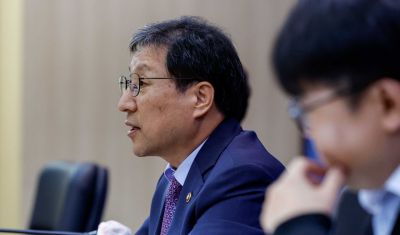
Lee Seonghee, Vice Minister of Employment and Labor, explained, "While the 52-hour workweek system has largely been established, some industries and occupations are facing difficulties. We intend to maintain the 52-hour workweek while developing improvement measures limited to certain industries and occupations."
For the targeted industries and occupations, safety measures will be put in place to alleviate concerns about long working hours and health rights. In particular, since both labor and management have expressed the need to set a weekly maximum working hour limit and introduce 11 consecutive hours of rest between working days to ensure workers' health rights, the government plans to develop reasonable measures based on the survey results.
Along with the working hours survey results, the government also announced the results of a planned inspection conducted from January to August this year on workplaces suspected of abusing lump-sum wage systems. This inspection targeted 87 workplaces suspected of illegal misuse of lump-sum wages, reported through labor organizations and anonymous reporting centers. Among them, 64 workplaces (73.6%, totaling 2.63 billion KRW) were found to have wage arrears, and 52 workplaces (59.8%) violated overtime limits, leading to administrative and judicial actions.
Vice Minister Lee stated, "To select industries and occupations urgently needing improvements in the working hours system in detail, objective empirical data on working hours and work patterns by industry and occupation, as well as additional surveys, are essential. The government will promptly prepare and support social dialogue among labor, management, and government to develop reasonable alternatives without delay."
© The Asia Business Daily(www.asiae.co.kr). All rights reserved.
![Clutching a Stolen Dior Bag, Saying "I Hate Being Poor but Real"... The Grotesque Con of a "Human Knockoff" [Slate]](https://cwcontent.asiae.co.kr/asiaresize/183/2026021902243444107_1771435474.jpg)
















