"Will the Santa Rally arrive?" As the year-end approaches, expectations for a Santa Rally are spreading in the U.S. New York stock market. While the S&P 500 index, centered on large-cap stocks, closed higher on 9 of the last 10 trading days, Wall Street's fear index has been falling continuously, indicating a return of the so-called 'FOMO (Fear Of Missing Out)' sentiment. However, with the deadline for the temporary budget bill looming, concerns about a federal government shutdown are also being noted inside and outside Wall Street. This week, consumer price index (CPI) and retail sales data are also scheduled to be released.
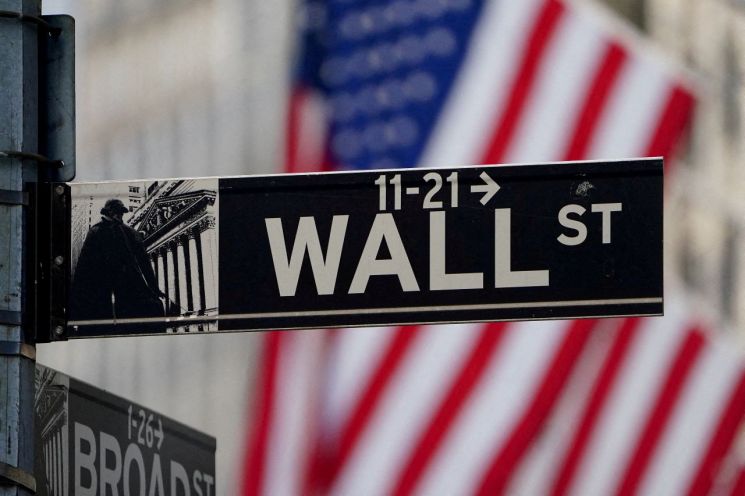
According to the daily Wall Street Journal (WSJ) on the 12th (local time), the S&P 500 index has risen by 7.2% over the past two weeks. Amid expectations of interest rate freezes and falling Treasury yields, the S&P 500 index closed higher on 9 of the last 10 trading days. WSJ reported, "FOMO has returned to the stock market," adding, "Investors are now holding onto stocks and expecting a year-end rally." The Chicago Board Options Exchange (CBOE) Volatility Index (VIX), known as Wall Street's fear gauge, also supported this year-end bullish view by falling for eight consecutive trading days.
Jiwei Ren, portfolio manager at Penn Mutual Asset Management, said, "At this point, investors are trying to position themselves for the year-end rally." Adam Turnquist, chief strategist at LPL Financial, analyzed that the stock market showed a meaningful recovery last week due to oversold conditions, solid earnings, and a sharp drop in Treasury yields, increasing the potential for further S&P 500 gains by year-end. Earlier, Evercore ISI also predicted that the S&P 500 index could surpass its previous high (4,588.96 on July 31).
The recent decline in Treasury yields and expectations of a Federal Reserve (Fed) interest rate freeze are cited as the main reasons for the growing market optimism about the Santa Rally. The 10-year U.S. Treasury yield, which had previously exceeded 5% raising volatility concerns, has recently dropped to around 4.6%. Charles Schreiber, portfolio manager at T. Rowe Price, which manages about $50 billion in assets, told WSJ that he had kept a significant portion of his portfolio in cash but has recently shifted some into stocks, saying, "Stocks will continue to rise. We will look for additional opportunities."
Investors' attention is now focused on inflation indicators such as CPI and producer price index (PPI) to be released this week. If these inflation indicators come in below expectations once again, hopes for the end of tightening will strengthen further, pushing down Treasury yields and accelerating the stock market rally. Wall Street estimates that the October CPI, to be released on the 14th, will rise 3.3% year-over-year and 0.1% month-over-month, a slowdown compared to the previous month's increases of 3.7% and 0.4%, respectively.
This week, remarks from Fed officials including Lisa Cook, Vice Chair Philip Jefferson, Loretta Mester, President of the Cleveland Federal Reserve Bank, and Austan Goolsbee, President of the Chicago Federal Reserve Bank, are also scheduled. Earlier, Fed Chair Jerome Powell dampened market hopes for an end to tightening by stating, "We cannot be confident that current monetary policy is sufficiently restrictive to achieve the 2% inflation target." Such hawkish comments emphasize the Fed's cautious stance and are interpreted as efforts to prevent a premature victory declaration that could cause inflation expectations to surge again.
The financial market is also on high alert for the possibility of a U.S. federal government shutdown. The temporary budget bill, which Congress barely passed earlier, has a deadline on the 17th. If the bill does not pass Congress by then, a shutdown is inevitable. Concerns are mounting that a shutdown could have a greater impact on financial markets amid already significant worries about the fiscal deficit.
International credit rating agency Moody's has already issued a warning ahead of the deadline. On the 10th, Moody's downgraded the U.S. outlook from 'stable' to 'negative' citing fiscal deficits and political polarization. This is a pre-warning of a possible credit rating downgrade. Moody's is the only one among the three major international credit rating agencies to maintain the U.S. credit rating at the highest level. Moody's pointed out, "Risks to the U.S. fiscal soundness have increased, and the country's inherent credit strengths may no longer fully offset these risks."
The fate of the temporary budget bill that will decide the shutdown this week remains uncertain. Earlier, House Speaker Mike Johnson, a Republican, proposed a temporary budget bill extending through February next year, but opposition voices have been confirmed not only from the White House but also from hardliners within the Republican Party. The House Rules Committee will hold a hearing on the 13th to consider whether to bring Johnson's two-stage temporary budget bill to a floor vote.
Additionally, this week will see the release of earnings and retail data from retailers such as Home Depot, Target, Walmart, and TJX, which provide insight into U.S. consumer spending.
© The Asia Business Daily(www.asiae.co.kr). All rights reserved.
![Clutching a Stolen Dior Bag, Saying "I Hate Being Poor but Real"... The Grotesque Con of a "Human Knockoff" [Slate]](https://cwcontent.asiae.co.kr/asiaresize/183/2026021902243444107_1771435474.jpg)
















