US Research Team: "Reducing Salt Alone Has the Effect of Blood Pressure Medication"
A study has found that reducing salt intake by just one teaspoon a day can have effects similar to those of blood pressure medication.
Professor Deepak Gupta's team at Vanderbilt University Medical Center in the United States revealed these findings on the 13th through the medical journal Journal of the American Medical Association (JAMA).
The research team reported that in a clinical trial on sodium-controlled diets involving 213 middle-aged and elderly participants, reducing salt intake lowered blood pressure in 70-75% of participants regardless of whether they were taking blood pressure medication.
Professor Gupta said, "Reducing salt intake by about 2.2 g per day compared to usual diets resulted in a decrease of about 6 mmHg in systolic blood pressure," adding, "This is similar to the blood pressure-lowering effect of commonly used first-line antihypertensive drugs." The 2.2 g corresponds to one teaspoon of salt.
The research team stated, "This clinical trial is one of the largest studies conducted on hypertensive patients and medication users to investigate the effect of sodium on blood pressure," and added, "Previously, it was unknown whether reducing salt intake could further lower blood pressure in those taking blood pressure medication."
The team conducted a one-week experiment with 213 participants aged 50 to 75 living in Chicago and Birmingham, Alabama. The participants were composed of 25% with normal blood pressure, 20% with controlled hypertension, 31% with uncontrolled hypertension, and 25% with untreated hypertension.
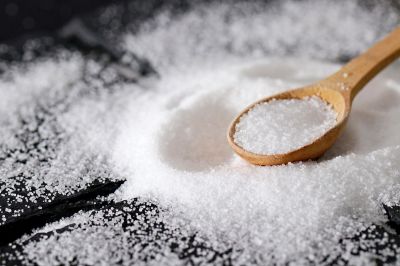
Among the participants, one group consumed a high-sodium diet with 2200 mg more salt per day than usual, while the other group consumed a low-sodium diet with about 500 mg of salt per day. The American Heart Association (AHA) recommends a daily sodium intake of less than 1500 mg.
After one week each on the low-sodium and high-sodium diets, blood pressure changes were measured. The low-sodium diet group showed an average systolic blood pressure reduction of 7-8 mmHg compared to the high-sodium diet group, and 6 mmHg lower than their usual diet.
Professor Gupta said, "Systolic blood pressure decreased compared to usual diets in 72% of participants on the low-sodium diet," and added, "This effect was observed in almost everyone, including those with normal blood pressure, hypertension, controlled hypertension, and uncontrolled hypertension."
Co-researcher Professor Norina Allen of Northwestern University said, "Just as any physical activity is better than none, reducing salt in the usual diet is generally beneficial," and added, "This also helps with blood pressure control in people taking hypertension medication."
Another co-researcher, Professor Cora Lewis of the University of Alabama at Birmingham, emphasized, "It is important that the blood pressure-lowering effect of sodium reduction appeared quickly and safely within a week," and stressed, "Considering the impact of hypertension on health, reducing salt intake could have a very significant potential effect on public health."
Hypertension is one of the diseases with high incidence and mortality rates worldwide, exerting strong pressure on arteries and potentially causing serious conditions such as heart failure, heart attack, and stroke.
© The Asia Business Daily(www.asiae.co.kr). All rights reserved.
![Clutching a Stolen Dior Bag, Saying "I Hate Being Poor but Real"... The Grotesque Con of a "Human Knockoff" [Slate]](https://cwcontent.asiae.co.kr/asiaresize/183/2026021902243444107_1771435474.jpg)















