Hana Financial Research Institute
'The Spread of Digital Finance and the Future of Banks' Paper
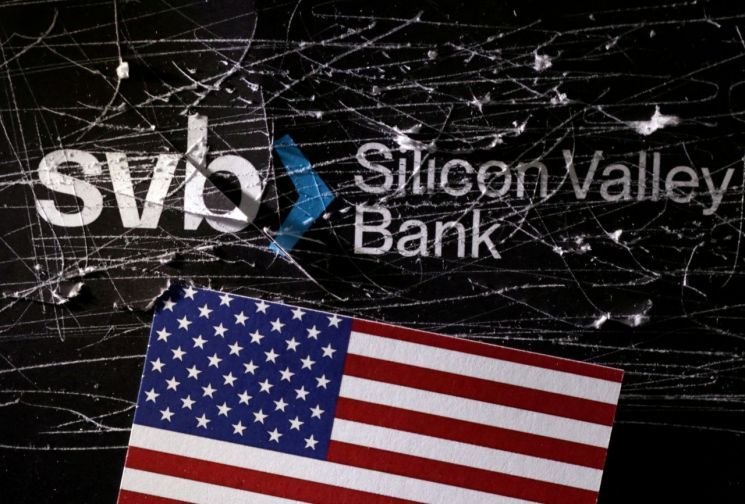
There have been calls to introduce regulations to prevent digital bank runs (massive deposit withdrawals) and to seek reforms in the deposit insurance system.
Hana Bank's Hana Financial Research Institute announced on the 12th that it held the 13th roundtable under the theme "The Spread of Digital Finance and the Future of Banks." At this roundtable, attended by over 40 experts and representatives from specialized institutions, participants agreed on the need to emphasize digital finance for advanced risk management, reflecting on the Silicon Valley Bank (SVB) incident, and reviewed potential related issues.
Professor Shin Kwan-ho of Korea University’s Department of Economics highlighted in his presentation titled "Digital Bank Runs and Financial Stability" that SVB's bankruptcy was the third-largest bank failure in U.S. history and emphasized the rapid sharing of bankruptcy risk information through social networking services (SNS).
Professor Shin stated, "SVB invested in long-term bonds but suffered significant losses due to the recent sharp rise in interest rates. While SVB's accumulated losses remained unrealized, financial authorities hesitated to take supervisory actions. The rapid spread of negative news about SVB via SNS can be seen as a major cause of the SVB bank run."
As a measure to prevent digital bank runs, Professor Shin suggested that even assets classified as Held-to-Maturity (HTM) securities should undergo timely corrective actions if they maintain a certain level of liquidity, such as government bonds, in response to losses. He also emphasized the need to strengthen soundness by avoiding concentration of liabilities, expanding regulations on liquidity and maturity, and increasing capital adequacy ratios to reduce self-fulfilling bank runs. Furthermore, he advocated for financial institutions to enhance stress testing and manage risks through diversification of assets and liabilities.
Professor Shin explained that reforming the deposit insurance system is necessary to apply deposit insurance differentially according to account types, such as raising insurance limits for corporate payment accounts. Additionally, he stressed the urgency of establishing a system that allows supervisory agencies like the Korea Deposit Insurance Corporation to swiftly resolve insolvent financial institutions to prevent problems in banks experiencing digital bank runs from spreading to other banks and escalating into a systemic crisis.
The discussion also included calls for supervisory approaches applying the principle of "same activity, same regulation" to tech companies entering the financial market. Professor Kim Jin-ho of Ewha Womans University’s Department of Business Administration argued, "While the entry of tech companies such as big tech and fintech into the financial market brings positive effects like efficiency improvements, it also generates risks. Recognizing this, it is necessary to establish supervisory and regulatory frameworks based on the 'same activity, same regulation' approach to mitigate these risks."
Suggestions were also made regarding desirable financial and non-financial cooperation structures in the banking industry. Professor Jeon Ju-yong of Dongguk University’s Department of Economics emphasized, "Since the entry of large platform companies and fintech firms into the financial sector cannot exclude the possibility of risk generation, it is important to ensure that no blind spots occur in financial supervision."
© The Asia Business Daily(www.asiae.co.kr). All rights reserved.
![Clutching a Stolen Dior Bag, Saying "I Hate Being Poor but Real"... The Grotesque Con of a "Human Knockoff" [Slate]](https://cwcontent.asiae.co.kr/asiaresize/183/2026021902243444107_1771435474.jpg)















