Google and European Telecom Operators "Apple Must Comply with DMA"
Integration Resolves Image Quality Degradation During Transmission
As early as the beginning of next year, it is expected that Apple and Android's messaging platforms will be interoperable. This is because the European Union (EU) has begun reviewing the inclusion of Apple's exclusive messaging feature, 'iMessage,' under the Digital Markets Act (DMA) as a subject of special regulation.

According to Bloomberg and other sources on the 10th (local time), Google recently partnered with major European telecom companies such as Vodafone UK, Deutsche Telekom Germany, Telef?nica Spain, and Orange France to send a letter to the European Commission (EC) requesting that iMessage be designated as a core platform service under the DMA.
The EU finalized the list of companies subject to DMA regulations in September and began a grace period of about six months. The DMA is a powerful law that designates certain large platform operators as 'gatekeepers' to prevent abuse of market dominance.
The DMA applies to companies meeting criteria such as annual revenue exceeding 7.5 billion euros within the EU, market capitalization or market value over 75 billion euros, at least 45 million monthly active users, service provision in at least three member states, and having over 10,000 business users (merchants) annually. Six companies fall under this, including Alphabet (Google's parent company), Apple, Meta, Amazon, Microsoft (MS), and ByteDance, the operator of TikTok.
Companies designated as gatekeepers must allow interoperability with third-party services and permit merchants to promote their own businesses or make contracts outside the platform. They must also allow access to data generated by merchants when using the platform.
Google and European telecom companies point out that Apple, like Meta's Facebook and ByteDance's TikTok, generates sufficient revenue from iMessage while maintaining closed ecosystems with other platforms. Their argument is that "iMessage should also be considered a core platform service subject to the DMA."
This move by Google and telecom companies is analyzed as an effort to get Apple to adopt the next-generation (3rd generation) messaging standard called 'RCS.' Google has consistently urged Apple to adopt RCS since its introduction.
RCS has been widely deployed worldwide since 2019 and offers features such as free text messaging between users, free file transfers under 5MB, message recall, and group chats. It applies end-to-end encryption to enhance security between users and allows sending messages or photos over Wi-Fi, similar to KakaoTalk. RCS is fully established on Android phones such as those from Samsung Electronics.
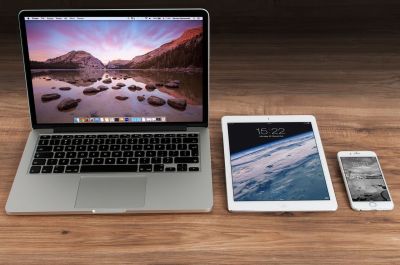
However, Apple has drawn a line, stating, "RCS is not our priority, nor is it a feature demanded by iPhone users," and continues to maintain its own messaging standard, iMessage. iMessage only interoperates among Apple products such as iPhone, iPad, iPod, and MacBook. Apple emphasizes that iMessage maintains high security.
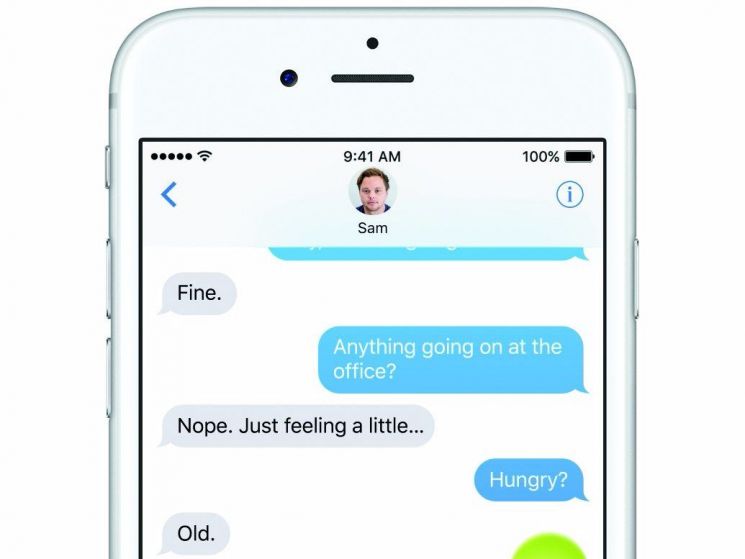
When Apple and non-Apple devices exchange messages, the 2nd generation standards SMS and MMS services are used. Because of this, sending photos or videos from an iPhone to an Android phone results in degraded image quality or, in some cases, transmission failure. Additionally, in the user interface (UI), iMessage is clearly distinguished by blue speech bubbles, while SMS/MMS uses green speech bubbles. Interoperability between the two platforms could resolve these issues.
Since the DMA grace period began in September, the EU has started investigating whether gatekeeper companies comply with the DMA. It is also known to be investigating iMessage under the assumption that it indirectly contributes to Apple's revenue. The EU plans to make judgments based on factors such as the scale of iMessage users, the degree of corporate dependence on iMessage, and the impact of iMessage on Apple's overall business.
The EU Commission plans to release the results of the iMessage investigation by February, ahead of the full enforcement of DMA regulations in March next year. Given the EU's previous success in breaking Apple's insistence on maintaining the Lightning standard and forcing the adoption of USB-C on iPhones, the industry expects that this time the interoperability issue between Android and Apple will be completely resolved.
© The Asia Business Daily(www.asiae.co.kr). All rights reserved.
![Clutching a Stolen Dior Bag, Saying "I Hate Being Poor but Real"... The Grotesque Con of a "Human Knockoff" [Slate]](https://cwcontent.asiae.co.kr/asiaresize/183/2026021902243444107_1771435474.jpg)

















