Eli Lilly's 'Zepbound' Approved in US and UK
Same Ingredient as Diabetes Drug 'Mounjaro'
By 2035, Half of Global Population Expected to Be Overweight
Obesity Drug Developers Rank 1st and 2nd in Global Pharma Market Cap
A obesity treatment drug that has confirmed a weight loss effect of over 20% for the first time has received formal approval from the U.S. Food and Drug Administration (FDA).
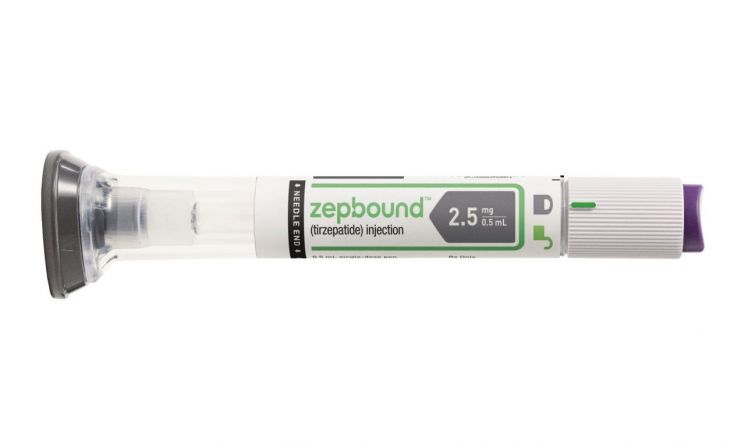
On the 8th (local time), Eli Lilly announced that it had received approval from the FDA and the UK's Medicines and Healthcare products Regulatory Agency (MHRA) for 'Zepbound' (generic name: Tirzepatide) as an obesity treatment drug. Zepbound is used for adults with a body mass index (BMI) of 27 kg/㎡ or higher who are obese or overweight and have issues such as hypertension, type 2 diabetes, dyslipidemia, or cardiovascular disease.
Zepbound, a dual agonist of glucagon-like peptide (GLP)-1 and glucose-dependent insulinotropic polypeptide (GIP), showed a 24.5% weight loss effect in the experimental group compared to the placebo group after 72 weeks of administration in previous clinical trials. Although still in the clinical stage, Zepbound was the first drug ever to confirm a weight loss effect exceeding 20%.
GLP-1 promotes insulin secretion and lowers blood sugar, originally developed as a diabetes treatment, but it has been repurposed as an obesity treatment due to its secondary effects of appetite suppression in the brain and delayed gastric emptying. GIP, although acting on different cell types than GLP-1, similarly promotes insulin secretion. Glucagon is secreted by the pancreas and promotes energy expenditure, resulting in weight loss.
Obesity treatment drugs are attracting great attention because obesity is emerging as a global enemy. The World Obesity Federation (WOF) predicts that without appropriate measures, by 2035, 4 billion people?more than half of the world's population?will be classified as overweight, and the obese population will exceed 1.9 billion. Consequently, the obesity treatment drug market is rapidly growing, with investment sectors forecasting the market size to reach $100 billion (approximately 130 trillion KRW) by 2030. Furthermore, as GLP-1 treatments have shown preventive effects on cardiovascular diseases following type 2 diabetes and obesity, and potential expansion into treatments for type 1 diabetes, Alzheimer's dementia, and non-alcoholic steatohepatitis (NASH), the pace of market expansion for obesity treatments is expected to accelerate.
Along with this, the valuation of companies developing GLP-1 treatments is soaring. Eli Lilly's market capitalization has grown to $561.3 billion (approximately 740 trillion KRW), ranking first among global pharmaceutical and biotech companies. Novo Nordisk, which transformed the diabetes treatment 'Saxenda' (semaglutide) into the obesity treatment 'Wegovy,' is in second place with a market cap of $446.3 billion (approximately 588 trillion KRW). Novo Nordisk has become the largest market cap company in Europe and has rapidly grown into a company that significantly influences the Danish economy.
The problem lies in supply. All major diabetes and obesity treatments are struggling to meet the rapidly increasing demand. Both Mounjaro and Saxenda/Wegovy, which share the same active ingredient as Zepbound, are experiencing supply shortages. As a result, Novo Nordisk is restricting the supply of low-dose Wegovy formulations for initial patients, effectively limiting new patient intake. There are also complaints that GLP-1 treatments primarily for diabetes are experiencing even more delayed supply in relatively smaller markets like South Korea.
Eli Lilly and Novo Nordisk aim to further increase their sales next year, but expanding supply is crucial to achieving this. Accordingly, Eli Lilly is significantly expanding facility investments, including expanding production facilities in the U.S. to double Tirzepatide production by the end of this year, while Novo Nordisk is increasing contract manufacturing organization (CMO) agreements.
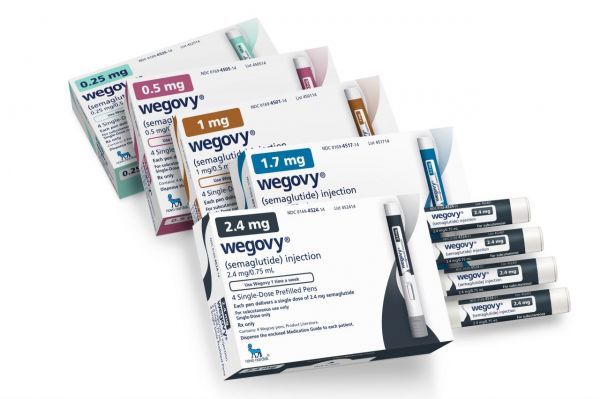 Novo Nordisk's GLP-1 class treatment 'Wegovy (active ingredient Semaglutide)'
 [Photo by Novo Nordisk]
Domestic companies are also hastening preparations to enter the obesity treatment drug competition. Hanmi Pharmaceutical is leading the 'H.O.P (Hanmi Obesity Pipeline)' project, headed by Lim Joo-hyun, Head of Strategic Planning at Hanmi Science (President of Hanmi Pharmaceutical), aiming to launch a GLP-1-based obesity drug tailored for Koreans by 2025. Last month, Hanmi Pharmaceutical received approval for phase 3 clinical trials of 'Epeglenatide' for obesity treatment, targeting a 2025 launch. Their plan includes a diverse obesity portfolio ranging from drugs for severely obese patients to those preventing muscle loss, suppressing rebound effects, and improving eating disorders. Additionally, Daewoong Pharmaceutical and Daewon Pharmaceutical are developing patch-type obesity treatments based on semaglutide, the active ingredient in Wegovy, to enhance dosing convenience.
© The Asia Business Daily(www.asiae.co.kr). All rights reserved.
![Clutching a Stolen Dior Bag, Saying "I Hate Being Poor but Real"... The Grotesque Con of a "Human Knockoff" [Slate]](https://cwcontent.asiae.co.kr/asiaresize/183/2026021902243444107_1771435474.jpg)

















