NVIDIA Supplies GH200 to UK Supercomputer
Equipped with 5,448 Units... More Than Existing Supercomputers
Positive News for Samsung and Hynix, Leading Players in HBM Market
U.S. company Nvidia will supply a large quantity of its AI semiconductor chip, the 'GH200 Grace Hopper Superchip,' to the fastest supercomputer in the United Kingdom. Samsung Electronics and SK Hynix, which are showcasing the latest high-bandwidth memory (HBM) compatible with the GH200, are expected to see a good opportunity to boost their performance.
On the 6th, Nvidia announced that it will supply the GH200 Grace Hopper Superchip to the UK AI supercomputer 'Eizembard-AI.' Eizembard-AI is a next-generation supercomputer launched with a ?225 million investment from the UK government. Nvidia explained, "Eizembard-AI will include 5,448 GH200 chips," adding that "construction is expected to be completed next year."
The GH200 is Nvidia's latest AI semiconductor chip that combines a central processing unit (CPU) and a graphics processing unit (GPU). After releasing the GH200 used with HBM3, the company introduced a new version of the GH200 equipped with the latest HBM3E in August. They also announced plans to begin full-scale mass production of this product in the second quarter of next year.
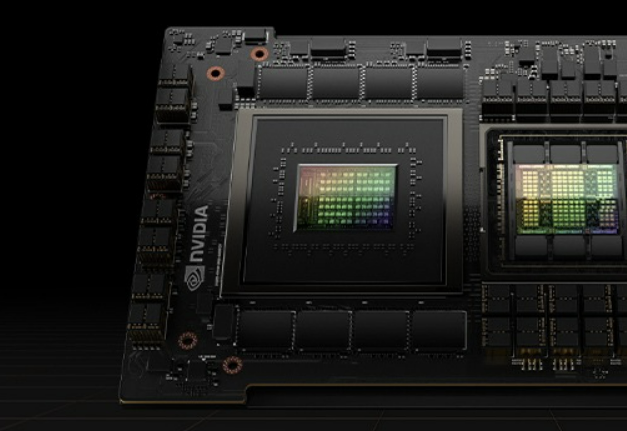
The number of GH200 chips installed in Eizembard-AI is greater than in existing supercomputers. Nvidia's supercomputer 'Helios,' which will be operational by the end of the year, contains 1,024 GH200 chips, about one-fifth of Eizembard-AI’s capacity. This is why Nvidia described the recent installation news as a "meaningful result." Consequently, the amount of HBM installed will also increase.
It has not yet been disclosed whether HBM3 or HBM3E will be used with the GH200 in the UK supercomputer. Either one product may be used exclusively, or both HBM3 and HBM3E may be used together. In any case, this is welcome news for Samsung Electronics and SK Hynix, who dominate the HBM market.
Both companies recently revealed their HBM business plans during their third-quarter conference calls. Samsung Electronics stated that it plans to increase HBM supply volume by 2.5 times next year compared to this year and has already completed supply agreements with customers for this volume. They also aim to increase the proportion of HBM3 and HBM3E products, which are among their latest offerings.
SK Hynix has also received pre-orders for next year’s production of HBM products, including HBM3 and HBM3E. This means they have already sold HBM that has not yet been manufactured. Next year’s capital expenditures (CAPEX) will minimize increases compared to this year, but investments in HBM and related packaging technology, such as Through Silicon Via (TSV), will be expanded.
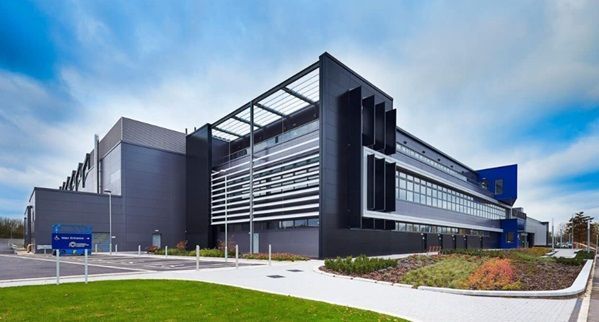 The National Composites Centre (NCC) at the University of Bristol, where the UK supercomputer 'Isambard-AI' will be installed /
 [Photo by NVIDIA]
The industry expects the HBM market size to more than double next year compared to this year. As HBM demand continues to exceed supply, it is anticipated to positively impact the performance of Samsung Electronics and SK Hynix. DS Securities forecast that the proportion of HBM sales relative to DRAM sales for both companies will increase to 9% and 14% respectively next year, up from this year.
Meanwhile, the Korea Institute for International Economic Policy pointed out in its report titled 'Impact and Implications of the U.S. Semiconductor Export Control Expansion' published on the same day that the U.S. is expressing concerns about HBM, which can be used together with AI semiconductors, as it tightens export regulations on AI semiconductors. However, the negative impact on the domestic industry is expected to be limited.
China’s efforts to achieve semiconductor self-reliance and its entry into HBM development are factors to watch in the future. The Korea Institute for International Economic Policy explained, "Although China’s independent HBM development efforts may not pose a significant threat to our industry in the short term, they should be monitored carefully from a mid- to long-term perspective."
© The Asia Business Daily(www.asiae.co.kr). All rights reserved.
![Clutching a Stolen Dior Bag, Saying "I Hate Being Poor but Real"... The Grotesque Con of a "Human Knockoff" [Slate]](https://cwcontent.asiae.co.kr/asiaresize/183/2026021902243444107_1771435474.jpg)
















