Kishida Announces 17 Trillion Yen Economic Stimulus
5 Trillion Yen for Tax Cuts and Low-Income Support
Debate Over Economic Impact and Fairness
Concerns Over Burden on Future Generations
Japanese Prime Minister Fumio Kishida has made a bold move to recover his approval ratings by injecting 17 trillion yen (125 trillion won) in fiscal spending. However, the policy has been criticized for increasing the massive fiscal deficit burden and for being an inequitable tax cut policy. Japanese netizens are criticizing Prime Minister Kishida as the ‘Tax Cut Lying Glasses-Wearer,’ implying that he is forcefully pushing through an economic stimulus policy.
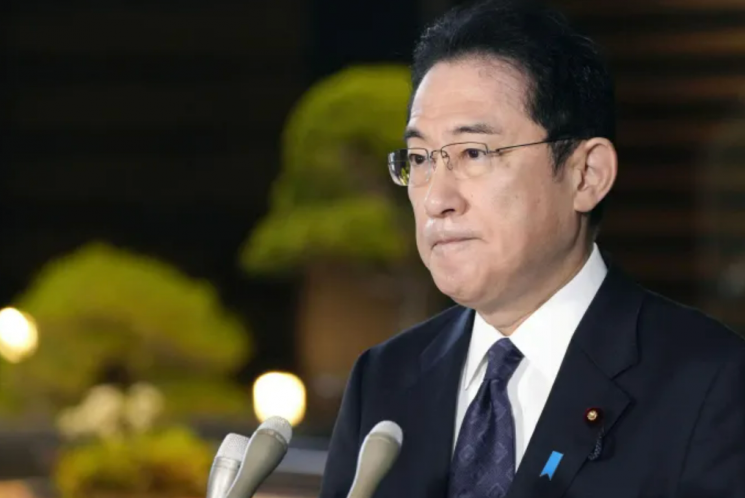
On the 3rd, the Asahi Shimbun criticized Kishida’s economic stimulus plan, saying, "Tax cuts are nothing more than a handout policy." The term ‘baramaki’ in Japanese means ‘to scatter recklessly,’ and in Korean it refers to a ‘giveaway’-style populist policy. Kishida positioned tax cuts as the core of this economic stimulus plan, allocating 5 trillion yen of the total budget solely to tax cuts and support for low-income groups.
There are also evaluations that the stimulus plan does not realistically reflect Japan’s economic situation. Yoshiyuki Shimazawa, a professor at Kanto Gakuin University, told the Asahi Shimbun, "In the past, in the 1960s, income tax cut policies were implemented, but at that time Japan had low unemployment and a fiscal surplus, so the policy was intended to return money to society." He added, "It was a policy implemented out of concern that a surplus might negatively affect the economy, so there is no reason to implement tax cuts under the current fiscal deficit situation."
Professor Shimazawa stated, "Unless new revenue sources are secured, the government will ultimately have to increase debt," and added, "This situation leads to the current generation using up all resources while future generations have to repay the debt, raising the question of whether it is acceptable to impose responsibility on future generations by pushing tax cuts."
The Nihon Keizai Shimbun, in an editorial, questioned Prime Minister Kishida, saying, "We need policies that face future generations, such as social security and fiscal structural reforms, not just the upcoming election," and asked whether this policy can truly be considered a measure for the future.
Questions have also been raised about the economic stimulus effect of the tax cut policy. For economic stimulus, raising the minimum wage and promoting corporate capital investment should precede, but the government is trying to allocate excessive budget to the ancillary policy of tax cuts. Nihon Keizai pointed out, "For the economy to improve, wages must rise in line with price increases, consumption must increase in a virtuous cycle, and companies must expand investment," adding that the tax cut policy is merely a training wheel prepared for emergencies.
Opposition to the equity of the tax cut policy has also been detected. The economic policy plan announced by the Kishida Cabinet the day before included a tax reduction totaling 40,000 yen, including 30,000 yen in income tax and 10,000 yen in resident tax. The total tax cut amount is estimated to be in the mid-3 trillion yen range. However, the plan also states that low-income households who do not pay resident tax will receive 70,000 yen per household (totaling over 1 trillion yen), leading some to question whether it is appropriate to collect money from high- and middle-income citizens and redistribute it to low-income groups.
Among Japanese netizens, the trend of calling Prime Minister Kishida the derogatory nickname ‘Tax Cut Lying Glasses-Wearer’ is spreading. Initially, Kishida was called the ‘Tax Increase Glasses-Wearer’ because he raised consumption tax and tobacco tax to secure defense spending funds. However, with the equity controversy over tax cuts, the new derogatory nickname ‘Tax Cut Lying Glasses-Wearer’ has emerged.
Nevertheless, Prime Minister Kishida did not waver in his determination regarding the new economic policy. At a press conference the day before, when asked by reporters if he was aware of being jeered with nicknames such as ‘Tax Increase Glasses-Wearer,’ Kishida said, "I know I am called by various nicknames," but added, "No matter what winds blow, it does not matter. I believe it must be done."
© The Asia Business Daily(www.asiae.co.kr). All rights reserved.
![Clutching a Stolen Dior Bag, Saying "I Hate Being Poor but Real"... The Grotesque Con of a "Human Knockoff" [Slate]](https://cwcontent.asiae.co.kr/asiaresize/183/2026021902243444107_1771435474.jpg)















