October PMI Drops 1.1 Points
Sales Slowdown Due to Weak External Demand
New Exports Decline for 4 Consecutive Months
China's Caixin Manufacturing Purchasing Managers' Index (PMI), which reflects the perceived economic conditions, has shifted into a contraction phase. Despite the Chinese government's active economic stimulus policies, analysis suggests that the economy is struggling to move into a recovery phase.
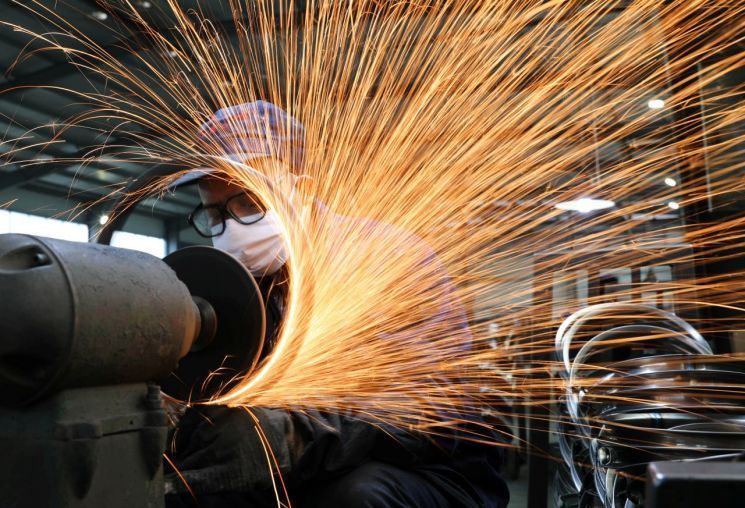
On the 1st, China's economic media outlet Caixin reported that the October manufacturing PMI, surveyed jointly with credit rating agency Standard & Poor's (S&P), recorded 49.5, down 1.1 points from the previous month (50.6). This figure fell short of the market expectation of 50.8.
The PMI is based on surveys of purchasing and human resources managers at companies. A result above 50 indicates economic expansion, while a figure below 50 signals economic contraction.
This is the first time since July that the Caixin manufacturing PMI has shifted into contraction territory. The Caixin manufacturing PMI fell below 50 to 49.2 in July but rebounded to 51.0 and 50.6 in August and September, respectively, indicating an expansion phase.
The manufacturing PMI for October, released the previous day by the National Bureau of Statistics, also recorded 49.5, marking a 0.7-point decline from the previous month. Both government and private statistics fell short of market expectations.
Weak overseas demand is analyzed to have led to a slowdown in overall sales growth for manufacturing companies. New export orders have declined for four consecutive months. As product sales fell short of expectations, inventories surged significantly, marking the largest increase since September 2015.
Rising prices due to increases in raw materials and oil have added to the burden on companies. As more companies cut labor costs to reduce expenses, employment has declined for two consecutive months, and the employment index has remained in contraction for seven months. The Caixin Insight Group diagnosed, "Overall, manufacturers' sentiment in October was poor," adding, "The foundation for recovery and expectations are weak."
Bloomberg analyzed that despite the Chinese government's stimulus measures, the economy is slowing due to global economic uncertainties. Bloomberg explained, "The conflict between Israel and Palestine has driven up oil prices, reducing global demand, leading to weak manufacturing activity across Asia this month," calling it "a bad sign for China's external trade environment."
Economic experts, based on these indicator results, have suggested that the Chinese government should actively implement additional stimulus measures to revive the economy. Cheng Xu, a Bloomberg economist, stated, "The October data sent a message that growth momentum is slowing despite active government stimulus policies," adding, "The sharp decline in PMI deepens concerns about economic recovery." Zhang Jiwei, chief economist at Pinpoint Asset Management, also emphasized the need for the Chinese government to consider increasing the fiscal deficit next year and issuing additional government bonds.
© The Asia Business Daily(www.asiae.co.kr). All rights reserved.
![Clutching a Stolen Dior Bag, Saying "I Hate Being Poor but Real"... The Grotesque Con of a "Human Knockoff" [Slate]](https://cwcontent.asiae.co.kr/asiaresize/183/2026021902243444107_1771435474.jpg)















