Chinese Buyers Continue Domestic Real Estate Shopping
High Interest Rates Also Drive Rising Delinquency Rates
Rep. Seo: "Speculation After Evading Regulations and Taxes"
As foreign nationals continue shopping for real estate in South Korea, it has been found that one in four Chinese investors borrow money from domestic banks to invest.
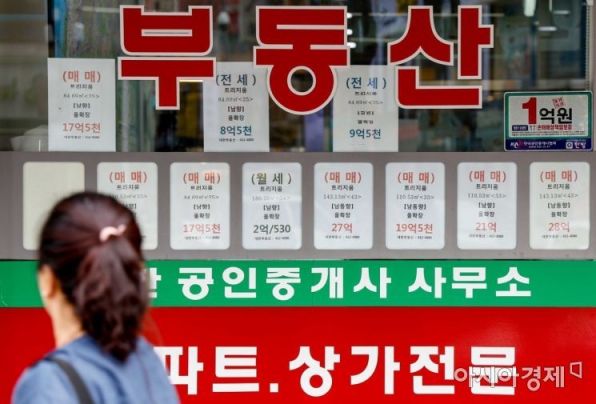
According to data submitted by the Financial Supervisory Service to National Assembly member Seo Beom-su on the 1st, the outstanding balance of mortgage loans to foreigners at the four major commercial banks (KB Kookmin, Shinhan, Hana, and Woori Bank) stood at 2.304 trillion KRW as of the end of June this year. This represents a 3.3% increase compared to the end of last year (2.2312 trillion KRW).
Looking at the outstanding mortgage loans to foreigners at these banks by year, the figures show an increasing trend: ▲End of 2019 (2.0455 trillion KRW) ▲End of 2020 (2.234 trillion KRW) ▲End of 2021 (2.2915 trillion KRW).
As of the end of the first half of this year, mortgage loan balances to Chinese nationals amounted to 1.3338 trillion KRW, accounting for 57.9% of the total.
Mortgage loans to Chinese nationals increased by 24.4% from 1.0719 trillion KRW at the end of 2019 over three and a half years, which is double the overall growth rate of 12.6% for mortgage loans to all foreigners during the same period.
As of the end of the first half of this year, the total number of mortgage loan executions to foreigners was 17,949, of which 12,234 cases (68.2%) were Chinese nationals.
According to the Ministry of Land, Infrastructure and Transport, as of the end of last year, foreigners owned a total of 83,512 houses in South Korea, with Chinese nationals holding 44,889 houses, accounting for 53.7%. Moreover, it is estimated that about one-quarter of the houses owned by Chinese nationals were purchased using loans from domestic banks.
The problem is that the delinquency rate among Chinese nationals who have taken out mortgage loans is rising due to the recent increase in interest rates.
Examining the delinquency rate by year shows a decrease from ▲0.13% at the end of 2019 ▲0.09% at the end of 2020 ▲0.09% at the end of 2021, but it rose to 0.12% at the end of last year and further to 0.18% by the end of the first half of this year. This is presumed to be due to the average mortgage loan interest rate increasing from 3.30% per annum at the end of 2019 to 3.89% at the end of 2022 and 4.26% at the end of June this year.
If foreigners evade various regulations and engage in speculative housing transactions using domestic bank funds, then disappear without repaying the money, the damage will be borne entirely by domestic financial institutions or tenants.
Assemblyman Seo stated, "There were rumors that during the real estate price surge, foreign, especially Chinese speculative capital entered the market, driving up house prices and making large profits, and these statistics have now confirmed that to be true. If there are foreigners who have participated in speculation while evading financial regulations or taxes and caused market disruption, they must be strictly punished, and measures to regulate this should be prepared as soon as possible."
© The Asia Business Daily(www.asiae.co.kr). All rights reserved.
![Clutching a Stolen Dior Bag, Saying "I Hate Being Poor but Real"... The Grotesque Con of a "Human Knockoff" [Slate]](https://cwcontent.asiae.co.kr/asiaresize/183/2026021902243444107_1771435474.jpg)















