5·18 Truth Investigation Committee Announces Findings of Fact-Finding Investigation
Spy Lee Chang-yong, who was arrested in 1980, and Son Seong-mo, who was caught the following year, were found to have no connection to the May 18 Democratic Uprising.
The May 18 Democratic Movement Truth Commission announced on the 30th, at the 100th plenary session, that it confirmed and decided that the spy cases of Lee Chang-yong and Son Seong-mo were unrelated to the May 18 Democratic Uprising.
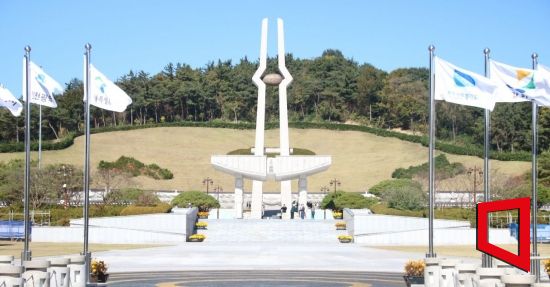
The commission conducted investigations into the investigation records and trial records of the intelligence authorities and police at the time, conducted interviews with the investigators in charge, and carried out on-site investigations related to Lee Chang-yong's whereabouts.
Lee Chang-yong infiltrated Jeonnam Boseong just before the May 18 Democratic Uprising in 1980 and was arrested on the 23rd of the same month at Seoul Station following a citizen's report.
Despite the difficult investigation circumstances, such as Lee Chang-yong's failed suicide attempt with a poison needle ampoule and fainting after biting his tongue at the time of arrest, the Seoul Metropolitan Police Department hastily announced the next day that he was a "spy sent to incite the Gwangju protests," which was prominently reported by major media outlets, the commission confirmed.
This was judged to be an example of how the public was led to perceive the May 18 Democratic Uprising as an event incited by North Korea.
The commission stated that spy Lee Chang-yong was confirmed to have been dispatched with missions such as restoring a disrupted fixed spy network and establishing an underground party.
Spy Son Seong-mo infiltrated Haenam, Jeonnam on May 4, 1980, and after moving between temples nationwide, was caught on February 15, 1981, at Hye-guksa Temple in Mungyeong, Gyeongbuk, following a citizen's report. Several years ago, a North Korean defector writer claimed through a nonfiction booklet that Son Seong-mo disguised himself as a monk and commanded North Korean special forces who infiltrated Gwangju during the May 18 Democratic Uprising at Jungsimsa Temple on Mudeungsan Mountain, which sparked controversy.
The commission conducted investigations into Son Seong-mo's investigation records, trial records, counterintelligence incident records, as well as interviews with investigators and on-site investigations.
As a result, it was confirmed that spy Son Seong-mo received meticulous long-term training in advance to operate covertly within the Buddhist community, disguised himself as a monk, and moved between approximately 34 temples nationwide until his arrest in February 1981.
Additionally, during the May 18 Democratic Uprising period, he stayed not at Jungsimsa Temple on Mudeungsan Mountain but at Seojinam in Namwon, Jeonbuk. When the police conducted so-called intensive inspections in vulnerable areas, he moved his residence to Hye-guksa Temple in Mungyeong, Gyeongbuk, and gathered information on temples nationwide before being arrested in February 1981.
© The Asia Business Daily(www.asiae.co.kr). All rights reserved.
![Clutching a Stolen Dior Bag, Saying "I Hate Being Poor but Real"... The Grotesque Con of a "Human Knockoff" [Slate]](https://cwcontent.asiae.co.kr/asiaresize/183/2026021902243444107_1771435474.jpg)















