KCC Conducts Research on Consumer Protection in Live Commerce
Entry into Home Shopping and YouTube Markets... 25 Trillion KRW Expected in 2 Years
"Should Not Hinder Growth... Guidelines Must Be Established First"
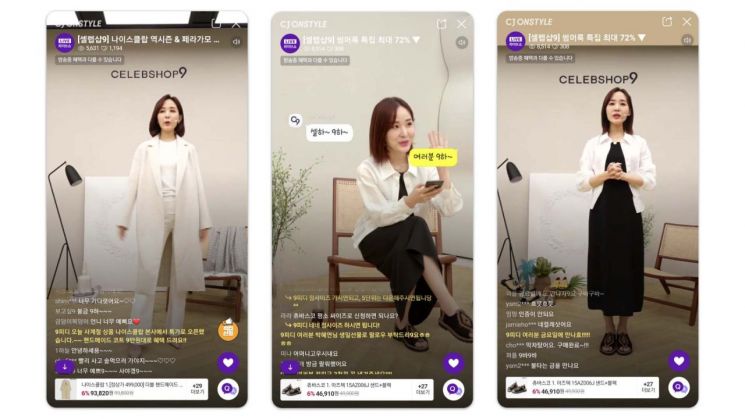
The government is preparing guidelines to strengthen consumer protection in live commerce. Although the live commerce market has expanded significantly due to the surge in non-face-to-face shopping amid COVID-19, sufficient regulations for consumer protection have not been established. Recently, YouTube and TV home shopping companies have also entered the live commerce market, and the market size is expected to continue growing.
Broadcasting Commission "Developing Guidelines"
According to the distribution and broadcasting industry on the 2nd, the Korea Communications Commission (KCC) selected ‘Policy Measures for Preventing Digital Service User Damage and Protecting User Rights’ as a research project in June and is currently conducting research. The project covers all issues related to digital service users, including service disruptions, and specifically includes preparing guidelines to protect live commerce consumers. This is the first time that consumer damage prevention related to live commerce has been included in a research project. Live commerce refers to live streaming e-commerce, where products are introduced and sold through mobile or real-time video streaming. It originated in 2016 with Alibaba’s live broadcasts in China and gained attention domestically in 2020 as face-to-face shopping decreased due to COVID-19. Consumers were attracted by the ability to hear product explanations through real-time conversations and to discover various products not seen in traditional channels such as home shopping, department stores, outlets, and marts.
However, there have been side effects. Although the concept of sellers selling products through video is similar to TV home shopping, consumer protection measures are almost nonexistent. For example, TV home shopping, which uses broadcasting as a public medium, must comply with strict regulations from the Korea Communications Commission and the Ministry of Science and ICT to maintain its license, but live commerce is different. Anyone can sell goods or services through platforms, but live commerce is exempt from prior review, advertising regulations, and consumer protection responsibilities. There have been efforts to legally establish a consumer protection system. In 2021, independent lawmaker Yang Jeong-suk proposed a partial amendment to the ‘Act on Consumer Protection in Electronic Commerce, etc.’ to preserve and allow access to live commerce videos as a consumer protection measure. However, the bill has remained under committee review for several years. Last year, Democratic Party lawmaker Byun Jae-il pointed out that the KCC should lead the preparation of guidelines to protect live commerce consumers, marking the last political interest. A representative from Yang Jeong-suk’s office said, "Interest in live broadcast sales has waned since the transition to the endemic phase, lowering attention to the bill," adding, "Not only consumer protection but also e-commerce companies want the bill to pass, so we continue to promote interest in it."
The KCC plans to encourage voluntary regulation through guidelines before changing the law. An official from the relevant department explained, "Rather than imposing strong mandatory regulations, the research aims to provide direction so that companies can voluntarily take steps to protect consumers. The research is scheduled to be completed by the end of the year."
YouTube and Home Shopping Also Enter the Market
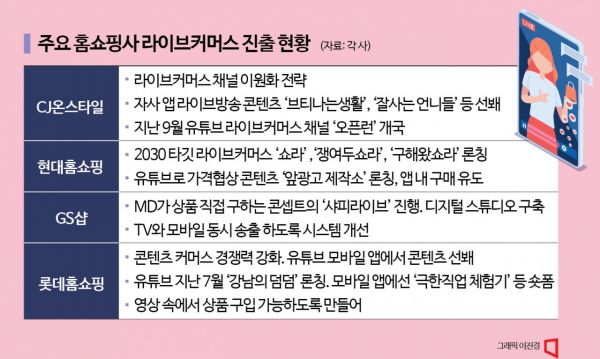
Although the growth of the live commerce market has slowed due to the endemic phase, more businesses are expected to enter the market in the future. Recently, YouTube, the world’s largest video platform, and TV home shopping companies that had been competing with live commerce growth have also jumped into live commerce. Since last year, YouTube has allowed creators to participate in sales through live broadcasts. Major live TV home shopping companies are also expanding live commerce by moving their broadcasting systems to their own applications (apps). For example, CJ OnStyle started ‘Live Show’ within its app and recently introduced ‘Offrun,’ a YouTube live commerce channel. Hyundai Home Shopping is expanding live broadcast channels such as ‘Showra,’ ‘Guhaewasshora,’ and ‘Jaengyeodushora,’ while Lotte Home Shopping focuses on increasing visits from subscribers and users through content like ‘Showhost Jeonbok Sonjil Experience’ and the YouTube channel ‘Gangnam-ui Deomdeom’ instead of directly selling products.
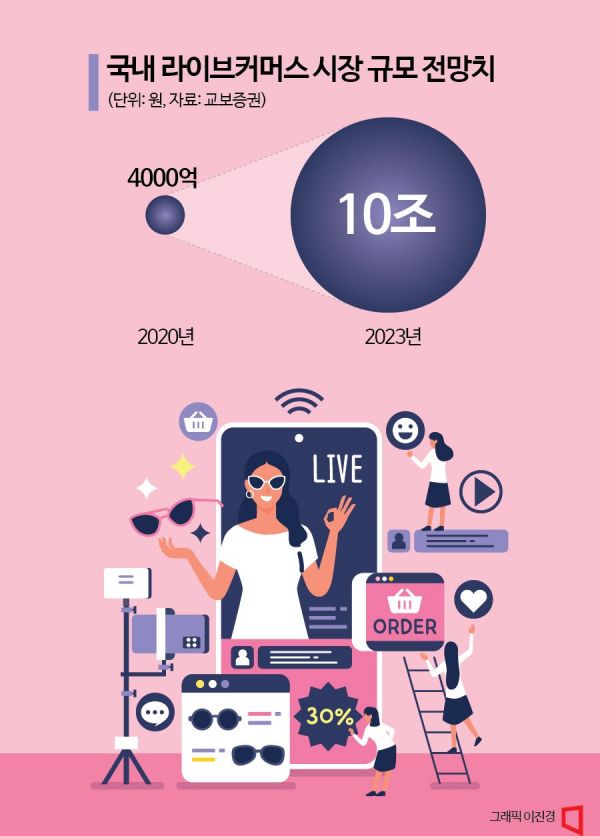
Experts also have high expectations for the growth of the live commerce market. This market offers a new shopping experience different from existing shopping channels and is especially popular among consumers in their 20s and 30s. As a result, the live commerce market size is predicted to grow significantly from about 400 billion KRW in 2020 to over 10 trillion KRW in 2023.
However, regarding regulation, it is said that the live commerce market is still in its early stages domestically and has not yet fully established itself. Professor Seo Yong-gu of Sookmyung Women’s University’s Business Administration Department said, "Since live commerce is a market where anyone can become a seller, regulations are theoretically necessary to address issues such as counterfeit products and returns," but added, "Because live commerce is an innovative market with expected growth, it is important to encourage companies to improve voluntarily through monitoring rather than imposing strong regulations."
Currently, Coupang is conducting online seminars to educate sellers on live service functions and usage methods. Although not mandatory, seller participation is actively encouraged. 11st provides sellers with broadcasting and review guidelines and has established regulations to store videos for six months. Gmarket operates a dedicated live commerce team composed of professionals to prevent deceptive advertising and has set up a pre-management system involving related departments’ inspections. Videos are stored for one year and receive after-sales services equivalent to those for general products.
© The Asia Business Daily(www.asiae.co.kr). All rights reserved.



















