Korea-EU Trade Ministers Meeting and the 11th Korea-EU FTA Trade Committee
Expressing Our Position on Trade Issues
Urging Minimization of Trade and Investment Impact
Andeok Geun, Head of the Trade Negotiation Department at the Ministry of Trade, Industry and Energy, requested careful consideration on the 31st to ensure that the European Union's (EU) push for perfluorinated compounds regulation does not impose excessive burdens on the industry.
On the same day, Head Andeok held the Korea-EU Trade Ministerial Meeting and the 11th Korea-EU FTA Trade Committee in Seoul with Valdis Dombrovskis, the EU Executive Vice-President in charge of trade, to review the implementation status of the FTA and discuss trade issues such as the Carbon Border Adjustment Mechanism.
According to the Ministry of Trade, both sides agreed at the meeting to continue cooperating to expand free trade and reduce non-tariff barriers amid the recent global trend of protectionism. The Korean side actively presented the government and industry’s positions regarding the EU’s Carbon Border Adjustment Mechanism, Battery Act, steel safeguard measures, and France’s electric vehicle subsidy reform, urging active cooperation to minimize trade and investment impacts between Korea and the EU.
At the trade ministerial meeting, Head Andeok requested careful consideration to ensure that the EU’s push for perfluorinated compounds regulation does not impose excessive burdens on the related industries.
Perfluorinated compounds are organic chemicals composed of carbon and fluorine. They are heat-resistant and have water- and oil-repellent properties, making them widely used across many industrial sectors. However, they are not easily decomposed, have high persistence and bioaccumulation, are widely found in humans and the environment, and are also harmful. Accordingly, five countries?Netherlands, Germany, Denmark, Sweden, and Norway?have proposed a complete ban on the use of perfluorinated compounds to the European Chemicals Agency (ECHA). ECHA plans to decide on the evaluation opinion next year, have it adopted by the European Commission in 2025, and apply usage restrictions as early as 2026.
Meanwhile, besides holding this Trade Committee meeting, the government plans to actively communicate Korea’s stance on recently promoted economic legislation to the EU and European countries through bilateral and multilateral trade negotiation activities on various occasions. Through this, efforts will continue to minimize the burdens on Korean companies entering the EU market and maximize opportunity factors.
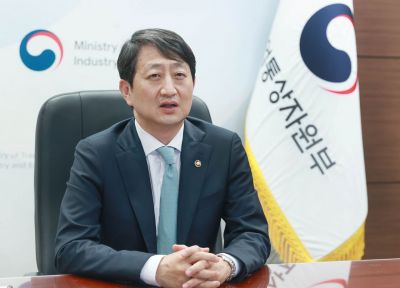 Anduk Geun, Director General for Trade Negotiations at the Ministry of Trade, Industry and Energy. (File photo)
 Photo by Yonhap News
© The Asia Business Daily(www.asiae.co.kr). All rights reserved.

















