Park Hwan-hee, Chair of the Seoul Metropolitan Council Operations Committee, Attends Kick-off Meeting for Gyeongchun Line Forest Trail Revitalization Master Plan... Requests Maintaining Existing Railway Meaning and Form While Securing Key Spaces Like Library, Plaza, and Cafe Through Gyeongchun Platform Improvements
The Gyeongchun Line Forest Trail is set to be redeveloped into a pedestrian-centered walking path, with a detour road also planned for bicycle users.
The train, previously used as a visitor center, will be repurposed into a small library, a citizen open caf?, and community facilities after the management office relocates. The front plaza will be specialized as a space for various cultural events, connected with a lawn yard.
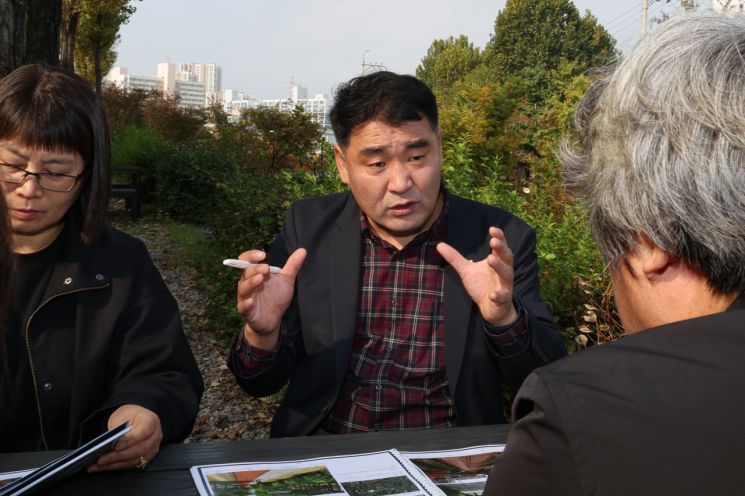
On the 24th, Park Hwan-hee, Chair of the Seoul Metropolitan Council’s Operations Committee (People Power Party, Nowon 2), attended the ‘Gyeongchun Line Forest Trail Revitalization Basic Plan Project Kick-off Meeting’ held by Seoul City the previous day, stating, “I conveyed residents’ opinions and reviewed the current status of the existing Gyeongchun Line Forest Trail environment improvement project and the basic plan.”
The Gyeongchun Line Forest Trail Revitalization Basic Plan project aims to accommodate the rapidly increasing number of users and diverse citizen demands by preparing plans for creating key spaces and facility improvements in major sections, and establishing a master plan linked with ecological treasures such as Taegangneung and nearby universities.
Seoul City plans to reflect the project results targeting the Gyeongchun Line Forest Trail (L=6km) and its surrounding areas by the first quarter of 2024 and to redevelop the Gyeongchun Line Forest Trail by 2026.
The main tasks include ▲establishing a bicycle road detour and restructuring the Gyeongchun Platform to enhance the function of the living zone park, and creating a key space at the Central Park Yard ▲creating the Gyeongchun Village gallery space and operating the Railroad Art Festival to enhance the value-respecting image ▲activating networks through ecological networks such as Taegangneung and Jungnangcheon, linking living zones like Gongneung Station and Dokkaebi Market, and revitalizing the area through hosting the Gyeongchun Line Biennale (tentative name).
Chair Park emphasized, “Since the revitalization of the Gyeongchun Line Forest Trail also affects the activation of surrounding commercial areas, please create key spaces as living zone parks, and implement environmental improvements that maintain the existing railroad form so that local brands, caf?s, and art activity spaces can harmonize with the past appearance.”
Additionally, Chair Park, while continuously consulting with Seoul City and inspecting the Gyeongchun Line Forest Trail environment improvement project sites, requested pedestrian-centered street improvements, noting, “There is a lack of entrances for strollers and wheelchairs to access the Gyeongchun Line Forest Trail, and some palm mat areas need to be replaced with paving blocks to prevent inconvenience for pedestrians.”
The Gyeongchun Line Forest Trail environment improvement project consists of detailed projects such as ▲separating bicycle roads and sidewalk maintenance (460 million KRW) ▲installing two restrooms and two rest areas (388 million KRW) ▲relocation and installation of the staff center (120 million KRW) ▲tree planting (150 million KRW), with a total investment of 1.5 billion KRW currently underway for environment improvement services.
Chair Park Hwan-hee stated, “Taking this project as an opportunity, we will do our best to create spaces such as fountains and plaza galleries around the Gyeongchun Line Platform to serve as living zone parks while safely maintaining the existing railroad to preserve its significance.”
© The Asia Business Daily(www.asiae.co.kr). All rights reserved.
![Clutching a Stolen Dior Bag, Saying "I Hate Being Poor but Real"... The Grotesque Con of a "Human Knockoff" [Slate]](https://cwcontent.asiae.co.kr/asiaresize/183/2026021902243444107_1771435474.jpg)















