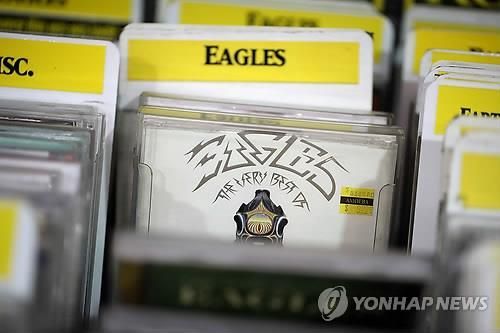
The amount of plastic used in producing albums has increased more than 14 times over the past six years.
According to data received by Woo Won-sik, a member of the National Assembly's Environment and Labor Committee from the Democratic Party of Korea, from the Ministry of Environment on the 22nd, the amount of plastic used by domestic entertainment agencies subject to waste charge fees for album production steadily increased from 55.8 tons in 2017 to 145.4 tons in 2018, 136.1 tons in 2019, 225.2 tons in 2020, 479.0 tons in 2021, and 801.5 tons last year. Albums contain various plastics, including CDs, photocards, canvases, and packaging vinyl.
Considering album sales, the actual amount of plastic used is estimated to be higher than the Ministry of Environment's figures. According to Circle Chart, 74,195,554 albums were sold last year. Since one CD weighs 18.8g, the plastic used for CDs alone amounts to 1,394.9 tons.
According to the sustainability management report released by HYBE, the largest domestic music agency, in July this year, HYBE used 894.6 tons of plastic last year for product manufacturing and packaging.
Payments for waste charges and recycling fees have also rapidly increased. Waste charges are imposed on companies that manufacture or import products, materials, or containers that are difficult to recycle and may cause waste management issues, while recycling fees are charged to companies that fail to meet the obligations under the Extended Producer Responsibility (EPR) system.
Waste charges increased from 100.81 million KRW in 2021 to 191.41 million KRW last year, and recycling fees rose from 6.008 million KRW in 2018 to 41.418 million KRW in 2021. Photocards are even excluded from the charge because they are classified as paper.
Meanwhile, voices from the music industry criticize the marketing strategies of entertainment agencies that encourage redundant consumption. According to the Korea Creative Content Agency's '2022 Music Industry White Paper,' only 11.7% of consumers listen to music using the albums they purchased.
Rep. Woo stated, "As K-pop receives global love, awareness of ESG (environment, social, and governance) management must be raised," and pointed out, "The Ministry of Environment should also prepare measures such as labeling separate disposal instructions on album packaging and clearly establishing the criteria for imposing charges."
© The Asia Business Daily(www.asiae.co.kr). All rights reserved.
![Clutching a Stolen Dior Bag, Saying "I Hate Being Poor but Real"... The Grotesque Con of a "Human Knockoff" [Slate]](https://cwcontent.asiae.co.kr/asiaresize/183/2026021902243444107_1771435474.jpg)















