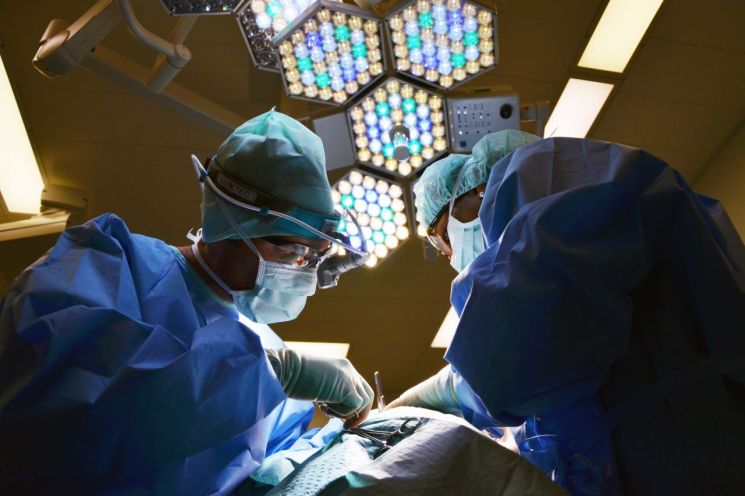
Medical organizations have announced their plan to fully mobilize all means, including strikes, to strongly oppose the government's plan to significantly increase the number of domestic medical school admissions starting in 2025.
According to the Korean Medical Association (KMA), a nationwide meeting of doctor representatives will be held in Seoul on the 17th to prepare future measures regarding the government's plan to expand medical school admissions. The meeting will be attended by the presidents of 16 city and provincial medical associations under the KMA, the Korean Intern Resident Association, the Public Health Doctors Association, and the Korean Private Practitioners Association. Within the medical community, there are voices stating, "If the plan is announced hastily without an agreement between the government and medical professionals, we will not hesitate to strike."
In a statement on the 16th, the KMA's General Assembly said, "The political idea of simply increasing medical school admissions will ruin advanced medical care and threaten the health and lives of the public," and added, "If the drastic expansion of medical school admissions is true, the association and all members agreed on the opinion that they must respond with all available means." In fact, during the 2020 COVID-19 pandemic, when the government pushed to increase medical school admissions and establish public medical schools, doctors including residents staged a total strike and collective work stoppage.
The government is expected to announce this week a plan to increase medical school admissions, which have been frozen for 18 years, by as many as over 1,000 students as a measure to resolve gaps in essential and regional medical care. Since early this year, through 14 rounds of medical issue consultative bodies with the medical community, a plan to increase admissions by 300 to 500 students annually from 2025 was considered, but due to the relatively low number of doctors compared to overseas and rapid aging, it was concluded that such an increase would be insufficient, leading to a shift toward a plan for a significant increase. There are also talks that the expansion of medical school admissions will focus on regional national universities and local talent.
According to the Ministry of Health and Welfare, even if medical school admissions increase by 1,000 students annually starting next year, the number of doctors per 1,000 people in Korea in 2035 is predicted to be only 2.88, which is 64% of the OECD average of 4.5 doctors per 1,000 people.
Public opinion supporting the expansion of medical school admissions is also strong. According to a recent "National Medical Issue Survey" released by Kim Won-i, a member of the National Assembly's Health and Welfare Committee from the Democratic Party, more than half of the public believes that medical school admissions should be increased by 300 to 1,000 students. Among them, 24.0% responded that the increase should be more than 1,000 students.
However, the medical community's stance is firm. They argue that simply increasing the number of doctors cannot fill the gaps in essential and regional medical care. A medical community official said, "The fundamental improvement should come first by raising medical fees in these medical fields where effort and compensation are low, thereby improving the treatment of medical staff." The Seoul Medical Association recently stated in a statement, "Whether it is public medical schools, new medical schools, or the government's proposed expansion of medical school admissions, none can prevent the ongoing collapse of Korean healthcare," and added, "To expand essential medical care, the vicious cycle of existing doctors shifting to non-essential medical fields must be resolved first."
© The Asia Business Daily(www.asiae.co.kr). All rights reserved.
![Clutching a Stolen Dior Bag, Saying "I Hate Being Poor but Real"... The Grotesque Con of a "Human Knockoff" [Slate]](https://cwcontent.asiae.co.kr/asiaresize/183/2026021902243444107_1771435474.jpg)















