Many University Dropouts Expected in Medical School Admissions
Some Say Proper Placement Is More Important Than Increasing Quotas
Starting from the 2025 academic year university entrance exam, the quota for medical schools is expected to be significantly expanded by more than 1,000 students, and there is an analysis that the number of repeat test-takers (N-su students) re-challenging the college entrance exam will increase.
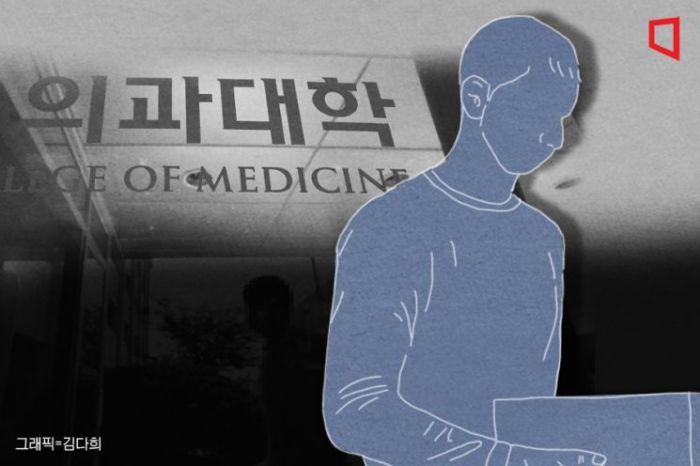
According to the education sector on the 16th, the recruitment quota for medical schools is expected to be dramatically expanded by more than 1,000 students starting from the 2025 academic year university entrance exam.
Since the medical school admission quota has been frozen for 17 years since 2006, causing an overheated entrance exam competition and a shortage of doctors below the OECD average, this measure is interpreted as an effort to solve these problems by increasing the quota.
Accordingly, many changes are expected to occur in the entrance exam landscape. The education sector anticipates that the number of N-su students aiming to re-challenge the entrance exam will increase, taking advantage of the expanded medical school quota.
In particular, it is analyzed that many top-tier university students from SKY (Seoul National University, Korea University, Yonsei University), as well as students from colleges of Korean medicine, pharmacy, veterinary medicine, and science and engineering specialized universities, will decide to take a leave of absence or repeat a year to apply for medical school, leading to mid-course withdrawal from their current universities.
If the number of N-su students participating in the medical school entrance exam increases this way, it will not be easy for the competition rate to drop even if the medical school quota is increased.
On the other hand, concerns have also been raised about the plan to increase the medical school quota. Medical associations argue that instead of immediately increasing the medical school quota, policies to appropriately allocate doctors to needed areas should be implemented first.
Their opinion is, "Increasing the number of doctors does not guarantee an increase in doctors in essential medical fields or the training of regional doctors."
They emphasize that there could be problems such as concentration of personnel only in the metropolitan area or specific medical fields, and stress the need for sufficient discussion, saying, "Mid-term measures such as establishing a medical delivery system that can overcome metropolitan concentration are necessary."
© The Asia Business Daily(www.asiae.co.kr). All rights reserved.
![Clutching a Stolen Dior Bag, Saying "I Hate Being Poor but Real"... The Grotesque Con of a "Human Knockoff" [Slate]](https://cwcontent.asiae.co.kr/asiaresize/183/2026021902243444107_1771435474.jpg)















