74kg smuggled... Dosage for 2.46 million people
Hidden in clothes in winter, on cutting boards in summer
Thorough role division among organizations from 3 countries
Investigation into possible involvement of airport customs staff
A criminal organization that smuggled 74 kg of methamphetamine, the second largest amount in South Korea's history, has been caught by the police. It has been revealed that a 'multinational drug organization' consisting of drug dealers from Korea, Malaysia, and China was behind the operation. They were found to have cooperated meticulously and closely to establish a foothold in the Korean drug market.
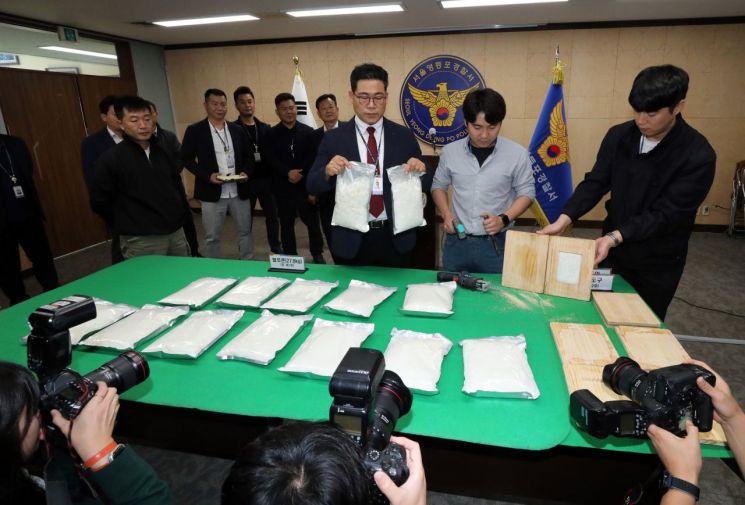
According to the police on the 11th, the Yeongdeungpo Police Station in Seoul has booked 26 members of an international drug smuggling coalition composed of Koreans, Malaysians, and Chinese on charges of organizing a criminal group and violating the Act on the Aggravated Punishment of Specific Crimes. Among them, 14, including managers and distributors, are under detention during the investigation. The police have identified that they smuggled 74 kg of methamphetamine into the country. This amount is enough for approximately 2.46 million doses at once, with a market value reaching 220 billion KRW. The police have seized 27.8 kg of this and are tracking the methamphetamine that has already circulated in the market. This is the second largest smuggling volume since the 2018 case where Taiwanese, Japanese, and Korean organizations collaborated to distribute 112 kg of methamphetamine domestically.
What stands out in this case is that criminal organizations from the three countries moved together to pioneer the Korean drug market. The Malaysian organization's leader, 'Michael,' who directly manufactured methamphetamine locally in Malaysia, used to distribute it to Asian countries such as Japan, Taiwan, and Hong Kong. In January, he agreed to mutually cooperate with an unidentified Korean leader and the Chinese leader 'Luya.' The leaders in each organization did not directly engage in distribution or sales but instead directed their members. A police official stated, "We recognize them as an emerging drug distribution organization," adding, "It is rare for a Malaysian organization to establish a foothold and operate domestically."
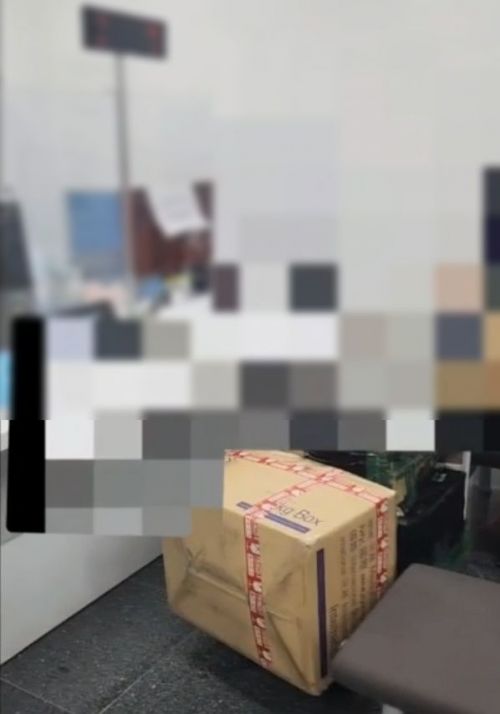 International cargo delivered to Incheon Airport from Malaysia (wooden cutting board disguised methamphetamine) / Photo by Yeongdeungpo Police Station
They divided roles and meticulously prepared for smuggling. The Malaysian organization was responsible for smuggling methamphetamine into Korea. Members attached 4 kg of drugs each to their bodies using four pieces of box tape and wore thick winter clothing to conceal them, avoiding detection at airport customs. The Korean organization secured domestic smuggling routes and handled the transportation and storage of the methamphetamine, which was then passed on to the Chinese organization for distribution and sales. The Chinese organization distributed the drugs to lower-level members, mainly ethnic Koreans from China (Joseonjok), who sold the drugs to domestic consumers via messengers like WeChat and Telegram, using the so-called 'throwing method' for contactless delivery.
As summer approached and it became difficult to hide drugs under thick clothing while passing through airports, the Malaysian organization changed their smuggling method. They carved grooves into wooden cutting boards, a so-called 'patented' item that does not get caught in customs, and concealed the packaged drugs inside, disguising them as international cargo. The drugs smuggled into the country this way were directly managed by the Malaysian organization, which established a base and distributed them to the Korean and Chinese organizations for circulation. Although the Malaysian leader was preparing for subsequent smuggling, the police arrested members of the organization and prevented 100 kg of methamphetamine from being loaded at Kuala Lumpur Airport. Considering that the Malaysian organization's drug distribution routes included personal carriers and international cargo, there is a possibility that the Korean organization was involved in the air route. The police have expanded their investigation, including obtaining communication warrants for some Incheon Airport Customs officials suspected of helping Malaysian members pass through airport security checks smoothly in January.
The police are tracking the Korean organization's leader and other members who have not yet been arrested, and they continue to identify the whereabouts of the quantities believed to be stored for distribution and sales among the smuggled amounts by the multinational organization. A police official said, "We will conduct the investigation swiftly to apprehend the leaders."
© The Asia Business Daily(www.asiae.co.kr). All rights reserved.
![Clutching a Stolen Dior Bag, Saying "I Hate Being Poor but Real"... The Grotesque Con of a "Human Knockoff" [Slate]](https://cwcontent.asiae.co.kr/asiaresize/183/2026021902243444107_1771435474.jpg)
















