Average Household Surplus Declines Due to Interest Rate Hikes
Rebound Unlikely for Now... "Both Domestic Demand and Exports in Recession"
Since the COVID-19 pandemic, household disposable income has significantly decreased. Concerns are rising that consumption may sharply contract due to the burden of high interest rates and high inflation.
According to the National Statistical Office's National Statistics Portal (KOSIS) on the 8th, the average monthly household surplus in the second quarter of this year was 1,111,000 KRW, down 183,000 KRW (13.8%) from a year earlier. This is the largest decline since 2020.
The surplus amount is an indicator of household disposable income remaining after deducting taxes, insurance, interest, etc., minus consumption expenditures such as food, representing the household's leftover money.
Household surplus has decreased for four consecutive quarters since the third quarter of last year. The main cause is the sharp increase in interest expenses following the big step rate hike in July last year (from 1.75% to 2.25%). The year-on-year growth rate of household interest expenses surged from 7.1% in the second quarter of last year to 42.4% in the second quarter of this year.
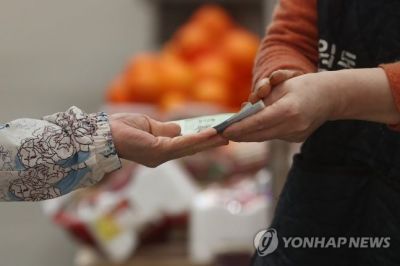
Persistent high inflation is also hitting households. In the second quarter, household consumption expenditure averaged 2,691,000 KRW per month, up 2.7% (71,000 KRW) from the same period last year. However, real consumption expenditure adjusted for inflation decreased by 0.5%. This suggests that despite reducing actual spending, expenditures increased due to the impact of rising prices.
On the other hand, household income in the second quarter averaged 4,793,000 KRW per month, down 0.8% (38,000 KRW). Naturally, consumption contracted, with a notable decrease in food and beverage consumption (-8.3%).
The problem is that the situation is unlikely to improve anytime soon. With slowing income growth and continued high interest rates and inflation, household finances are expected to become more difficult. The U.S. Federal Reserve (Fed) has also indicated that high interest rates may persist longer than expected.
Concerns about high inflation are also growing due to soaring international oil prices and exchange rates. Consumer prices in the third quarter rose 3.1% compared to the same period last year, only 0.1 percentage points lower than the 3.2% increase in the second quarter. The Bank of Korea expects the inflation rate to be around 3% by the end of this year.
Experts say, “Currently, the Korean economy is in a recession phase with both domestic demand and exports sluggish,” and predict that the timing of an economic rebound may be delayed for a considerable period.
© The Asia Business Daily(www.asiae.co.kr). All rights reserved.
![Clutching a Stolen Dior Bag, Saying "I Hate Being Poor but Real"... The Grotesque Con of a "Human Knockoff" [Slate]](https://cwcontent.asiae.co.kr/asiaresize/183/2026021902243444107_1771435474.jpg)















