Q2 Housing Purchase Burden Index 165.2
Appropriate Level is 130~140
It was found that a median-income household in Seoul must spend more than 40% of their income on principal and interest repayments for a mortgage loan to purchase a median-priced home. This contrasts with the nationwide housing purchase burden index, which has been declining for three consecutive quarters as incomes continue to rise and mortgage interest rates peak and then fall.
According to the Korea Housing Finance Corporation on the 2nd, the nationwide housing purchase burden index for the second quarter was 68.0, down 3.9 points from the previous quarter (71.9). This is the lowest level since the first quarter of 2021 (63.6).
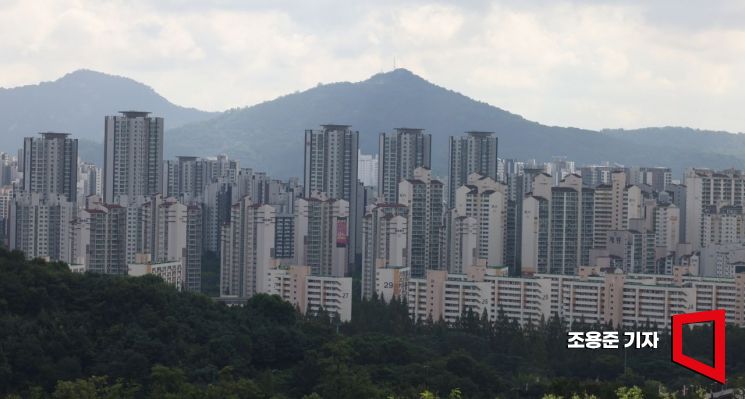
The housing purchase burden index represents the repayment burden when a median-income household takes out a standard loan to buy a median-priced home. A lower index indicates eased housing purchase burden, while a higher index means increased burden. When mortgage repayments account for about 25% of household income, the housing purchase burden index is calculated as 100.
The nationwide housing purchase burden index set record highs for four consecutive quarters from the fourth quarter of 2021 (83.5) through the first (84.6), second (84.9), and third quarters (89.3) of last year. However, with the government's real estate soft-landing policy and interest rates peaking and then declining, the upward trend was halted in the fourth quarter of last year (81.4), and the index continued to fall in the first and second quarters of this year. Nonetheless, as household loans have recently increased and housing prices have turned upward, it remains uncertain whether the housing purchase burden index will continue to decline after the third quarter.
By region, Seoul's housing purchase burden index was 165.2 in the second quarter, down 10.3 points from 175.5 in the first quarter. In Seoul, the index reached an all-time high of 214.6 in the third quarter of last year and has declined for three consecutive quarters since. However, the index remains at a high level close to 170, indicating a very heavy burden for housing purchases. Typically, in Seoul, a housing purchase burden index of 130 to 140 (mortgage repayment ratio of 33% to 35% of income) is considered an appropriate level for purchasing a home.
Based on the second quarter housing purchase burden index, a median-income household in Seoul would need to spend about 41% of their income on principal and interest repayments for a mortgage to buy a median-priced home in the area. This still exceeds the financial authorities' regulatory threshold of 40% under the Debt Service Ratio (DSR) standard.
Outside of Seoul, Sejong was the only region with a housing purchase burden index exceeding 100 in the second quarter. Sejong's housing purchase burden index was 100.3, down 2.4 points from 102.7 in the previous quarter. Other regions' housing purchase burden indices were in the following order: Gyeonggi (88.0), Jeju (82.7), Incheon (72.4), Busan (71.7), Daejeon (67.6), Daegu (62.2), Gwangju (57.3), and Ulsan (53.0).
© The Asia Business Daily(www.asiae.co.kr). All rights reserved.
![Clutching a Stolen Dior Bag, Saying "I Hate Being Poor but Real"... The Grotesque Con of a "Human Knockoff" [Slate]](https://cwcontent.asiae.co.kr/asiaresize/183/2026021902243444107_1771435474.jpg)
















