Moody's has issued a warning that a 'shutdown'?a temporary halt in the operations of the U.S. federal government due to delays in budget approval?could have negative repercussions on the country's credit rating. The economic burden, including temporary unemployment, is expected to increase, making a decline in Gross Domestic Product (GDP) inevitable.
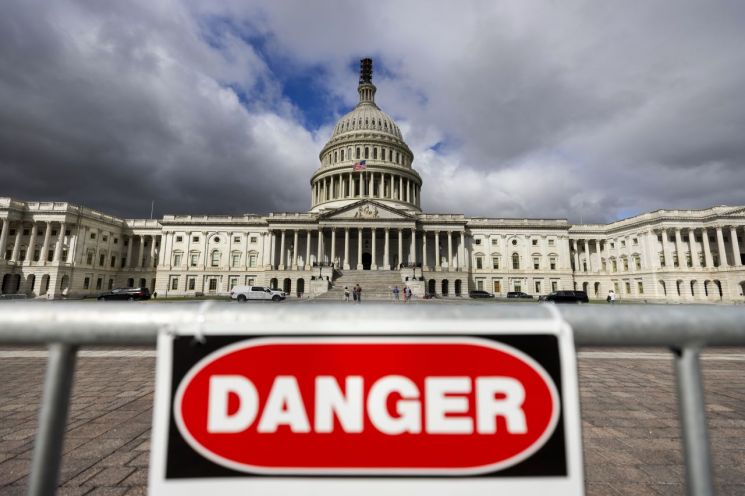
Moody's, one of the world's three major credit rating agencies, warned in a report on the 25th (local time) that "a shutdown will negatively impact the United States' sovereign credit rating." Moody's is currently the only one among the big three rating agencies to maintain the U.S. sovereign credit rating at the highest level (Aaa). The agency expressed concern that "this situation reflects a worsening fiscal soundness due to deepening fiscal deficits and deteriorating debt repayment capacity, compounded by intensified political polarization that severely restricts fiscal policy decisions."
To prevent a shutdown, the budget must be approved before October 1, when the 2024 fiscal year begins. However, the hardliners within the Republican majority in the House of Representatives, who hold the authority to review the budget bill, are demanding massive cuts. As the deadline approaches with only a few days left, the deadlock remains unresolved. They are also rejecting the one-month temporary budget resolution (CR) proposed by the Republican leadership to buy time, raising serious concerns that the countdown to a shutdown has effectively begun.
This recurring political conflict has been cited as a major reason by credit rating agency Fitch for downgrading the U.S. sovereign credit rating from AAA to AA+ last month. S&P downgraded the rating to AA+ during the debt ceiling crisis in August 2011 and has maintained that rating since.
Moody's pointed out in the report that the impact of this shutdown will be concentrated in countries with a high proportion of government spending and warned that "if prolonged, it could cause turmoil in both the U.S. economy and financial markets."
If the shutdown materializes, approximately 800,000 federal government employees, excluding essential personnel, will be immediately placed on forced unpaid leave. Some social welfare programs, such as food assistance for low-income groups, will inevitably face disruptions. At a critical time when concerns about oil price-driven inflation are resurfacing, delays or suspensions in the release of key economic indicators will increase uncertainty surrounding monetary policy. Especially this year, voices cautioning against uncertainty are louder than ever, given that the economic conditions differ from those during the 2019 and 2014 shutdowns.
Warnings about the economic burden of a shutdown have also come from within the U.S. Congress. According to the Congressional Research Service (CRS) 'Shutdown Impact Report,' goods and services provided by the federal government account for about 7% of GDP. The extent to which these goods and services are not provided could directly lead to a decrease in GDP. Additionally, many subcontracted contract workers are feared to face the risk of layoffs.
The report warned that "the indirect damage from reduced spending is far more extensive than the direct impact of the shutdown," noting that "government employees who do not receive their wages on time are likely to reduce consumption." According to Goldman Sachs, during the 2014 shutdown, two out of five Americans reduced their consumption. Goldman Sachs expects this shutdown to result in a weekly GDP decline of 0.15 percentage points.
Kevin McCarthy, Speaker of the House and a member of the Republican Party, has stated his intention to pass a large-scale budget cut proposal on the 26th. However, it is expected to be rejected in the Senate, where the Democrats hold the majority.
© The Asia Business Daily(www.asiae.co.kr). All rights reserved.
![Clutching a Stolen Dior Bag, Saying "I Hate Being Poor but Real"... The Grotesque Con of a "Human Knockoff" [Slate]](https://cwcontent.asiae.co.kr/asiaresize/183/2026021902243444107_1771435474.jpg)















